Governance The Adjudicatory Chamber of FIFA’s independent Ethics Committee has bannedSergio Jadue and Luis Bedoya for life from ‘all football-related activities’. Jadue is a former President of the Chilean FA and Bedoya is a former FIFA Executive Committee member and President of the Colombian FA. Both officials had already pleadedguilty to charges of racketeering conspiracy and wire fraud conspiracy.
The Australian Sports Commission (ASC) has released a ‘set of new practical guidelines’ to all sports club in the country to help with the ‘management and oversight of integrity issues confronting sport’. The new guidelines, contained within a 5-page document, warns especially of the rise of match-fixing in sport. The ASC says that it hopes the report will help in particular board directors, who it notes are mostly volunteers.
Match-Fixing Two Maltese footballers who represented the national U-21 team against Montenegro in a UEFA Championship qualifier in March are reportedly set to be charged with match-fixing. According to The Times of Malta, the police have filed charges against footballers Emanuel Briffa and Kyle Cesare, as well as a former soldier, Ronnie Mackay. In April Maltese police announced that they were investigating the match against Montenegro after another footballer, Seyble Zammit, admitted to match-fixing charges. The former soldier, Mackay, has reportedly already been convicted of attempted theft in a previous incident, as well as being accused of bribing another footballer in September 2012.
Former ZIFA (Zimbabwe Football Association) Executive Committee member Edzai Kasinauyo has reportedly had his case challenging a provisional suspension from ZIFA dismissed as ‘not urgent’ on Friday. Kasinauyo appeared at the Harare Magistrate’s Court last month to face match-fixing charges after being expelled by ZIFA in March for allegedly attempting to fix two African Cup of Nations qualifiers. According to The Chonricle, Kasinauyo’s case was ruled not to be urgent after a judge found that there were some ‘internal remedies’ under the ZIFA constitution – including taking the case to FIFA and the Court of Arbitration for Sport (CAS) – that needed to be exhausted before approaching the courts.
New evidence has emerged showing that former South African Test wicketkeeper Thami Tsolekile met with illegal Indian bookmakers and discussed the participants involved in a match-fixing scam, reports local South African newspaper The Citizen. In January The Sports Integrity Initiative reported that Tsolekile was one of three players being investigated over allegations of match-fixing in South Africa’s Ram Slam Twenty20 competition. Last week there was widespread media speculation that Cricket South Africa is set to charge at least five more cricketers for match-fixing in the coming days.
Doping Craig Reedie, President of the World Anti-Doping Agency (WADA), has called on sport’s sponsors and broadcasters and the ‘wider sports industry’ to commit more money to anti-doping. In an article for The Guardian, Reedie said that WADA was operating with its ‘belts tightened’ and feeling the squeeze evermore despite the ‘expanding amount of work’ they are asked to do. One of Reedie’s recommendations is that, where an organisation sponsors an athlete who has been sanctioned for doping, they should ‘attribute the money it would pay the athlete during that sanction to the anti-doping movement’ instead.
Australian race walker Jared Tallent is to receive his gold medal from the London 2012 Olympics in a ceremony in Melbourne next month. Tallent finished the race behind Russian race walker Sergey Kirdyapkin, who was banned for doping by the Russian Anti-Doping Agency (RUSADA) in 2015 but whose sanction was only backdated to October 2012, meaning he could keep his Olympic gold. However earlier this year the Court of Arbitration for Sportupheld an appeal by the International Association of Athletics Federations (IAAF) based on a ‘selective’ annulment of competitive results, eventually resulting in an annulment of Kirdyapkin’s Olympic result.
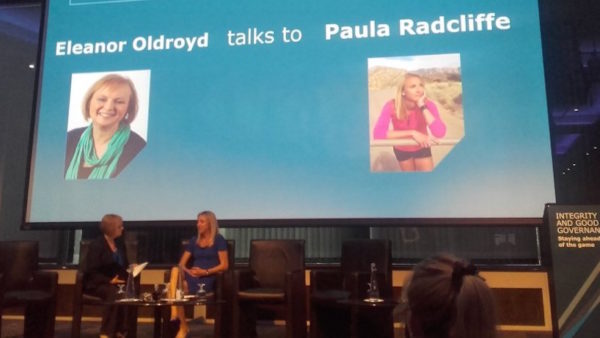
Sport needs to do more to protect athletes from abuse, corruption and cheats, heard delegates at Sport Resolutions 2016; Integrity and Good Governance, which took place in London today. Delegates heard how athletes currently lack a voice in a sports governance system that lacks oversight, allowing the sort of integrity issues that have recently plagued football and athletics to occur. Speakers continually raised a lack of athlete trust in the governance of sport as an issue.
“Athletes don’t have confidence in the Court of Arbitration for Sport (CAS)”, said Marathon world record holder Paula Radcliffe. “With the work I do on the [IAAF] Athletes Commission, more and more athletes are coming – apparently to other athlete commissions across different sports – and they just don’t have full faith that all the issues are being understood when they’re discussed at CAS”.
Radcliffe suggested that a fully independent tribunal for sport is now necessary. “That would be a huge step forward”, she said.
Abuse
Former gymnast Gloria Viseras and former swimmer Katherine Starr shared their harrowing experiences of abuse at the hands of their former coaches. Viseras said that she had suffered 12 years of bulimia and suicide attempts due to keeping silent for 30 years about abuse by Jesús Carballo, her former coach. Despite the Spanish Sports Council recognising that the abuse had taken place, his son remains as President of the Spanish gymnastics federation (RFEG). Viseras said that she “hadn’t received a single phone call” from the RFEG following her revelations.
“Children and young people in sport were not listened to for a long time”, said Starr, who changed her name to escape the abuse suffered at the hands of her coach, Paul Hickson and now runs Safe4Athletes. “Most people in sport can’t speak out for fear of losing their place. The only checkmark against coaches is how good their athletes are.” When asked if there are coaches in sport doing what Jimmy Saville did to his victims, Anne Tiivas of the Child Protection in Sport Unit replied: “Undoubtably, there are”.
Collusion
Radcliffe alleged that there had been collusion between ARD, the Sunday Times and the UK Parliament’s Culture, Media and Sport (CMS) Select Committee to ‘out’ her as an athletes alleged to have suspicious blood values. She alleged that ARD had issued a statement ahead of the CMS Select Committee hearing on 8 September last year stating that an athlete would be named.
She said that the Sunday Times conclusion that her blood values were suspicious was due to “inexperienced journalists trying to cut corners”, and alleged that the Sunday Times had attempted “entrapment” with regards to her and other athletes by threatening to write articles detailing how they had refused to publish their blood data. She also argued that press regulations needed to be tightened, as her reputation has been damaged when she had “done nothing wrong”.
Sport is in denial
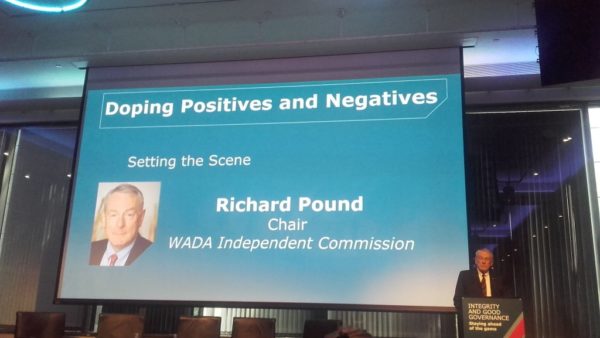
“Sport remains in a state of catatonic and unpersuasive denial”, said Dick Pound, the first President of the World Anti-Doping Agency (WADA) and Chairman of its Independent Commission which produced two reports into allegations of systemic doping in Russia. “Too many people involved in sport do not want the anti-doping system to work”.
Pound said that WADA needs additional investigatory powers and again called for an extension to its mandate through regulations that would allow WADA to compel those being investigated to contribute towards the cost of that investigation, with additional powers to sanction those that refuse to contribute. Pound also revealed that the Independent Commission had “not finished” its investigation into the IAAF blood database used by ARD and the Sunday Times in its investigation into blood doping in athletics.
Functional separation
Many speakers outlined that in order for sport to avoid further integrity issues, separation of governance and commercial functions is essential. “Normal corporate governance procedures don’t apply at international federation level”, said Nic Coward, former General Secretary of the Premier League and CEO of the British Horseracing Authority (BHA). “What is one trying to govern?” questioned Jonathan Bellamy of Essex Chambers. “Is it a sports body or a business?” Coward continued: “There should be a separation of roles. This has to happen at the international level.”
However, it was pointed out that sporting confederations – such as FIFA – don’t do much other than handle commercial issues, and it was therefore questioned as to why they had taken on a political role. “There is nobody overseeing them at an international level”, said Jane Purdon, Head of Governance & Leadership at UK Sport. Former UK Minister for Sport, Richard Caborn, said that bodies such as FIFA were often guilty of hiding behind the autonomy of sport in order to do what they like.
This concept was thrown into sharp relief by Alexandra Wrage of Trace International, who served on FIFA’s Independent Governance Committee (IGC). “I am the only man on earth who can arrive in a country without protocol and be received by the Head of State”, she revealed former FIFA President Joseph S. Blatter had told her.
Wrage’s concern is that despite numerous football officials being arrested and charged with corruption, little has changed at FIFA. She pointed out that shortly before he was elected as FIFA’s new President, Gianni Infantino had “hosed down the audience with cash”, by promising each national association US$5 million for football development – $4 million more than they had ever been promised in the past. She said that football’s real stakeholders – players, fans and clubs – “have no voice”.
It was also pointed out that the IAAF have a very difficult decision to make regarding Russian athletics’ participation at the Rio 2016 Olympic Games. Last week, the Sports Integrity Initiativerevealed how the International Olympic Committee (IOC) had spoken to the IAAF about the situation at April’s SportAccord convention.
Ed Warner, Chairman of UK Athletics, said it would be unfair to simply sanction Russian track & field athletes. “You can’t just suspend Russian athletics”, he said. “You need to suspend every sport tested by RUSADA [the Russian Anti-Doping Agency] during the period in question”.
Radcliffe agreed and also pointed out that a ban could have overall adverse effects. “If we ban Russian athletics from Rio, then we are giving them an Olympic cycle to come back prepared”, she said. “Do they even know how to train for the Olympics without drugs?” She also pointed out that similar issues exist in other countries, yet they do not face the same exclusion from the Games.
Conclusion
It appears that sport still has a long way to go towards true reform, as it is still stuck with the organisational structures that allowed integrity issues to develop in the first place. “You have a 20th century business operating in a 19th century organisation”, said Pound. It was suggested that internal change is hard for sport to implement – one analogy used was that it is similar to getting turkeys to vote for Christmas.
However, these changes need to be made if sport is to repair its relationship with athletes. A change in how we treat those who have cheated in sport is also needed. “We don’t celebrate the honest athletes”, argued multiple 400m champion Jamie Baulch. “We celebrate the cheats”. This may be a public perception that is harder to shift than any structural changes required in sport.
• The Sports Integrity Initiative spoke to Paula Radcliffe, Dick Pound, Alexandra Wrage and Katherine Starr at Sport Resolutions 2016. Articles will follow shortly…
• Eric Pickles, the UK Government Anti-Corruption ‘Champion’, has reportedly said that sports bodies, including FIFA and UEFA, would in the future have to sign a joint statement ‘pledging to fighting corruption in sport’. Pickles’ comments come after UK Prime Minister David Cameron proposed a global anti-corruption agency in the wake of the Panama Papers which revealed the large-scale use of tax havens around the globe.
• An Italian prosecutor has revealed that match-fixing in Italian football runs far deeper than he originally thought. Speaking to the Italian newspaper Calcio News 24, Roberto Di Martino said that the manipulation of matches was an ‘industry’ and that, despite recent high profile prosecutions, ‘the cancer has not been eliminated’. Di Martino was prosecutor at many of these high profile sporting trials, including the recent case against the current Italian head coach Antonio Conte, who is set to take charge of Chelsea next season.
• UK Anti-Doping (UKAD) has reportedly decided not to allocate any of its public funding to the Scottish Football Association (SFA) this year. According to the BBC, UKAD views ‘Scottish football as a low-risk sport for drug misuse’. In response the SFA said that it was ‘disappointed’ that UKAD ‘have taken what seems an arbitrary decision’.
• UKAD Chief Executive Nicole Sapstead has said that the rise in doping violations in rugby, specifically those involving steroids, is a ‘worrying trend’. Yesterday, UKAD announced that three rugby union players from lower league amateur clubs in the UK had been banned for twelve, four and two years for breaking anti-doping violations. Sapstead said that UKAD must continue to ‘take a preventative approach by educating players and athletes, at all levels, on the dangers of steroid use’.
As President of the World Anti-Doping Agency (WADA), I acknowledge the high level of interest surrounding the recent suspension of accreditation of the Beijing, Bloemfontein and Lisbon laboratories. I am also aware that these suspensions come at a time when the eyes of the sporting world are fixed on the Rio 2016 Olympic and Paralympic Games. Understandably, some athletes might question whether, in light of these suspensions, they can retain full confidence in anti-doping sample analysis procedures.
It is important for athletes to note that, as a result of these suspensions, all samples will now be transported securely to one of the remaining 31 WADA-accredited laboratories worldwide, thereby ensuring that there are no gaps in the anti-doping sample analysis procedures and that the integrity of the samples is fully maintained. I wish to stress that the three laboratory suspensions are a direct result of WADA’s strengthened laboratory monitoring process. The robust procedures we have introduced include a more stringent External Quality Assessment Scheme (EQAS) and more frequent laboratory site visits by independent experts and WADA personnel. It is for this very reason that clean athletes should have full confidence in the system: if a laboratory is found not to be conforming with WADA’s standards, their accreditation is suspended pending the necessary requirements being met.
As it relates to the specific reasons why a laboratory may have its accreditation suspended, WADA cannot provide these details due to ongoing legal processes that include the laboratory’s right of appeal to the Court of Arbitration for Sport (CAS). Generally speaking, however, laboratory suspensions can be due to a variety of reasons, including: a violation of the International Standard for Laboratories (ISL), which may relate to administrative problems or organizational issues; or the accumulation of too many ‘penalty points’ that would result from WADA’s EQAS. If a laboratory accumulates 30 or more points during an EQAS period, this can result in a suspension. To give an example, these ‘penalty points’can be accumulated if the laboratory wrongly reports results for ‘blind’ or ‘double blind’ samples that they would have been sent during the assessment period. It is also worth bearing in mind that as laboratories face increasing analytical challenges, with new substances being added to the Prohibited List, a suspension can be the result of insufficient or outdated equipment, which can directly impact their ability to analyse samples efficiently.
If, for example, a laboratory which was found to have reported ‘false negatives’ – i.e. erroneously reporting what should be a positive sample as a negative – was ever left to continue conducting analysis, this would result in wasted resources for the anti-doping system, and would offer no safeguard for clean athletes. The far better alternative for the clean athlete, and the anti-doping system at-large, is for that laboratory to be suspended until it has corrected any recurrent problems. There can be no question that issues have to be addressed on the spot with the laboratories; this is an approach that WADA will continue through its quality monitoring program.
Athletes need not be concerned that the laboratory’s past sample analysis would be in any way compromised by the suspension, as WADA requires suspended laboratories to reassess results of past analysis and reanalyse past athlete samples from a determined period of time as needed. This is an important safeguard that protects the clean athlete.
I can assure you that WADA is committed to supporting all of its accredited laboratories in maintaining or reaching the Agency’s more stringent laboratory monitoring standards; and, with this, athletes can have full confidence that this, too, is a strong link of the anti-doping chain.
WADA will continue to work with the suspended laboratories to ensure that the necessary requirements are met.
• This media release was originally published by the World Anti-Doping Agency (WADA) on 6 May 2016. To access the original, please click here.
UK Anti-Doping (UKAD) today confirmed that three English rugby union players, Andrew Quarry, Brandon Walker and Connor Stapley, have been suspended from all sport for twelve, four and two years respectively following Anti-Doping Rule Violations (ADRVs).
Andrew Quarry, who was registered with Kendal RUFC, has been banned for twelve years on account of three ADRVs, following a criminal conviction in 2013 for conspiracy to supply a controlled Class C drug.
Quarry, from Barn Holme in Kendal, pleaded guilty at Carlisle Crown Court in July 2013 to dealing anabolic steroids in a gym and was handed a suspended sentence of twelve months imprisonment.
Following the criminal conviction, a RFU Disciplinary Panel banned the former North One West Division player from 21 June 2013 to 20 June 2025 for Possession of Prohibited Substances and Methods; Use or Attempted Use of a Prohibited Substance or Method; and Trafficking or Attempted Trafficking in any Prohibited Substance or Method.
In a separate case, Brandon Walker, who was registered with Esher RFC, tested positive for the anabolic steroid oxandrolone following an out-of-competition squad test on 19 November 2015.
Walker, who played for Esher RFC in English National League Division One, admitted to using the substance and a RFU Disciplinary Panel imposed a ban from all sport for four years from 9 December 2015 to 8 December 2019.
In a third case, Connor Stapley, who was registered with Henley RFC, tested positive for the presence of metabolites of anabolic agents methandienone and methandienone, following an out-of-competition squad test on 25 August 2015.
Stapley, who also played in English National League Division One, argued that the positive finding had been caused by a supplement and, following a review of the evidence provided, a RFU Disciplinary Panel concluded that the violation was not intentional.
As a result, Stapley is banned from all sport for two years from 23 September 2015 until midnight on 22 September 2017.
UKAD Chief Executive, Nicole Sapstead said:
“It is important to recognise that all three cases are different, must be treated individually and cover a broad range of rule violations.
“The Quarry case is a good result for UKAD and the RFU. Removing a dealer of anabolic steroids from the game – someone who made a conscious choice to cheat the system and the law – is a positive result for the sport.
“The case also shows just how important our relationship with law enforcement has become. By working with local police forces and the National Crime Agency, we have been able to remove a dealer from the system – someone who has absolutely no place in sport.
“The rise in the number of young people, like Brandon Walker, turning to steroids continues to be a worrying trend. But testing alone will not solve the problem. We must continue to take a preventative approach by educating players and athletes, at all levels, on the dangers of steroid use, as well as continue to work closely with law enforcement partners to target those who supply these substances.
“We would encourage anyone with information on doping to contact us. It doesn’t matter how big or small the piece of information is, please tell us. Sports, athletes and coaches can influence what we do by telling us what they know.
“At the other end of the spectrum is the Stapley case. Supplements are never free from risk and athletes must remember that they are responsible for any prohibited substance found in their system, whether it was their intention to cheat or not. Our advice is clear – maximise food and nutrition first and if you must use supplements, thoroughly research the ingredients and seek medical advice.”
• The United States’ National Football League (NFL) and NFL Players’ Association (NFLPA) have warned its players that eating too much meat while abroad, specifically in China and Mexico, may result in a positive drugs test. The statement warned players that some meat in these countries might be contaminated with clenbuterol, an anabolic agent. Last year Mexico banned its national football team from eating red meat while competing in the CONCACAF Gold Cup, to avoid any clenbuterol positives.
— Patrick Peterson /P2 (@RealPeterson21) May 3, 2016
• Tennis Australia has announced that it is strengthening its anti-corruption and integrity efforts by creating a new executive position, Head of Integrity and Compliance. The governing body for tennis in Australia announced that Ann West, its incumbent Risk and Compliance manager, would fill the position. In a statement West said that the first thing that she would do is employ two new staff, an experienced investigator and a sports compliance expert. The global watchdog, the Tennis Integrity Unit, was criticised earlier this year for a lack of transparency and failing to do enough to combat corruption.
• China’s Sports Ministry is reportedly being investigated by the country’s ruling Communist Party for not doing enough to combat corruption. The South China Morning Post reported that 17 officials from the Sports Ministry were summoned before the Communist Party’s Central Commission for Discipline Inspection ‘to find out if they were following party rules on fighting corruption’. Last year the Chinese government fired Xiao Tan, Deputy Sports Minister, following a corruption investigation.
• An international football player from Guam has been provisionally suspended for 30 days following an adverse analytical finding. The finding came after a doping control test conducted after a FIFA World Cup qualifier in late March between Oman and Guam. Guam’s population is estimated to be just over 160,000, and their current FIFA World Ranking is 162 of 209 countries.
• The Adjudicatory Chamber of FIFA’s independent Ethics Committee opened proceedings yesterday against Jeffrey Webb following a report submitted by its investigatory chamber. Webb, a former FIFA Vice President was provisionally suspended by FIFA after his arrest in Zurich last year at the request of US authorities. Webb, the former regional CONCACAF President, has been under house arrest in the US since pleading guilty to a range of fraud charges connected to the massive FIFA corruption investigation.
• South Korean swimmer Park Tae-Hwanannounced at a press conference on Monday that he wanted to be given ‘another chance’ in order to compete at this year’s Rio Olympics. The Olympic gold medallist was banned by FINA for 18 months in 2015 after testing positive for testosterone, but the ban ended on 2 March 2016, making him eligible to take part in the Olympics. However, the Korean Olympic Committee (KOC) has rules in force banning athletes from representing South Korea for three years after the expiration of any doping ban. Local media have reported that Tae-Hwan may contest this rule at the Court of Arbitration for Sport (CAS). According to Reuters, the former World Anti-Doping Agency (WADA) President Dick Pound told South Korea’s Yonhap news agency that the KOC could ‘find itself in hot water’ with the International Olympic Committee (IOC) over Park’s case.
The International Paralympic Committee (IPC) has updated its rules to crack down on ‘boosting’ – a practice whereby paralympic athletes hurt themselves in order to induce autonomic dysreflexia, which is understood to give them a performance advantage. An IPC study outlines how athletes with a high-level spinal injury have ‘limited physiological potential for improvements in cardiac output and maximal oxygen uptake which are known to improve racing performance’.
In other words: ‘during competition a wheelchair athlete’s heart rate does not increase according to the body’s demands, leading to low blood pressure, fatigue, often poor performance and a loss of endurance’. As such, the study found that some athletes with high level spinal cord injuries ‘partly compensate for the loss by the induction of the dysreflexic state’, resulting in increased blood pressure, improved blood flow to muscles and better performance.
The study questioned 99 athletes. It found that methods used to induce autonomic dysreflexia by clamping of the urinary catheter to produce bladder distension; excessive tightening of the leg straps; twisting and/or sitting on the scrotum; or other ‘less dramatic’ methods such as abdominal binders or pressure stockings. ‘Some men have been known to break their big toe before the competition’, warns the study.
The new rules, dated April but published on 2 May, lower the limit on systolic blood pressure from 180mm Hg to 160mm Hg. This is because the IPC’s study found that athletes entering a dysreflexic state risk a stroke, intracranial haemorrhage or death.
‘An athlete with a systolic blood pressure of above 160mm Hg will be re-examined approximately ten minutes after the first examination’, they read. ‘If on the second examination the systolic blood pressure remains above 160mm Hg the person in charge of the examination shall inform the Technical Delegate to withdraw the athlete from the particular event in question’.
‘Any deliberate attempt to induce autonomic dysreflexia is forbidden and will be reported to the Technical Delegate’, the rules continue. ‘The athlete shall be disqualified from the particular event regardless of the systolic blood pressure. In addition, a report on the deliberate attempt to induce autonomic dysreflexia, or an attempt to compete in a hazardous dysreflexic state, will be provided to the IPC Legal and Ethical Committee for subsequent investigation in relation to the non-respect of legal and ethical principles by the athlete and/or athlete support personnel.’
Gymnast Thema Williams is preparing to appeal the Trinidad & Tobago Olympic Committee’s (TTOC) decision to support the Trinidad & Tobago Gymnastic Federation’s (TTGF) last-minute change to replace her as its sole athlete at the Rio 2016 Olympics. On 2 May, the TTOC said that following a statement by the Fédération Internationale Gymnastique (FIG), it had to support the TTGF’s nomination of Williams’ replacement, Marisa Dick. “The (TTOC) Olympic Games Management Committee have therefore ruled that the TTOC has no choice but to include Marisa Dick in the Team TTO Rio 2016 declaration”, TTOC President Brian Lewis toldNewsday.
Although the FIG’s 30 April statement (see below) said the final decision rested with the TTOC, it added that the TTOC must confirm the selection of Dick by 9 May, otherwise her place would be reallocated to the athlete with the next best score. ‘This place must be confirmed by the Trinidad and Tobago Olympic Committee as soon as possible, but no later than 9 May 2016’, it read. ‘Failure to do so will result in the automatic invitation of the next best ranked All-Around athlete from the qualifying event in Rio (1st reserve). Since the qualification place earned by Marisa Dick is nominative, no name change or replacement is possible.’
Dr. Emir Crowne, who represents Williams, said that as the TTOC couldn’t support her, then they would take the case to the CAS. “CAS has exclusive jurisdiction of any dispute arising from or in connection with the Olympics”, he told the Trinidad & Tobago Guardian. “We can take the situation directly to CAS”.
The TTOC also said that it would be investigating whether the TTGF had broken any rules due to issues with the selection process, highlighted by the Sports Integrity Initiative last month. “The TTOC has considered issues surrounding the process and will be invoking its authority under clause 13 of its Constitution to determine whether the TTGF has infringed the TTOC constitution, the Olympic Charter and the International Olympic Committee [IOC] Code of Ethics in respect of their duties to be fair”, Lewis toldNewsday.
The situation could prove embarrassing for the TTOC, as the Caribbean Association of National Olympic Committees (CANOC) recently signed up to become a member of the Sports Integrity Global Alliance (SIGA), launched by the International Centre for Sports Security (ICSS) in April. Its Core Principles outline that organisations under its stewardship must adhere to a number of good governance standards.
The ICSS said that it would consider the situation as part of work it is already taking to support the TTOC. “As a new member to SIGA, the Trinidad and Tobago Olympic Committee has also recently signed an agreement with ICSS Europe that will include an independent audit of the TTOC’s overall governance model and will also assist with the development of a code of conduct on sports betting integrity for its members”, said a spokesperson. “As part of this agreement and in accordance the TTOC’s forthcoming Good Governance Code for Sport, the ICSS will consider this matter as part of the work to support the TTOC and the SIGA platform”.
• Two Polish weightlifters have tested positive for the use of human growth hormone (HGH). In a statement, the Polish Commission Against Doping in Sport, said that the organisation had started an investigation into the findings and was currently waiting a decision from the athletes on whether they wanted to have their B samples tested.
• A professional football player for AC Cesena, who play in Italy’s second division (Serie B), has been given a ‘precautionary suspension’ after failing a doping test. In an official statement on AC Cesena’s website, the club said that one of tis players, Nicola Dal Monte, had tested positive for metabolic clostebol. The statement also said that the drug was widely used to treat skin lesions, and was confident that its player would clarify that it had consumed the drug for ‘therapeutic purposes without any intention to alter performance’.
• The International Biathlon Union (IBU) has lifted the provisional suspension on Russian biathlete Eduard Latypov, who tested positive for meldonium during the IBU cup earlier this year. Following guidance issued by WADA in April about meldonium concentrations and excretion times, the IBU asked its Anti-Doping Hearing Panel to lift Latypov’s suspension.
• The Supreme Court of Victoria in Australia has dismissed a lawsuit from James Hird, the former Head Coach of Australian Football League (AFL) club Essendon. Hird sued the club’s insurer, Chubb Insurance, for refusing to pay for his failed challenge against the lawfulness of an investigation conducted by the Australian Sports Anti-Doping Authority (ASADA). Hird had alleged that ASADA had illegally used the AFL’s contractual powers to force Essendon players to attend interviews with ASADA.
• The Football Federation of Kosovo (FFK) was yesterday admitted as a member association of UEFA, the Union of European Football Associations. At the Ordinary UEFA Congress, the FFK received 28 votes in favour and 24 against, and was therefore admitted on a simple majority. In response, the Director of the Serbian Government Office for Kosovo and the Serbian Sports and Youth Ministerreportedly held a press conference saying that they would help the Football Association of Serbia (FSS) oppose UEFA’s decision at the Court of Arbitration for Sport.
• The former assistant coach of Zimbabwe’s national football team has reportedly become the latest suspect in a football match-fixing case to appear to appear in court on match-fixing charges. According to news site All Africa, Nation Dube, who was implicated in the case at the beginning of the Zimbabwe Football Association’s (ZIFA) investigations, is alleged to have been paid to leak the list of players in an African Cup of Nations qualifier to prospective match-fixers. He was reportedly released on USD $100 bail until 24 May. A player for the Zimbabwe Premier Soccer League side Highlanders FC was also reportedly summoned for an interview by ZIFA lawyers to see if he could be used as a witness, but Knox Mutizwa was deemed ‘irrelevant to the case’.
The French financial prosecution service has searched the headquarters of the French Tennis Federation, as well as the home of its President, Jean Gachassin. Last night French newspaper Le Monde, alongside AFP, reported that the search was part of an investigation into property embezzlement and ‘influence trafficking’ launched on 19 March by the country’s financial prosecution service.
‘The national financial prosecutor, assisted by the Central Office for the Fight against Corruption and Financial and Tax Offences [OCLCIFF], today led several searches at the headquarters of the French Tennis Federation, the offices of the company Havas Voyages La Dépêche in Tarbes, and the home of the President of the FFT,’ read a statement from thef financial prosecutor.
According to the statement, the investigation was triggered ‘following a report by the General Inspectorate of the Ministry of Youth and Sports, relating in particular to the existence of an illicit system of reselling tickets for the French Open tournament, as well as the conditions surrounding the award of renovation contracts for the expansion of the Roland Garros stadium.’
On Tuesday 3 May 2016, the financial prosecutors from the police searched the premises of the French Tennis Federation.
This preliminary investigation, conducted by the financial prosecutor, follows the work of the General Inspectorate at the Ministry of Community, Youth and Sports, which has been widely discussed in the press.
The Federation’s teams, elected officials and employees are cooperating fully with investigators.
The French Tennis Federation has no comment to make at this stage of the proceedings. It reserves the right to initiate civil proceedings if criminal actions are revealed by the investigation.
Press contact:
Guillaume Lebastard – 01 47 43 49 98 – [email protected]
Paris, le 3 mai 2016
La Fédération Française de Tennis
• This media release was originally published by the Fédération Française de Tennis (FFT) on 4 May 2016. To access the original, please click here.
WADA has suspended the accreditation of the South African Doping Control Laboratory (Laboratory) in Bloemfontein until 30 September 2016. The suspension, which takes effect immediately, prohibits the Laboratory from carrying out any anti-doping activities including all analyses of urine and blood samples. During the period of suspension, samples are required to be transported securely to another WADA-accredited laboratory, ensuring that athletes can have full confidence in continued high quality sample analysis and the wider anti-doping system. Pursuant to Article 13.7 of the World Anti-Doping Code (Code), the Laboratory may appeal this decision to the Court of Arbitration for Sport within 21 days of receipt of notice.
During the period of suspension, the laboratory shall address all non-conformities identified in its External Quality Assessment Scheme (EQAS) program and any other non-conformities identified in the course of WADA site visits during the suspension period. If the laboratory satisfies the Disciplinary Committee in meeting these requirements, the laboratory may apply for reinstatement prior to 30 September.
According to the International Standard for Laboratories (ISL), WADA is responsible for accrediting and re-accrediting anti-doping laboratories, thereby ensuring that they maintain the highest quality standards. This monitoring process is conducted in conjunction with ISO assessment by independent national accreditation bodies that are full members of the International Laboratory Accreditation Cooperation (ILAC). Whenever a laboratory does not meet ISL requirements, WADA may suspend the laboratory’s accreditation.
• This media release was originally published by the World Anti-Doping Agency (WADA) on 3 May 2016. To access the original, click here.
It was a week British Cycling would rather forget. Accusations of discrimination forced the resignation of technical director Shane Sutton and then, it was reported that one of its brightest young stars had submitted a positive drug test. Just 100 days before the Olympic Games kick off in Brazil, it is a gruelling time for a sport that has delivered national success for Britain like few others.
Simon Yates, who rides for Australian professional team Orica-Greenedge, was found to have a drug called terbutaline in his system during the March stage of the Paris-Nice. The team confirmed the news in a statement but said the positive result was for the drug’s use as an asthma treatment noted by the team doctor on a doping control form signed at the time of the test.
The UCI, cycling’s governing body, does allow the use of terbutaline under its programme of therapeutic-use exemptions (TUEs), and Orica blamed one of the team’s doctors for failing to submit the relevant paperwork. It said it was ‘solely based on a human error that the doctor in question has taken full responsibility for’. The UCI said it would not be suspending the 23-year-old rider because use of this drug did not call for its imposition.
So what is terbutaline? How does it work? And why have anti-doping authorities required athletes to seek permission before using it?
At the limit
Many athletes have a form of asthma known as exercise induced bronchoconstriction (EIB). In fact, the prevalence of asthma/EIB in elite athletes (21%) is reported to be more than double that of the UK general population (9%). Athletes are more susceptible to this form of asthma because they regularly expose themselves to a significant volume of asthma triggers (dry air, dust, pollution) as a result of long and intense hours of training on the road. In simple terms, increased exposure to those triggers equals greater chance of asthma/EIB.
Asthma/EIB is an obstructive airway disease characterised by inflammation and muscle constriction around the airway. Any asthma sufferer will be able to relate to familiar symptoms such as tight chest, difficulty in breathing and wheezing. An athlete’s aerobic performance will obviously be compromised if they are unable to ventilate their lungs effectively so a group of drugs known as β2-Agonists can be used to reverse the muscle constriction, open up airways and reduce symptoms. These drugs allow athletes with asthma/EIB to train and compete without compromising their health and performance.
All but four forms of β2-Agonists are banned for athletes to use in and out of competition by the World Anti-Doping Agency (WADA). Clenbuterol, for example, is banned for enhancing strength and power performance as well as reducing body fat. Athletes can use salbutamol, salmeterol, formoterol and terbutaline – although terbutaline is the only one that requires an athlete to apply for a TUE certificate before they can use it.
Salbutamol and formoterol have limits on the amount you can use but do not require special permission. This is because it is possible to distinguish between whether a dose is inhaled (to treat asthma) or taken orally. But this is not possible for terbutaline (and there is no oral form of salmeterol). In other words, once you have an exemption for terbutaline you could in theory use an oral dose without specifically targeting asthma.
Performance gains?
But can terbutaline and the others make a difference in a cycling race? Well, there is evidence that oral doses of terbutaline improve strength and power performance and that high doses of inhaled terbutaline may improve sprint and power but not endurance. Strangely enough, the action behind the potential performance improvement is not linked to improved lung function.
Terbutaline and other treatments may improve performance by altering muscle function so that power production per muscle contraction is enhanced. Long-term use may also improve the energy producing pathways that do not require the presence of oxygen, hence a boost to anaerobic bursts of power. But to achieve these performance gains inhaled doses of terbutaline must be well above the therapeutic dose.
So an athlete using terbutaline as prescribed therapeutically is not likely to benefit from a performance enhancement in their sprinting. However, once an athlete has a TUE for terbutaline they have licence to use as much as they like. So an unscrupulous athlete could seek to gain an advantage once they had the exemption.
There is no hint that climbing specialist Yates was using the asthma drug for anything other than his condition, or that the dose in his case was unusually high.
Fellow British rider Owain Doull also leapt to Yates’ defence on Twitter:
I'm not naive, I just know and trust the lad I raced and lived with for years and have seen first hand how he has struggled with asthma.
Because athletes need to apply for permission to use terbutaline, most athletes with asthma/EIB choose to use salbutamol – which is found in the commonly-seen blue inhaler. Back in 2009 however, the World Anti Doping Authority (WADA) had placed all four β2-Agonists on the list of banned substances. The upside was that athletes had to prove they had asthma/EIB by producing a specific objective test as evidence of their condition, and there is plenty of evidence that this process improved diagnostic practices and the management of athletes with the condition. The downside was that it massively increased the administration burden on sports medics and governing bodies.
And so, by 2010 the decision was reversed for all but terbutaline. There was at the time limited evidence that inhaled β2-Agonists improved performance, and crucially, the costs and practicality of testing every athlete around the world with suspected asthma/EIB were deemed impractical. Given the emerging evidence that these treatments may improve strength and power performance, WADA may decide to revisit that position.
• This article was originally published on 29 April 2016 on The Conversation. You can view the original by clicking here.
The issues created by how the anti-doping community has handled meldonium’s addition to the Prohibited List has polarised opinion. In this opinion piece, Steven Selthoffer examines why so many athletes were unaware that meldonium had been added to the 2016 Prohibited List and explores the lack of incentive for WADA and other anti-doping organisations to keep athletes informed about changes to the List.
The epic announcement of the World Anti-Doping Agency’s (WADA) Statement on Meldonium Notice issued to Stakeholders, 11 April 2016, stating that ‘limited data exists’ on how long the substance (meldonium) takes to get out of an athletes system reveals a major operational failure by WADA leadership of adding meldonium prematurely to the Prohibited List without adequate scientific information, placing WADA and athletes in legal jeopardy and calls into question whether it should be on the Prohibited List at all.
With anti-doping leadership like this, no athlete is safe. These scenarios and problems were predicable long ago.
The Statement was followed by the announcement of a record breaking number of 201 adverse analytical findings (AAFs) of athletes who have tested positive for meldonium, throwing the world of anti-doping into a tailspin of who is responsible for what in this disaster. Athletes who would never even think of doping are caught in the net.
The Notice of ‘guidance regarding the Results Management and Adjudication process’ throws the 201 athletes, including tennis superstar Maria Sharapova and others, a possible life-preserver for their sport careers. However, whether that manifests itself remains to be seen.
The entire process of the addition of meldonium to the Prohibited List from the first ‘alert’ reportedly given to USADA to Ms. Sharapova’s announcement of testing positive for her medical treatment is becoming an ever darkening tale of condemnation, substandard communications and possible Cold War animosities. It also demonstrates what many believe; that WADA is incapable of governing itself, that it needs oversight, checks and balances and independent review.
The about-face, saying that cases could be ‘stayed’ and provisional suspensions ‘lifted’ under certain concentrations before 1 March and after 1 March 2016 reveals another case of a lack of scientific data and information. Questions arise as to how these new limits and time frames were created if they did not have enough science or data in the first place? How many studies were done? Over how many years? Did they do male and female comparisons? Did it include world-class performance athletes? The real question becomes: How can they get enough ‘science’ or do enough ‘new studies’ to make a determination before the Rio 2016 Olympics, or the hearing panels in May-June?
Now that WADA has ‘blown it’, growing public sentiment believes this to be the first step back in a scramble and search for a political solution and not just a ‘clarification’. In recent days, nine athletes have had their bans for testing positive for meldonium lifted, as they qualified for the ‘no fault or negligence’ provision under the WADA Code.
Then the Ethics Commission of the Austrian National Anti-Doping Agency (NADA) weighed in, criticising WADA’s operations and procedures stating; ‘This inconsistency is a setback… With this approach, WADA itself has done sport a disservice and the anti-doping work has been dealt a severe setback.’
Most likely, this is not the last back peddling that will happen. The Notice of the adjustments for the athletes facing results management and adjudication is only one part of this dark story now emerging. The real story begins here.
Pound’s condemnation of Sharapova
Many were astounded and taken aback by the statements and condemnation made by Mr. Dick Pound levelled at Ms. Sharapova and her use of meldonium in her medical treatment for cardiac issues including irregular EKG [electrocardiogram] results after her press conference announcing her medical use of meldonium. Her heart problems and medical issues, including possible signs of diabetes, have been known for a long time. Sharapova has always played at a medical disadvantage to healthier athletes.
Pound is the former WADA president from 1999 to 2007 and now a member of the WADA Independent Commission (IC) which was recently tasked with investigating the spreading Russian doping scandal. His statements infuriated many who viewed the commission as not being genuinely ‘independent’ and it appeared as if Pound was more concerned with protecting his own work under his watch at WADA.
In an interview with The Guardian onTuesday, 8 March, Pound condemned Sharapova’s conduct as “reckless beyond description”. Not content with that, he stated among other things that Sharapova taking meldonium was “willful negligence”. Pound went on to say, “She was warned in advance of the WADA publications out there, (but) she didn’t pay any attention to it… of course she should have known.”
These statements were viewed as patently hypocritical to many coming in the middle of the expanding Russian doping scandal, shortly after the release of two shocking Independent Commission Reports, also after the death of two RUSADA executives Kamayev and Sinev (to date), athletes living in exile for fear of their lives, sport executives allegedly extorting hundreds of thousands of Euros from athletes, with the FSB [Russian intelligence agency] allegedly inside the Russian anti-doping lab, doping test cover ups, destruction of evidence and the tentacles going all the way to the Lausanne lab, home of the Athlete Biological Passport (ABP) system and WADA itself in Montréal.
Pound’s statement that Sharapova “should have known” revolted many in light of what has taken place with WADA, which many view as a mess. The statement is also key and pivotal as to who is genuinely at fault for the high volume of cases (201 to date) currently pending to go to adjudication and perhaps the Court of Arbitration for Sport (CAS) and the process of adding meldonium to the Prohibited List.
Accusing Sharapova of not “paying attention to it” is revelatory clue in the dark and convoluted world of WADA and international sport federation communications.
Pound’s quotes of “reckless beyond description”, “willful negligence” and others placed in context are heavy comments damaging to Ms. Sharapova personally and her entire career before the case has even gone to adjudication and potentially arbitration at the CAS. Sharapova, like other athletes, has always supported efforts in anti-doping and the efforts of WADA, Mr. Pound and others. And all this was done knowing that WADA had only ‘limited data’ on the secretion times of meldonium.
Usually, it’s those athletes who have left their country to train in the USA (or another country) that are totally innocent and the most committed to clean sports. They usually know what is going on in their own country and chose to ‘vote with their feet’.
Sharapova demonstrates integrity
Sharapova took the initiative by announcing her positive analytical finding first. Standing up at her press conference, she took full responsibility for her mistake.World Number 1, Serena Williams, USA praised Sharapova saying, “I think most people were happy she was upfront and very honest and showed a lot of courage…”
Nick Bollettieri, her former coach, said in a BBCinterview that he believed she “made a very honest mistake” and did not take meldonium to gain any unfair advantage over her opponents.
Sharapova said her family doctor began prescribing the drug Mildronate, also known as meldonium, in 2006 after several health issues arose… including frequent cases of the flu. “I was getting sick often”, she said. “I had a deficiency in magnesium, I had irregular EKG [electrocardiogram] results, I had a family history of diabetes and there were signs of diabetes”.
Sharapova’s lawyer, John Haggerty, said in an interview after the news conference that the medication “brought these conditions that she had under control”.
The absolute power of condemnation
It appears Pound has now personally cemented his role as WADA’s CCO, the Chief Condemning Officer. In the middle of the current Russian doping scandal, the Sharapova press conference gave Pound a public relations opportunity to hide behind, quickly sliding from defence back to offence as Condemner-in-Chief.
Condemnation is a powerful weapon. Hard hitting, made-for-TV statements and quips can invoke a populist wave of condemnation on an athlete through the global anti-doping chain-of-command. Statements like those outlined above can result in eliciting the maximum emotional, social and economic punishment on an athlete possible. It is especially harmful to athletes like Sharapova, who are personally committed to clean sports and who have supported Pound’s and WADA’s work during their careers.
With Pound citing athletes like Sharapova and using her as a punching bag, strategically it takes the heat off himself and WADA, pulling the media spotlight on to meldonium, deviating from the current crisis and criticism due to the steady stream of scandals uncovering illegal conduct in anti-doping that went on under his, Howman’s, Reedie’s and others watch at WADA. With Sharapova’s condemnation rippling globally, major questions on athlete rights, innocence until proven guilty, proportionality and basic human rights come into play.
How could anyone ever expect to get a fair and impartial hearing, or trial at the CAS or anywhere, with people like Pound condemning athletes like Sharapova with such statements? Anti-Doping seems to be the only judicial system in the world where you are punished first by WADA officials through condemnation, while sponsors cancel contracts worth tens of millions of dollars while you are globally publicly shamed, all before your adjudication proceedings or a court date at CAS.
Under Pound’s and Howman’s leadership at WADA, what is now considered to be emerging due to the two shocking Independent Commission reports is possibly one of the worst examples of executive sport leadership and governance in the history of sport. Shouldn’t they have known about this? In the war against corruption in sport, maybe it’s time to create a level playing field.
Ignorantia juris non excusat? Sharapova’s Facebook statement
Ignorance of the law is no excuse? Ummm… Yes it is. Especially if information from WADA and/or international sport federations is carelessly designed that way with a callous disregard for the welfare of the athletes or to keep athletes informed. Current efforts are not sufficient.
Sharapova’s Facebook page, on 11 March 2016, states ‘A report said that I had been warned five times about the upcoming ban on the medicine I was taking. That is not true and it never happened. That’s a distortion of the actual “communications” which were provided or simply posted onto a webpage. I make no excuses for not knowing about the ban. I already told you about the December 22, 2015 email I received. Its subject line was “Main Changes to the Tennis Anti-Doping Program for 2016”. I should have paid more attention to it. But the other “communications?” They were buried in newsletters, websites, or handouts.’
That demonstrates that WADA’s and the ITF’s communications are blurred at best and possibly (unintentionally) misleading. However, Sharapova went on to write, ‘On December 18, I received an email with the subject line “Player News” on it. It contained a newsletter on a website that contained tons of information about travel, upcoming tournaments, rankings, statistics, bulletin board notices, happy birthday wishes, and yes, anti- doping information. On that email, if a player wanted to find the specific facts about medicine added to the anti-doping list, it was necessary to open the “Player News” email, read through about a dozen unrelated links, find the “Player Zone” link, enter a password, enter a username, read a home screen with more than three dozen different links covering multiple topics, find the “2016 Changes to Tennis Anti-Doping Program and Information” link, click on it and then read a page with approximately three dozen more links covering multiple anti-doping matters. Then you had to click the correct link, open it up, scroll down to page two and that’s where you would find a different name for the medication I was taking. In other words, in order to be aware of this “warning,” you had to open an email with a subject line having nothing to do with anti-doping, click on a webpage, enter a password, enter a username, hunt, click, hunt, click, hunt, click, scroll and read. I guess some in the media can call that a warning. I think most people would call it too hard to find.’
By burying additions to the Prohibited List at the bottom in a mish-mash of topics not directly applicable or interesting to an athlete, combined with a difficult hunt-and-seek, high ‘click through rate’ would get WADA communication team members fired if they were in e-commerce. The tactic enforces disinterest in an athlete in a game of ‘Gotcha’. That’s the bait – uninteresting, non-threatening topics. The hook was buried inside, causing an athlete to most likely delete the message or mentally move along.
Preventing unnecessary legal carnage involving innocent, young athletes appears to hold little currency within WADA. Prevention, communication process management, instituting world-class communication plans and communication forensics that identify corruption or sub-standard performance in communications aren’t sexy. Proactive improvements are often ignored and the results are catastrophic for the life of an athlete.
Minimal communications
The seething anger and frustration athletes and coaches globally face getting answers from WADA and/or NADOs on the changes on the Prohibited List or with other issues are well known. The sub-standard communications and non-communication are ‘built-in’ to the WADA system.
How about asking WADA and the NADO’s to implement customer-service criteria in their communications with athletes, coaches and press such as rating response times to questions and “Are you happy with this answer?” “Has it been effective?” WADA and the NADOs already know the truth concerning that. They don’t want to face the backlash.
Is there a harmonised, best-methods, best-practices, top-level communications plan across all national borders and all platforms and communication objects? There doesn’t appear to be. The WADA and international sport federation communications, information architecture, platforms and information system distribution, along with tech adoption, remain at minimum levels and any changes have been mostly self-protecting.
WADA’s faulty communications and evasion
The WADA 2015 Code Review – Second Code Consultation Phase, shows 35 comments that had been narrowed down from others submitted during the WADA Code Review process (three of which were contributed by the author – one of them follows). The purpose of these comments was for WADA to take note and address these issues completely to the satisfaction of those concerned, by changing the Code, amending the Code, or drafting new mechanisms and safeguards to solve the problems stated. There is no excuse for WADA ‘not knowing’ about these issues. The comments were published by WADA themselves on its own internet site by its own team.
Beginning on the bottom of page 12 of 13 of the WADA 2015 Code Review:
‘WADA does NOT use best practices or best methods in communications. It is the most secretive and closed group many have dealt with. There is no public accountability in their condemnation of athletes before or during/or after the CAS cases. There are NO best methods, best practices in communications with… open public accountability in the process with the press, or other experts.’
These statements cover the need for an independent investigation into the Claudia Pechstein case along with a number of other issues, including the use and analysis of statistics, WADA’s decision making process for adding substances to the Prohibited List, its lack of independent verification, their communications with athletes and so on.
On 4 April, former President of the Union Cycliste Internationale (UCI), Hein Verbruggen, wrote an open letter about his role at the UCI and in fighting doping: ‘WADA is not keen on independent investigation commissions if there is any chance that its own actions and failings might be exposed and that it might therefore come under investigation’, he wrote. ‘Hence the permanent appointment of WADA Board member Dick Pound as the President of the so called “independent” WADA committees, neatly ensuring that there can never be any serious investigation into WADA’s failings’. For WADA to say ‘they don’t know’ about their dysfunctional and deficient communications regarding changes to the Prohibited List or internal and external communications with athletes, and other issues, is 100% false.
On page 9 of the WADA 2015 Code Review – Second Code Consultation Phase Luis Horta, President of Portugal’s anti-doping organisation (ADoP), highlighted that there had already been problems with WADA’s communications regarding their Prohibited List. He stated: ‘ADoP recommends WADA to make the process of the changes and adoption of the List more concise and more transparent. E.g.(i) to upgrade the List Expert Group to a Committee of its own, rather than a sub-committee, (ii) to clarify the decision making process from the draft to the adoption of the List, (iii) to eliminate or at least minimise last-minute changes to the draft List, (iv) to share scientific data regarding substances included on the (draft) Prohibited List and the Monitoring Program, and (v) to clarify the process of including substances and methods on the List.’
Be more transparent? Clarify the decision making process? Share scientific data? Clarify the process of including substances on the List? What does Grindeks (the manufacturer and distributor of mildronate) think of that?
“It also has some wondering whether elite athletes in all parts of the world are being educated sufficiently about imminent changes to the banned list”, writes Christopher Clarey in the New York Times.
Anna Antselovich, Head of RUSADA, recently said that sanctions issued against the agency in November had damaged the information chain on meldonium. “We had no possibility for a certain period of time to hold educative seminars with athletes, coaches and the personnel of national teams”, she told Russian news agency TASS.
The communications responsibility for anti-doping was set up by WADA. WADA’s ‘non-compliant’ Russian NADO should share the blame along with WADA for any of its substandard non-compliant work.
In the New York Times article, Tom Bassindale, a Senior Lecturer in Forensic and Analytical Science at Sheffield Hallam University, continued: “Word could not have filtered down. That could honestly be the issue.”
Though WADA posts changes to its Code on its website, it does not inform athletes directly of changes, relying instead on its partners: national anti-doping agencies and international federations. The question is whether those bodies have all done a thorough job of spreading WADA’s word?
Essentially, WADA’s communication system is similar to the children’s game of ‘telephone’ [Chinese whispers to our British readers] where as through each person’s interpretation, the original statement loses some of its meaning. Each organisation (stakeholder) handles things differently (let alone what is lost in translation). Data integrity and issue urgency come into play here. But, WADA reserves the right to blame the athlete(s) directly.
The NYT article adds: ‘There is also the matter of whether the banning of a drug that has long been legal for use in some parts of the world might require an exceptional level of communications from WADA and its stakeholders’. It does – completely.
Communication failure on a global scale
By acknowledging the need for improvement and taking responsibility to improve communications, WADA would then have to admit it is not at 100% effectiveness or efficiency and thus give the appearance it may be culpable for any miscommunications in its information system design in notifying athletes. But, remember, in an organisation made by attorneys for attorneys…
Always. Always. Always. Blame. The. Athlete.
And Grindeks?
Grindeks, the maker of mildronate – the main brand of meldonium – say it was never informed during the WADA process for adding meldonium to the Prohibited List. The company says it received no scientific justification from WADA as to why meldonium is on the Prohibited List.
What hasn’t been widely mentioned and was completely absent in the WADA meldonium statement is that Ivars Kalviņš, whose groundbreaking research in the field of medicinal biochemistry and who spearheaded the development of a new generation of drug compounds had been nominated as a finalist for the European Inventor of the Year award by the European Patent Office just last year, during WADA’s monitoring of meldonium.
Kalviņš was named as a candidate for the Lifetime Achievement award in the European Patent Office’s Medicine/Biochemistry sector. ‘Kalviņš led the laboratory work of the Department of Medicinal Chemistry at the Latvian Institute of Organic Synthesis in developing the anti-cancer drug Belinostat, neuro-protectant Neramexane, anti-inflammatory compound OX-MPI and heart medication Mildronate’, reportsLatvia Broadcasting.
Concerning meldonium, the Latvian broadcaster reported: ‘The targeted use of natural compounds – as opposed to artificially created chemicals – is the foundation of Kalvins’ approach. He successfully brought to market drugs based on natural compounds to treat and prevent strokes, tinnitus, heart attacks, Alzheimer disease, as well as chronic pain and inflammation. Kalvins’ inventions have proven especially beneficial for the prevention and treatment of ischemic heart disease and stroke, currently the world’s top most causes of death with 7.4 million and 6.7 million victims in 2012, respectively, according to the World Health Organization (WHO).’
What appears to be emerging now after reading the WADA statement and other reports is perhaps more a case of resurgent Cold War animosities between the West and East influencing the process than anything associated with a performance enhancing drug. Essentially saying, “Your medicine is not approved here (USA)” and “our medicine is better than your medicine”.
The 13 member WADA Prohibited List Expert Group is composed of four Americans, three Germans, two or three from the UK, and one each from France, Ireland, Denmark and Ghana. There are none from Eastern Europe. Eastern Europe appears to have been excluded from the decision to place meldonium on the Prohibited List, and those from Eastern Europe could be forgiven for assuming that those involved are protecting the ‘special relationship’ between WADA and USADA, just like the ‘special relationship’ that the USA and UK share.
USADA and WADA don’t have the monopoly on intelligence. The outstanding work at the Latvian institute appears to be rivalling efforts in the USA and elsewhere. Not everyone outside of WADA’s or USADA’s inner circle is evil.
The truth is there is no scientific evidence to show that you can take meldonium and get a faster time. You won’t automatically win a tennis match either. You can’t pop three or four tablets in order to win a race. That’s totally absurd.
What many need to understand is that taking care of your health is a basic human right. What should be considered along with everything else is that meldonium/Mildronate might be the best medication to take to prevent early heart attacks in athletes.
But, don’t cheaters hide what they do? Aren’t cheaters always ‘one step ahead?’ Meldonium is detected in urine. So far in the 201 positive samples, there are no reports of any athletes using masking agents to hide their medical use of meldonium.
Latvia Broadcasting continued: “Kalvins’ biggest success story to date is meldonium, medicinal name Mildronate, an efficient drug against heart disease. Manufactured and marketed by Latvian pharmaceuticals company Grindeks, Mildronate ranks among Latvia’s most successful medical exports: it generated an export turnover of around €60–€70 million in 2013, with a share of 0.6% to 0.7% of all Latvian exports.” Its first market is Eastern European countries.
WADA and USADA have reported that meldonium is ‘not approved in the USA’. What they and others have failed to say was that Grindeks is expanding the market gradually around the globe as finances permit. It takes tens of millions, sometimes hundreds of millions of US$ to bring a product to market with clinical trials in the US. Sales are only €70 million to date. Grindeks is expanding as it is able.
Grindeks’ defence
On 9 March, the Grindeks internet site published the following statement: ‘Despite Grindeks’ submitted arguments, evidence and justifications, the World Anti-Doping Agency (WADA) included meldonium in the Prohibited List. In accordance with the results of the extended research, Grindeks has a firm conviction that meldonium should not be included in the Prohibited list. It means that meldonium cannot improve athletic performance, but it can stop tissue damage in the case of ischemia. That is why this therapeutic drug is not a doping agent. It is unclear to Grindeks why the WADA included meldonium in the Prohibited List, because it never gave any explanation of this decision. The company will continue to use all the options and will stand up for to the exclusion of meldonium from the WADA’s Prohibited list.’
Speaking with Ilmärs Stonäns, Head of Research and Development, Grindeks: “We do not produce doping (substances). We manufacture medicine. WADA placed one of our products on its Prohibited List without asking or notifying us.”
How transparent and fair are WADA’s operations and communications? Stonäns answered: “WADA has never directly asked our opinion on the mode of function of the drug, or its operation, or the mechanisms of how the substance functions. How can WADA make an informed decision without us?”
When questioning Stonäns I asked: How do you feel you have been treated by WADA and their List Expert Group? Is the process fair? Do they explain things to your satisfaction? Stonäns: “The answers to your questions are: ‘No’ and ‘No.’”
Last year WADA made a public relations splash to show their cooperation and work with the pharmaceutical industry and companies. However, the reality is far different. Stonäns reiterated: “We would like to have the scientific justification as to why they have included meldonium on the Prohibited List”.
Forbes magazine posted an article by Rita Rubin explaining that Prof. Michael Joyner, anesthesiology, Mayo Clinic, Rochester, MN who studies physical and mental stress, stated: “Evidence is lacking for many compounds believed to enhance athletic performance. I would be shocked if this stuff (meldonium) had an effect greater than caffeine…”
A US doctor stated: “There’s not much scientific support for its use as an athletic enhancer”, in a CNN’sarticle.
WADA & CAS: the Arbitrators & Attorneys in the anti-doping eco-system
The story behind the selection of meldonium for addition to the Prohibited List has raised suspicions over the ‘alert’ and data analysis. It has nothing to do with athletes like Sharapova – innocent or not.
Over the years, funding WADA and anti-doping has been a major concern. There are hundreds, if not thousands of people who need funding in the entire anti-doping eco-system, from WADA down to the NADOs, the labs, the CAS, the Arbitrators (judges), the specialised anti- doping Attorneys and so on.
WADA, the CAS, the Arbitrators, sporting federations (hearing panels) and specialist Attorneys have been facing financial shortfalls and/or tight budgets for years. With the Prohibited List, quietly the financial calculus in the whole anti-doping equation slowly, almost unperceptively, has changed over the past five years.
The release of the annual Prohibited List update has become a financial ‘bump’ to the entire anti-doping system. Almost like what Christmas shopping is to retail stores.
The whole point of anti-doping was to protect clean athletes and to root out the black sheep (cheaters) in sport. However, now the system casts as broad as net as possible, hauling in innocent athletes, youngsters, carefree teenagers, athletes just training and going along in life, as well as the ‘black sheep’ in sport.
It’s not that there were ‘thousands of athletes cheating’. No. No one was ‘cheating’ on 31 December 2015 at 11:59:59.99pm or before that with meldonium. Then one hundredth of a second later, it’s only a matter of time before they reel in the net of 201 athletes… and counting…
It’s the WADA communications – or lack of them – that creates the case load volume. Current substandard communications results in the ability to cast as wide as net as possible and makes ‘cheaters’ out of innocent and honourable athletes who would never even think of doping. If WADA has laboratory standards for compliance, shouldn’t it also have communication standards?
In hearings and adjudication processes, the CAS Arbitrators, the three panel judges and personal Attorneys all must be paid by the individual athlete. Are there grants? Yes, and fees at the CAS are reasonable. But, we’re talking about potentially an extraordinary number of legal cases going through Results Management and the adjudication process now.
Think of this. WADA, respective hearing panels, CAS arbitrators, specialist Attorneys, NADO scientists and others have no incentive to improve communications to stop the new 201 meldonium cases and other related cases from coming to adjudication and before the CAS.
Why? The more anti-doping cases, the more money everyone makes. With hundreds of cases over the past four or five years, there are millions to be paid out by high profile athletes.
There is a powerful, built-in financial and public relations incentive for WADA to hold communications at the minimum level, where they allow for the maximum number of athletes to be caught in the net with little to no incentive to improve communications. There is a perverse logic to the whole equation of ‘justice’ that distorts the actual crisis in keeping sport clean, the more athletes they ‘get’, the more the public thinks they are doing their jobs. Netting dozens and dozens of innocent athletes along with the ‘black sheep’ in sport in the long trawler lines is just part of the bycatch in anti-doping.
Inadvertent and not intentional
The truth is a high concentration of athletes who ‘didn’t know’ means that it is a FAILURE of WADA and the WADA designed communications plan across all countries and sport federations to properly serve and inform the athletes. Without multi-layers of redundant safeguards in place across all ISFs, NADOs, digital platforms, communication objects, end terminals, events and personnel, the netting of more innocent athletes than ‘black sheep’ in sport will continue.
The beginning of a new era? FIFA and WADA?
With WADA releasing the two IC reports, many believe that it is following the same organisational pattern as FIFA with the top of the food chain more concerned about protecting its own interests first. Regarding the open letter published by Mr. Hein Verbruggen, Sir Craig Reedie, WADA President, said he is “astonished by the complaint made by Hein Verbruggen to the IOC Ethics Commission… The allegations in the complaint have no merit, are outrageous… and obviously defamatory… etc.”
Maybe. Maybe not. Mr. Reedie should demonstrate his integrity. He either represents all stakeholder’s interests or only a few. Which is it? Place a poll on WADA’s customer-facing internet site and let the athletes, coaches, anti-doping community and public at large vote to see if Mr. Verbruggen’s complaint has no merit… is outrageous… or defamatory. Give the athletes and those who WADA is mandated to serve a voice. Isn’t that a good idea?
Communications is the nervous system
A tyrannical model of communications functions by edicts. Its power is condemnation and threats. The decision making process is not transparent. Information is tightly controlled and centric, not distributed. It institutionalises a ‘come to me’ attitude demanding everyone to ‘pay’ attention. Instead of ‘working for the athlete’ the athlete or anyone else must work for the organisation to find the most important information pertaining to them.
WADA is not a law firm, or a medical or technical agency. In its current form, WADA is an information based organisation. And until that view supersedes all other organisational functions, hundreds of more innocent athletes will be falsely accused, more athletes will be suicidal, sport lives will be lost, substances that shouldn’t be banned will be banned, unnecessary legal carnage will ensue, athletes will be living in exile for fear of their lives, countries will continue state-sponsored doping and sports will continue to be corrupt or at risk at best.
WADA’s Code Review has failed to adequately address these issues. Does WADA have a system of compliance and harmonisation for communications for all NADOs? International Sport Federations? National Sport Federations? Apparently not. A look across the digital landscape at all NADOs, ISFs, NSFs and anyone will see it’s a dog’s breakfast, a mish-mash of communication architecture, digital platforms, various communication objects and priorities.
There is no world-class, best-methods model used. But there should be.
No one will face criminal charges
The latest news is: ‘Russian doping scandal, no one to face criminal charges, says minister’. With two former RUSADA officials now dead within days of each other and the former head of the Russian track federation allegedly accused of a role in extorting €450,000 from a marathon runner now banned for life… with other athletes under death threats now in hiding for fear of their lives outside the country, the article said: “No one will face criminal charges” over the worst doping scandal in Russia’s history.
Russian sport minister Vitaly Mutko stated: “The General Prosecutor’s Office carefully examined the report in question and did not find a single legally supported fact (from the WADA Independent Commission reports chaired by Mr. Dick Pound) to open any kind of case”.
However, Sharapova and others must now lay prostrate on the ground before their hearings for their very sport lives. Along with having already faced condemnation from Pound and others, Sharapova has lost over $37 million in cancelled sponsorship deals and endorsements so far. Who has ever been punished this severely and has lost more financially than Maria Sharapova in the history of sports?
Proportionality? Innocent until proven guilty? Basic human rights? Condemnation? Substandard communications? Remember, remember, remember… Always. Always. Always. Blame. The. Athlete.
• This article is an edited version of a PDF sent over by Steven Selthoffer, which you can view by clicking here. This article is an opinion piece, and as such reflects the author’s sole opinion on the issues raised.
The Union Cycliste Internationale (UCI) confirms that it has carried out unannounced bike checks at the Tour de Romandie on Friday 29 April 2016, and that no technological fraud was detected. Tests concerned 347 bikes from all teams participating. In total, the UCI has undertaken 507 bike checks at the Tour de Romandie.
These bike checks used the new scanning method which the UCI has been deploying in 2016 and with which it detected a case of technological fraud at the 2016 UCI Cyclo-cross World Championships in Heusden-Zolder (Belgium). The UCI has already tested bikes at many races in different disciplines this year (for example 274 at the UCI Track Cycling World Championships in London, 164 at the women’s Trofeo Alfredo Binda, 216 at the Tour of Flanders, 232 at Paris-Roubaix, 173 at the U23 Liège-Bastogne-Liège). It will continue to test heavily in all disciplines throughout the year.
The new scanning method uses a tablet, case, adapter and custom-made software which enable an operator to test a complete bike, wheels, frame, groupset and other components in less than a minute. The software utilised was created in partnership with a company of specialist developers and electrical engineers. If the scan picks up anything unusual, the bike or component is then dismantled for inspection.
The UCI’s trials of the current scanning method showed it is highly effective in detecting hidden motors or any components that could contribute to powered assistance. The scanner creates a magnetic field and the tablet then detects any interruptions to this magnetic field which can come from a motor, magnet or solid object such as a battery concealed in a frame or components. The scanners have proved to be a flexible, reliable and highly effective tool which enables large volumes of bikes to be tested in short periods. Extensive prototype testing was undertaken in 2015 before Beta testing in the field environment was started.
As it developed this new scanning system during 2015, the UCI also carefully considered and tested alternatives, including thermal imaging, x-ray and ultrasonic testing. These alternatives proved to be much less effective.
Thermal imaging
This was trialled at the beginning of the UCI’s research, as it was believed that it had the potential to be the most useful method. In certain circumstances, thermal imaging can indeed detect a motor, however, only when the motor is in use or just been used and is still warm. This makes pre- or post-race checks ineffective. Thermal imaging will also pick up heat signals from other sources, including the rider’s body, heat generated from friction in bearings and heat from warm tyres. The heat patterns shown on a recent documentary which deployed thermal imaging at a bike race are consistent with normal heat from moving parts. The UCI also found that it is simple and cheap to install effective thermal screening devices which render this kind of testing ineffective. Thermal imaging also only works on line of site and the scan must be alongside a moving bike during the scanning process. For these reasons, thermal imaging was not pursued. It is worth noting that the case of technological fraud detected at the 2016 UCI Cyclo-cross World Championships would not have been found by thermal imaging as the motor was not running when the check was made.
X-ray
This technology was also trialled but proved to be ineffective due to the complex logistics inherent in its deployment. Although effective in the right conditions, the equipment is cumbersome, expensive, relatively slow and in many jurisdictions subject to regulations which would constrain or prevent its use. Considerable space is required to install x-ray equipment at an event and using radiation in a public environment means that a large surrounding area must be fenced off. A power supply sufficient to run the x-ray equipment is also required. Tests take around three minutes for each bike which must be taken to the specific area where a qualified and authorised operator must be present.
Ultrasonic
This method, widely used in industry to test the density of materials, was also theoretically promising but proved ineffective because of the widely differing thicknesses and density of bike frames and other components. This created calibration issues which would make the method impossible to use in an environment where bikes from many different manufacturers are used and whose methods of fabrication are constantly evolving.
UCI President Brian Cookson said: “Over the past two years we have made a considerable investment of UCI resources to find a method of testing bikes for technological fraud which is flexible, reliable, effective, fast and easy to deploy. We have consulted experts from a wide variety of professional backgrounds – universities, mechanical, electronic and software engineers, physicists – and worked with the best technology available. Our ability to reliably test so many bikes has transformed our work in this area and we will continue to test widely in all our disciplines to ensure that anyone tempted to cheat in this way knows they are highly likely to be caught.”
• This media release was originally published by the Union Cycliste Internationale on 29 April 2016. To access the original, please click here.
Want more like this?
All the latest articles, delivered straight to your inbox