The IOC takes decisive action to protect the clean athletes

The IOC Executive Board met in special session today to step up the fight against drugs cheats. Speaking after the meeting IOC President Thomas Bach – himself an Olympic Champion – announced additional measures to protect the clean athletes.

The International Olympic Committee (IOC) retested 454 selected doping samples from the Olympic Games Beijing 2008. The re-tests follow work with the World Anti-Doping Agency (WADA) and the International Federations. They were focused on athletes who could potentially start at the Olympic Games Rio 2016 and were conducted using the very latest scientific analysis methods. As a result up to 31 athletes from six sports could be banned from competing at the Olympic Games in Rio. The Executive Board of the IOC today agreed unanimously to initiate proceedings immediately, with the 12 NOCs* concerned informed in the coming days. All those athletes infringing anti-doping rules will be banned from competing at the Olympic Games Rio 2016.

The fight to protect the clean athletes does not stop there, with 250 more results from retesting of samples from the Olympic Games London 2012 to come shortly. The aim is to stop any drugs cheats coming to the Olympic Games in Rio de Janeiro.

The IOC will also undertake a wider re-testing programme of medalists from Beijing and London. The samples of those athletes who could be awarded medals following the disqualification of others will also be retested.

Swift and decisive action will also follow the controversy surrounding the anti-doping laboratory in Sochi. Meeting Tuesday, the EB of the IOC has requested WADA to initiate a fully fledged investigation into allegations that testing at the Sochi Laboratory was subverted. The IOC for its part will instruct the Lausanne Anti-Doping Laboratory, where the Sochi samples are stored for ten years, to proceed in cooperation with WADA with their analysis in the most sophisticated and efficient way possible. Also, the IOC has already requested the Russian Olympic Committee to undertake all efforts to ensure the full cooperation of the Russian side in the WADA investigation. The IOC has put its Medical and Scientific Director, who himself is an Olympic Champion, at the disposal of the WADA investigation. Based on the result of this investigation the IOC will take swift action.

“All these measures are a powerful strike against the cheats we do not allow to win. They show once again that dopers have no place to hide. The re-tests from Beijing and London and the measures we are taking following the worrying allegations against the Laboratory in Sochi are another major step to protect the clean athletes irrespective of any sport or any nation. We keep samples for ten years so that the cheats know that they can never rest,” said the IOC President, an Olympic Gold Medalist in Fencing himself. “By stopping so many doped athletes from participating in Rio we are showing once more our determination to protect the integrity of the Olympic competitions, including the Rio anti-doping laboratory, so that the Olympic magic can unfold in Rio de Janeiro.”

Protecting the clean athletes is a key pillar of Olympic Agenda 2020 the strategic roadmap for the future of the Olympic Movement. This means that all those implicated in doping cases whether it be athletes, coaches, doctors or any other persons or organizations must be punished using the full powers available. Recent measures include:

• The IOC is funding the World Anti-Doping Agency (WADA) to carry out intelligence-gathering to make testing in the lead-up to the Olympic Games in Rio de Janeiro as efficient and independent as possible. Out-of-competition testing during the Olympic Games will also be guided by this intelligence group from WADA, to make it more targeted and more effective.
• In March of this year, the International Olympic Committee decided to make sanctions at the Olympic Games independent from the IOC. The Court of Arbitration for Sport (CAS) will handle cases from the Olympic Games Rio 2016 onwards. The CAS Anti-Doping Division will replace the IOC Disciplinary Commission to hear and decide on doping cases at the Olympic Games, as well as the subsequent re-analysis of samples taken at the Games.
• At the fourth Olympic Summit in October 2015, the Olympic Movement asked the World Anti-Doping Agency (WADA) to propose a solution to make to make all anti-doping testing independent from sports organisations, to avoid any perceived conflict of interest. A working group consisting of representatives of ASOIF, AWOIF, WADA and the IOC was set up to study the feasibility and terms of reference of the proposal of independent testing.
• The IOC set up a twenty million US dollar fund to protect the clean athletes. Ten million US dollars is being used to develop a robust education and awareness programme on the risk of match fixing and any kind of manipulation of competition and related corruption. A further ten million is being used to support projects offering a new scientific approach to anti-doping. Through its Medical and Scientific Commission, the IOC called on researchers to apply for support and funding of athlete-centred projects, involving both science and social research. Committing 10 million US dollars to fund research pertaining to anti-doping for the protection of athletes, the strategy of this fund is to complement, but not duplicate, existing anti-doping research programmes. 12 grants have already been disbursed to support a range of research projects around the world.

The Executive Board of the International Olympic Committee today also threw its full support behind the ‘Global Declaration Against Corruption’, which was adopted at the International Anti-Corruption Summit organised by British Prime Minister David Cameron last Thursday in London. The IOC was represented there with IOC Member and President of the International Paralympic Committee Sir Philip Craven, who chaired a panel on sport and was joined by the IOC’s Chief Ethics and Compliance Officer, Pâquerette Girard Zappelli.

‘Corruption is at the heart of so many of the world’s problems. We must overcome it if our efforts to end poverty, promote prosperity and defeat terrorism and extremism are to succeed,’ the declaration reads. The conference recognised the actions already undertaken by sport organisations and specifically welcomed the initiative of the IOC to launch ‘an International Sport Integrity Partnership in the margins of a meeting of the International Forum for Sport Integrity in Lausanne in early 2017’.

In this context and the allegations against the candidature of Tokyo for the Olympic Games 2020 the IOC EB took note of the declaration of the Japanese Olympic Committee and the former President of the Tokyo 2020 Bidding Committee, Tsunekazu Takeda, and the former Director General, Nobumoto Higuchi. In it, they say that ‘The payments mentioned in the media were a legitimate consultant’s fee….It followed a full and proper contract and the monies were fully audited.’

The IOC will continue to work to shed full light to the issue. Therefore the IOC will keep its position as civil party to the French justice procedure and the IOC’s Chief Ethics and Compliance Officer will further actively cooperate in the legal inquiry.

* Please note, that for legal reasons the IOC cannot give more detailed information on the cases. They will follow in due course.

• This media release was originally published by the International Olympic Committee (IOC) on 17 May 2016. To view the original, please click here.

Sports Integrity Briefs – 17 May 2016

• Antonio Conte (pictured), who is due to take over as manager of Chelsea next season, has been cleared of corruption charges by a Cremona court. ‘Four years ago, with the search that took place in my home at five o’clock in the morning, began a nightmare period which at times I thought would never finish’, read a statement on his Facebook page. ‘Those I hold close and those who know me, know how much I have suffered at the very idea that my name could be connected to the shame of calcioscommesse. Today finally puts an end to this bad history.’ Conte was accused of failing to expose a fixed second division match in 2011.

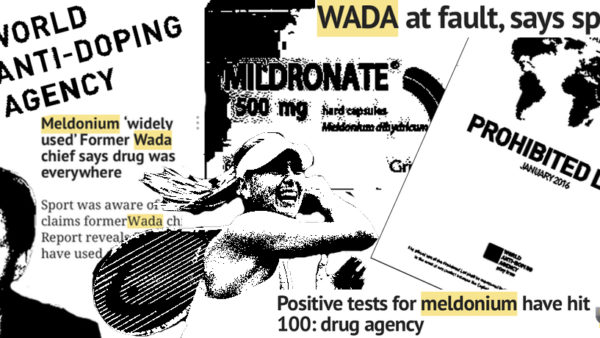
• A hearing into Maria Sharapova’s adverse analytical finding (AAF) for meldonium is expected to be held in London tomorrow, reports The Independent.

• The World Anti-Doping Agency (WADA) will next week announce how it will investigate allegations of systemic doping during the Sochi 2014 Winter Olympics. “We are currently determining our path forward, which we will communicate next week”, a spokesperson told The Sports Integrity Initiative.

Russia is considering criminalising doping, according to local reports. It is understood that a Bill will target coaches, doctors and sellers of prohibited substances.

Nike has reportedly suspended its sponsorship of Liverpool defender Mamadou Sakho, after he was provisionally suspended by FIFA and UEFA for returning an adverse analytical finding (AAF). “We have suspended our relationship with Sakho while the investigation continues”, a Nike spokesperson told the Daily Mail. ‘We will continue to monitor the situation’.

• The Singapore Corrupt Practices Investigation Bureau (CPIB) told the New Straits Times that it is assisting French authorities investigating a €1.8 million payment titled ‘Tokyo 2020 Games Bid’ to Black Tidings Limited, a company owned by Papa Massata Diack, son of former International Association of Athletics Federations (IAAF) President Lamine Diack. French prosecutors said that they had opened an investigation into whether corruption allegations in connection to Tokyo 2020 hold true on Christmas Eve last year.

• The World Olympians Association (WOA) has given its backing to the International Olympic Committee’s (IOC) move to establish an International Sport Integrity Partnership. At the International Anti-Corruption Summit held in London last week, the IOC announced that the body would be launched at an International Forum for Sport Integrity in early 2017.

• Eighteen short-track speed skaters and four coaches have been charged will placing illegal bets by local Korean police, reports the Yonhap news agency.

Footballers call for better conditions for Qatar 2022 workers

FIFPro and the Danish players association, Spillerforeningen, have released a short, powerful film calling for improved working and living conditions for migrant workers in Qatar. The video shows the shocking living conditions endured by many migrant workers building the stadiums for the 2022 FIFA World Cup.

“Working conditions in Qatar are cruel”, says Tom Høgli of FC Copenhagen and the Norwegian national team. “Safety is poor, the wages are horrible. Their Passports are confiscated and in many ways they live like slaves. The football world cannot accept that.” William Kvist of FC Copenhagen and the Danish national team adds: “The fact that thousands must die to build 12 fine stadiums for us has nothing to do with football”.

Construction workers are continuing to die in Qatar. At the end of April, Qatar’s Supreme Committee for Delivery & Legacy (SCDL) launched an investigation after a 48-year old Indian worker on a stadium construction site died following a heart attack. ‘Al Khor Hospital reported the cause of death as cardiac arrest’, read a statement. ‘All relevant authorities were notified and a full investigation is underway’. A Workers Welfare Progress Report, covering April to December 2015, confirms that two other Indian workers have recently died due to heart issues. In October 2015 a 52-year old painter at the Khalifa International Stadium site died after suffering a heart attack and in January 2016, a 55-year old heavy goods driver died after suffering a heart attack. ‘Investigations into both incidents confirmed that work duties were not a contributory factor’, read the report.

Qatar has continually attempted to refute claims that workers are mistreated by claiming that no workers have died on World Cup sites. ‘To date, after more than 14 million hours worked, there have been no fatalities on World Cup project sites – not one’, read a December 2015 statement. ‘It also makes no sense to suggest that all deaths in a population of over a million workers are a result of workplace accidents or conditions’. However, the FIFPro/Spillerforeningen video argues that long working days and tough living conditions combined with heat create serious health issues. “So many die from heatstroke or cardiac arrest, often at night in the camps”, says Mads Øland, Director at Spillerforeningen.

On 22 April, the Fédération Internationale de Football Associations (FIFA) created an oversight body designed to ensure decent working conditions for the workers building the stadiums for the 2022 FIFA World Cup Qatar. FIFA said that the body would include ‘independent members’, however its composition would be ‘led by FIFA’. On 17 March, the International Labour Organisation (ILO) gave Qatar a year to reform its migrant labour laws, or face a full inquiry by the United Nations (PDF below). This followed a warning from the International Trade Union Confederation (ITUC) that 7,000 migrant workers would die by the time the 2022 Qatar World Cup takes place.

Analysis: links between Moscow & Lausanne labs need investigating

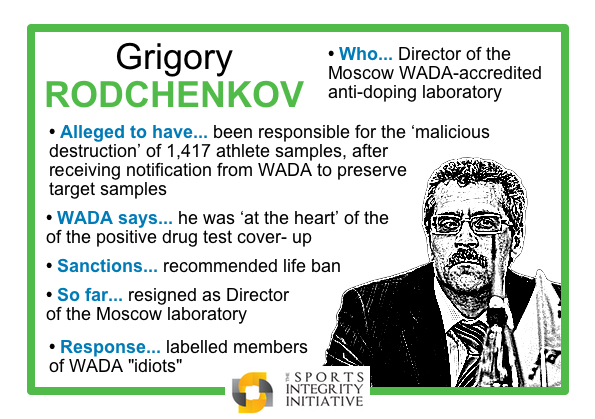
Last week, former Director of the Moscow Laboratory, Grigory Rodchenkov, made astonishing claims that Russia had switched the samples of at least 15 medal winners during the Sochi 2014 Winter Olympics. The World Anti-Doping Agency (WADA) has pledged to investigate his allegations, which have been denied by Russia.

‘During the period of the Olympic Games in Sochi, specialists from different countries under the constant supervision of foreign independent observers were at testing stations and in the laboratory’, read a 13 May statement from the Russian Ministry of Sport. ‘The allegations made by G. Rodchenkov are likely to be an attempt to justify his actions and to shift responsibility on to others’.

The Kremlin told news agency R-Sport that it would support any lawsuit launched by the Ministry of Sport against the New York Times, which published Rodhenkov’s claims. Vitaly Mutko, Russia’s Minister for Sport, is so confident that the Sochi 2014 anti-doping process was correctly conducted that he told R-Sport that all Sochi 2014 samples held in the Lausanne Laboratory should be retested.

Laboratory connections

In its first report on allegations of systemic Russian doping, the WADA Independent Commission found that the Lausanne laboratory had acted contrary to specific instructions by destroying 67 samples WADAprofiles_MSaugysent from Moscow in 2012. It was severely critical of the Director of the Lausanne laboratory, Martial Saugy, reporting that it had ‘not discovered evidence that would support otherwise culpable conduct on the part of the Lausanne laboratory in relation to the destruction of the samples’, but also emphasised that it ‘was not satisfied with’ and ‘did not believe’ the explanations provided by the Saugy as to how the samples came to be destroyed.

Saugy later acted as a paid consultant to the Organising Committee of the Sochi 2014 Olympic Games and/or the Russian Ministry of Sport. As reported by The Sports Integrity Initiative last November, he is pictured at Sochi during the Games alongside Professor Arne Ljungqvist and Dr. Richard Budgett of the International Olympic Committee’s (IOC) Medical Commission, with Natalia Zhelanova of the Russian Ministry of Sport.

Russian federal security service (FSB)

Another startling claim from Rodchenkov in his New York Times interview was that a Russian federal security service (FSB) agent began working at the Moscow Laboratory in 2013, and showed him how to open and re-seal the tamper-proof sample bottles. ‘If the statement of Grigory Rodchenkov is correct, the published case shows a professional, from long hand planned, Russian Secret Service involving, criminal act which has implications not only on the security bottles however affects the entire chain of custody and the related operations’, read a statement from Berlinger, which produces the bottles.

This was not the first time that Rodchenkov had alleged FSB involvement in the Sochi 2014 testing programme. In a 60 Minutes documentary by CBS News, conversations recorded between him and former Russian Anti-Doping Agency employee Vitaly Stepanov allege that the FSB managed the entire testing process, with agents working as Doping Control Officers (DCOs).

His allegation that a rogue FSB agent was working in the Moscow laboratory appears to be corroborated by the WADA Independent Observer (IO) report for Sochi 2014. It found that while all Sochi laboratory staff ‘had been identified in the Laboratory Games Staff list under their ISO 17025 accreditation’, a ‘representative of the Ministry of Sport of the Russian Federation’ who ‘was not a part of the Laboratory Games staff and the IOC Medical Commission’ and ‘whose role was unclear to the IO’ was also present.

Can the Lausanne samples be relied upon?

This is the question that WADA and the IOC will have to ask. Russia has not been alone in calling for the re-testing of Sochi 2014 samples sent from Moscow to Lausanne. Rodchenkov’s revelations came from interviews conducted with Bryan Fogel, who is making a film, Icarus, about doping in sport. Both have written to the IOC and WADA asking them to retest the samples.

However, given the connections between the Moscow and Lausanne laboratories highlighted in this article, can the Sochi 2014 samples held in Lausanne be relied upon? It would be questionable as to whether the strict chain of sample custody required by WADA regulations has remained intact.

The Sochi 2014 IO report found inconsistencies with that chain of custody. ‘During the Sochi Games it was observed that the stickers could be removed from the Sample Collection Forms, indicating a possibility that the sample code could be transferred to another athlete, potentially seriously compromising the integrity of the process’, it reads. ‘The chain of custody process in Sochi, including the transfer of samples to the Laboratory reflected the practice adopted at previous Games. All samples and paperwork were transported and centralised at one of three logistics depot (the ‘Hub’) where they were then redirected to the Laboratory. There were deviations to this agreed approach in that on occasion samples were shipped directly to the Laboratory without going through the Hub.’ Given Rodchenko’s revelations about ‘room 124’ being used to switch samples of listed Russian medal winners through a hole in the wall, these findings now appear damning.

Under Article 6.3.5 of the 2012 International Standard for Testing (IST), which was in force at the time, the anti-doping organisation (ADO) of the country hosting an international event is responsible for the chain of custody. The ADO for the Sochi 2014 Olympics was the Russian Anti-Doping Agency (RUSADA), which was deemed non-compliant by WADA on 18 November 2015. As previously reported by The Sports Integrity Initiative, RUSADA appears to have manipulated its testing figures over a number of years.

Implications for other sports

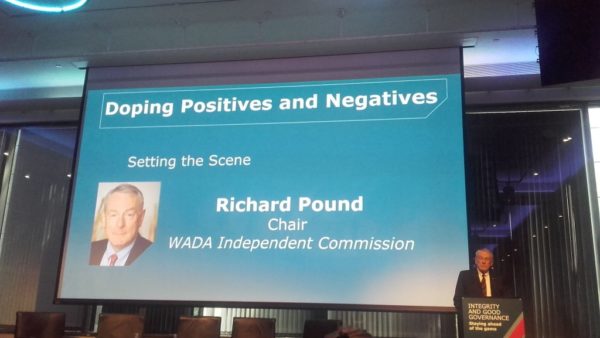
Dick Pound, WADA’s founding President and head of the Independent Commission that produced two reports into allegations of systemic doping in Russia, has said that Rodchenkov will be interviewed and retesting is on the cards. ‘Dr. Rodchenkov’s allegations go far beyond mere presence of the FSB in the Sochi laboratory and point to actual involvement in tampering with test samples’, reads an article he wrote for the Globe & Mail.

While he warns against a witch-hunt against Russia, he also recognises that if Rodchenko’s allegations are found to be true, this could have implications for other sports. ‘While it may be tempting to extrapolate to all other sports, even-handedness requires more substantial proof’, he writes. ‘It is the role of WADA to determine whether such proof exists. On the assumption – and I stress that at this stage it is only an assumption – that WADA is satisfied that Dr. Rodchenkov’s allegations are true, the real challenges begin. WADA will report accordingly to the IOC and to any international sport federation whose athletes may have been involved […] The current elephant in the room is, on the same assumption, what the IOC will decide regarding Russian participation in Rio. This will be a major credibility issue for the IOC and, indeed, for the Olympic Movement as a whole. Will the philosophy of fair play, honesty and the protection of clean (non-doping) athletes prevail? Or will those principles be sacrificed on some “political” altar? Do the rules of sport apply to major countries, or only to smaller countries? Does integrity matter?’

It is understood that the samples were shipped to Lausanne after the Sochi Games had finished. Rodchenko claimed that he manipulated samples of Russian medal winners during the Sochi Games, resealing sample bottles. If this is true, then the samples held at the Lausanne laboratory may also have been manipulated, and re-analysis would only serve to support the Russian assertion that nothing untoward has occurred. Therefore, in order to clear Russian athletes to participate in the Rio 2016 Olympics, a full investigation into the links between the Moscow and Lausanne laboratories is required.

Sports Integrity Briefs – 16 May

• Former Olympic swimming champion Park Tae Hwan (pictured) has filed an appeal with the Court of Arbitration for Sport (CAS), after the Korean Olympic Committee (KOC) imposed an additional three-year suspension, reports Reuters. Park was banned for 18-months by the Fédération Internationale de Natation (FINA) in March last year, however his ban expired on 2 March this year. The KOC regulation means that Park has not been selected for the 2016 Rio Olympics team. In a 4 October 2011 ruling, the CAS nixed Rule 45 of the Olympic Charter, which banned convicted dopers serving a ban of six months or more from the next edition of the Olympics.

• Spain’s Liga de Fútbol Profesional (LFP) is investigating allegations that Rayo Vallecano players accepted money to lose 2-1 to Real Sociedad on 8 May. In a statement, the club confirmed that the LFP was investigating, however denied media accusations that anything had occurred, stating that it is routine for the LFP to investigate any suspicious movement in odds.

• The importance of being able to scientifically prove that meat is contaminated was underlined by a UK Anti-Doping (UKAD) ruling issued on Friday, which banned a rugby union player for two years after he tested positive for clenbuterol. Sam Broster argued that his positive test was the result of eating contaminated biltong. ‘His only evidence on this point was anecdotal, and, though he submitted below that he had retained a piece of the allegedly offending biltong, he had not had it tested because he lacked the means to do so’, read the UKAD decision. ‘Mr. Broster’s anecdotal theories about his consumption of the biltong being the cause of his positive test simply do not reach the level of inquiry or evidence required by the relevant rule provisions or the applicable cases, and the Panel is not satisfied that Mr. Broster has met his burden of proof in this regard’.

Carlos Diego Ferreira has been provisionally suspended by the Ultimate Fighting Championship (UFC), after it received notification of a potential anti-doping rule violation (ADRV) from the US Anti-Doping Agency (USADA). The UFC said it had removed Ferreira from his scheduled bout against Abel Trujillo on 29 May in Las Vegas.

• The World Boxing Council (WBC) has postponed Alexander Povetkin’s heavyweight fight with Deontay Wilder, which was scheduled to take place in Moscow on 21 May. The Russian returned a ‘positive test result’, said the WBC in a statement. It is understood that concentrations of meldonium in Povetkin’s blood are lower than those mandated in the World Anti-Doping Agency’s (WADA) Guidance Statement on meldonium. The WBC said that a ‘final ruling’ would be issued in the coming days.

• The Mexican government has become the latest body to join the Sports Integrity Global Alliance (SIGA), the body launched by the International Centre for the Security of Sport (ICSS) in April. “Following our positive cooperation with the ICSS, Mexico is joining the multi-stakeholder coalition of SIGA to help accelerate the adoption of international standards and best practices that will lay the proper foundation for ensuring a strong future for sport”, said Alfredo Castillo Cervantes, Head of CONADE, the Mexican Government’s authority on sport in Mexico in a statement.

Scala resigns, arguing FIFA has eroded independence of ethics bodies

Domenico Scala has resigned over changes introduced at last week’s FIFA Congress in Mexico city, which he argues eroded the independence of its ethics bodies. Scala’s resignation is in protest at the fact that the new FIFA Council has been given control over who is appointed to FIFA’s independent monitoring bodies, who previously had control over their own staffing.

‘The FIFA Congress has delegated the election, or the dismissal respectively, of the members of the independent supervisory bodies – such as the Ethics Committee, the Appeal Committee, the Audit and Compliance Committee and the Governance Committee – to the exclusive competence of the FIFA Council’, read a statement from Scala. ‘With this decision, it will henceforth be possible for the Council to impede investigations against single members at any time, by dismissing the responsible Committee members or by keeping them acquiescent through the threat of a dismissal. Thereby, those bodies are deprived of their independent and are in danger of becoming auxiliary agents of those whom they should actually supervise’.

FIFA said that Scala had ‘misinterpreted’ the move. ‘The decision was made to permit the Council to appoint members on an interim basis to the vacant positions of the new committees so they can start fulfilling their roles as part of the ongoing reform process until the next FIFA Congress in 2017’, read a statement. ‘In addition, the measure allows for the swift removal of members who have breached their obligations. The Council fully respects the independence of the Audit and Compliance and the Ethics committees, and any suggestions to the contrary are without merit.’

It is understood that the proposal had not been seen by the national associations prior to being presented at Congress, yet despite this, it was voted through 186-1. ‘The Congress authorised the Council to appoint office holders for the remaining vacant positions within the judicial bodies, the Audit & Compliance Committee and the Governance Committee until the 67th FIFA Congress, and to dismiss any office holder of these committees until the 67th FIFA Congress’, it reads.

The 37-member FIFA Council will take over from the 26-person Executive Committee. However, at the moment, its membership is exactly the same as the Executive Committee it is designed to replace. As part of the reform process, the FIFA Congress elected Luís Miguel Poiares Maduro of Portugal and Mukul Mudgal of India to head the independent FIFA Review Committee, which will be responsible for conducting integrity checks on the new Council members. Justice Mudgal headed a committee that in February 2014, delivered its verdict on allegations of spot fixing in the Indian Premier League (IPL), leading to sanctions against two franchise owners, Gurunath Meiyappan and Raj Kundra.

BHA may have to quash rulings due to lawyer’s conflict of interest

The British Horseracing Authority (BHA) may have to quash a number of its disciplinary rulings, after it emerged that a lawyer who has been serving as the Head of disciplinary panels had carried out previous paid work for the BHA. On Friday, Irish trainer Paul Gilligan requested that the BHA’s decision to ban him for six months for breaching race entry rules be put on hold until after the BHA hears Jim Best’s appeal on 24 May against a four-year ban issued for ‘corrupt[ing] a young man to ensure horses were not run on their merits’.

The reason for Gilligan’s request was revealed in the press release relating to his request to stay proceedings until after the Best hearing. ‘One of Mr Best’s grounds of appeal, under para 14.2, is that the hearing that gave rise to the decision was substantially unfair and prejudicial to him in that the Chairman of the Disciplinary Panel, Mr Matthew Lohn, a Solicitor, acts, or has acted, professionally for the BHA’, it reads. ‘Mr Lohn was the Chairman of the Disciplinary Panel that heard Mr Gilligan’s case, and Mr Gilligan has raised the same para 14.2 ground in his notice of appeal’.

At around the time that Lohn was chosen to chair the hearing panel in the Best case, he turned down an approach from the BHA to submit a quote for a complete redraft of the rules of racing, reports The Guardian. The BHA said that it cannot comment on the case until after the Best hearing. Other rulings that could be affected are a three-year ban issued to racehorse owner Anthony Knott for use of inside information and a five-year ban issued to another trainer, Gerard Butler, for doping horses with steroids.

Sam Broster Banned Following Positive Test for Clenbuterol

UK Anti-Doping (UKAD) has confirmed that an English rugby union player, Sam Broster, has been suspended from all sport, for two years, following an Anti-Doping Rule Violation (ADRV).

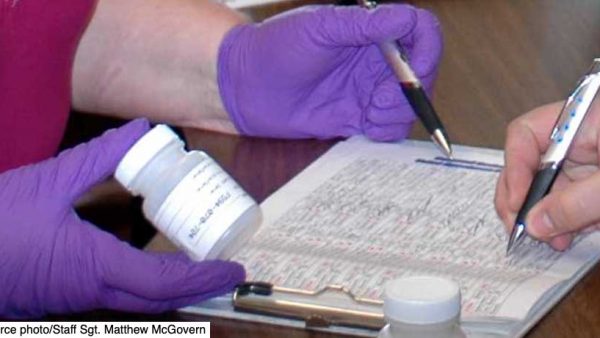
Broster, from Tytherington in Cheshire, tested positive for the presence of the anabolic agent clenbuterol following an out-of-competition test at Macclesfield RUFC on 15 July 2014.

Broster argued that the positive finding had been as a result of eating biltong, a South African form of jerky. However, a RFU Disciplinary Panel concluded that there was no basis for reducing the sanction based on no significant fault or negligence. As a result, Broster has been banned from all sport for two years from 16 August 2014 to midnight on 15 August 2016.

UKAD’s Director of Operations, Pat Myhill said:

“All sportspeople must ensure they are aware of, and adhere to, the principle of ‘Strict Liability’ – they are responsible for how and why a prohibited substance is found in their system.

“Food contamination is a risk athletes need to consider when travelling abroad. Meat is an area of particular risk with clenbuterol as a contaminant, having caused adverse analytical findings in the past. However, proving meat contamination is not straightforward, not least because the meat that has been contaminated will, in most cases, have been eaten. Finding evidence to support this defence can therefore be difficult.”

The full written decision can be found under current rule violations.

For further information on the risk of meat contamination please visit the Clean Sport Blog.

• This media release was originally published by the UK Anti-Doping (UKAD) on 13 May 2016. To access the original, please click here.
Berlinger statement on reported manipulations at Sochi lab

The published article in the New York Times (12th May 2016) is mentioning the exchange of urine in Doping samples and explicitly the high security bottles of the BEREG-KITs.

We therefore clearly state that according to our current knowledge our kits are secure if used according to our users instructions. The kits meet highest product standards and are checked several times before they leave our house. The security system is tested and certified by a neutral, independent laboratory and is specially adopted to the general doping control procedures.

If the statement of Grigory Rodchenkov is correct, the published case shows a professional, from long hand planned, Russian Secret Service involving, criminal act which has implications not only on the security bottles however affects the entire chain of custody and the related operations.

This case is an exceptional situation and as such this needs to be classified. Of course, Berlinger Special AG will provide assistance to support to clarify this case where ever needed.

Andrea Berlinger Schwyter
CEO, President

• This media release was originally published by Berlinger Special AG on 13 May 2016. To access the original, please click here.
NB Berlinger is a Swiss company which produces the self-locking glass bottles used for doping control tests in international competitions, including the Olympics.

Russia substituted urine samples at Sochi 2014 to top medal table

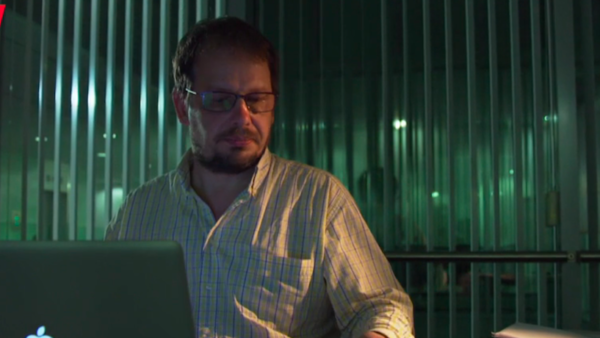
Russia allegedly substituted samples taken from at least 15 medal winners at the Sochi 2014 Olympics using a shadow laboratory – room 124 – which replaced samples with ‘clean’ urine, which was then re-sealed in the ‘tamper proof’ bottles and passed back through a hole in the wall. The claims were made by the former Director of the Russian anti-doping laboratory, Dr. Grigory Rodchenkov, in a series of interviews with film-maker Bryan Fogel, reported by the New York Times.

Earlier this week, Rodchenkov told former Russian Anti-Doping Agency (RUSADA) employee Vitaly Stepanov that four of the 13 gold medals won by Russia at Sochi 2014 were won by athletes on steroids in a ’60 minutes’ documentary for CBS News. His latest claims clarify how, with the help of Russia’s federal security service (FSB), he both doped athletes and replaced up to 100 samples to help Russia win 33 medals at Sochi 2014, more than double the 15 medals (three gold) won at Vancouver 2010.

‘Cocktail’ developed for athletes

Rodchenkov claimed that many athletes in the run-up to the London 2012 Olympics and throughout the Sochi 2014 Winter Olympics utilised a ‘cocktail’ of three drugs he had developed involving metenolone, oxandrolone and trenbolone – all steroids. The drugs were dissolved in alcohol to speed up absorption and shorten the detection period – Chivas whisky for men and Martini for women – using a precise formula; one milligram of steroid for every millilitre of alcohol.

He also named athletes he had helped in this way. They included 14 members of the country’s cross-country ski team as well as gold medal winners Alexander Legkov (50km freestyle cross country skiing), bobsledder Alexander Zubkov and Alexander Tretiakov (skeleton). Rodchenkov also claimed that the women’s ice-hockey team doped throughout the Games.

Rodchenkov said Sochi was the apex of a decade-long effort to perfect Russia’s doping strategy. “We were fully equipped, knowledgeable, experienced and perfectly prepared for Sochi like never before”, he said in the interviews, reported the New York Times. “It was working like a Swiss watch”.

Spreadsheet of doped athletes & bottle opening

Rodchenkov provided the New York Times with a spreadsheet of doped athletes he alleges was given to him by the Russian Ministry of Sport on 21 January 2014, before the Sochi Games. He alleges that he was instructed to substitute their samples if they won a medal. Eleven of the 33 medals won at Sochi 2014 were won by athletes on the spreadsheet.

Rodchenkov claims that before the start of the Sochi Games, an FSB agent presented him with a previously sealedWADAprofiles_GRodchenkov sample bottle that had been opened, with its uniquely-numbered cap
intact. “When I first time saw that bottle is open, I did not blieve my eyes”, he said. “I truly believed this was tamper proof”. Berlinger produces the athlete sample bottles generally used for urine samples in sport, which it advertises as tamper proof.

This FSB agent could have been the mysterious Russian agent identified in the World Anti-Doping Agency’s (WADA) Independent Observer report on Sochi 2014. It found that while all Sochi laboratory staff ‘had been identified in the Laboratory Games Staff list under their ISO 17025 accreditation’, a ‘representative of the Ministry of Sport of the Russian Federation’ who ‘was not a part of the Laboratory Games staff and the IOC Medical Commission’ and ‘whose role was unclear to the IO’ was also present.

Sample destruction & letter

The Moscow laboratory was suspended in November last year, after Rodchenkov admitted destroying 1,417 samples (page 13 of the first report of the WADA Independent Commission). It also found that the Lausanne Laboratory had acted contrary to specific instructions by destroying 67 samples sent from Moscow in 2012.

However, in November last year, the Sports Integrity Initiative uncovered that Martial Saugy, Director of the Lausanne Laboratory, acted as a paid consultant to the Organising Committee of the Sochi 2014 Olympic Games and/or the Russian Ministry of Sport. As reported, he was in Russia during the Games. ArneLjungvistBlogHe was even pictured in Sochi on Ljungqvist’s blog with Chairman of the International Olympic Commission (IOC) Professor Arne Ljungqvist and Natalia Zhelanova, then head of the Anti-Doping Division of the Russian Ministry of Sport.

WADA’s IC was severely critical of Saugy’s actions in its first report. It reported that it had ‘not discovered evidence that would support otherwise culpable conduct on the part of the Lausanne laboratory in relation to the destruction of the samples’, but also emphasised that it ‘was not satisfied with’ and ‘did not believe’ the explanations provided by the Saugy as to how the samples came to be destroyed.

The samples transferred to Lausanne from Moscow in 2012 take on extra significance because Fogel and Rodchenkov have written to the IOC and WADA asking them to re-analyse samples transferred from Moscow to Lausanne. Rodchenkov’s latest revelations will re-open questions as to how much the Lausanne laboratory knew about what was going on in the Moscow laboratory, and whether it was complicit.

Russia’s response

The Kremlin labelled Rodchenkov’s allegations as “slander from a defector”. Russian Minister for Sport, Vitaly Mutko, also dismissed Rodchenko’s claims as a deliberate attack on Russian sport. “Information attacks against the Russian sports are still underway”, he told news agency TASS. “It reminds me of a relay, when a baton is passed from one foreign media source to another one. These are all links in a single chain. There is nothing behind it in fact. There are no facts.”

However, Rodchenko’s revelations reveal that manipulation at the Moscow laboratory had been going on since 2004 – from prior to the London 2012 Olympics to Sochi 2014, which he claimed represented the apex of a decade’s work. In March, the Sports Integrity Initiative reported how RUSADA had been manipulating test figures – specifically from 2009 until 2012. It appears that many sports over the passage of time could have been affected by corruption within the Russian anti-doping system, giving the lie to the claim that this is a problem confined to athletics.

A Russian witch hunt?

On 17 June, the International Association of Athletics Federations (IAAF) Council will decide whether it can re-admit Russia ahead of the Rio 2016 Olympics at its Vienna meeting. At the Sports Resolutions conference last week, UK Athletics Chairman Ed Warner said that it would be unfair to ban just Russian athletics, since other sports were also tested by RUSADA using the Moscow laboratory during the period in question. Rodchenkov’s claims will add support to those calling for a full ban on Russian athletes competing at Rio 2016.

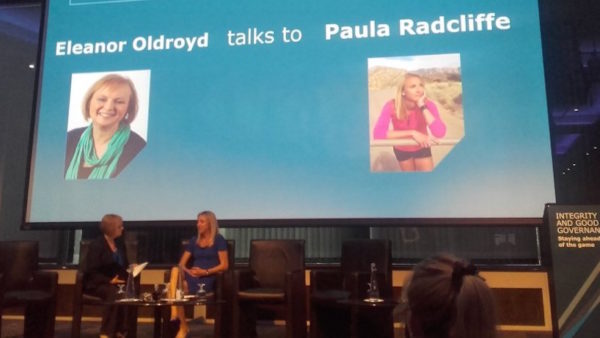
“If we ban Russian athletics from Rio, then we are giving them an Olympic cycle to come back prepared”, said Marathon world record holder Paula Radcliffe at the Sports Resolutions conference. “Do they even know how to train for the Olympics without drugs?”

The danger with this approach is that clean athletes will face punishment for the actions of officials. Yuliya Stepanova, one of the whistleblowers who alerted the world to what was going on in Russia in December 2014, has petitioned the IAAF Council to compete as an independent athlete at Rio 2016. However, banning some Russians but not others may result in accusations of unfairness.

Evidence has been uncovered that the International Olympic Committee (IOC) has been discussing the situation with the IAAF at April’s SportAccord convention. Key to this discussion should be the word favoured by the WADA IC: ‘systemic’. Making innocent athletes pay for the actions of officials is not the answer.

In a recent editorial, WADA President Sir Craig Reedie wrote about using a percentage of television and sponsorship revenue to pay for anti-doping. Dick Pound, Chairman of the WADA Independent Commission, has also spoken about the idea of forcing those being investigated by WADA to pay for the costs of that investigation, if wrong-doing is identified. Russia is hosting the 2018 World Cup. Perhaps now is the time to start talking to FIFA…

Tokyo 2020: payments were ‘legitimate consultant’s fees’

The news agency Reuters has reported that members of the Tokyo 2020 Olympic Bidding Committee have said that payments to Papa Massata Diack, son of former International Association of Athletics Federations (IAAF) President Lamine Diack, were ‘legitimate consultant’s fees’. According to Reuters, the statement by Bidding Committee ex-president Tsunekazu Takeda and ex-director general Nobumoto Higuchi said that the ‘properly contracted’ payments made to Black Tidings Limited, the company owned by Diack, were ‘fully audited by Ernst & Young ShinNihon LLC’.

According to other media reports, Olympic Bidding Committee members have said that the fees related to ‘planning, presentation, & lobbying’ and that the ‘activity by the Tokyo bid Committee was at all times fair and correct’.

On Thursday French financial prosecutors confirmed that they were investigating two financial movements during the months of July and October 2013, totalling S$2.8 million [€1.8 million at current exchange rates] under the title ‘Tokyo 2020 Olympic Games Bid’ from an account at a Japanese bank for the benefit of ‘Black Tidings’ in Singapore’.

On news of the investigation, the Tokyo 2020 Organising Committee, which is distinct from the Bidding Committee, distanced itself from the allegations. ‘The Tokyo 2020 Organising Committee is not itself involved in this, as it concerns the bidding process and those who worked at the bid committee’, read a statement on Thursday afternoon. ‘The Organising Committee’s understanding of the contents of [The Guardian’sreport is quite different’.


WADA: Kenyan NADO non compliant, Polish on watch list, RUSADA update

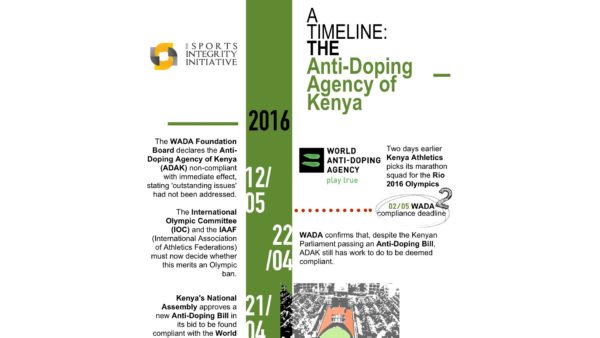
In keeping with the enhanced compliance process under the 2015 Code, the Foundation Board declared the Anti-Doping Agency of Kenya (ADAK) non-compliant with immediate effect. The Kenyan authorities had been given a series of deadlines to introduce a parliamentary bill, policy and rules for the ADAK; however, following a 2 May meeting, WADA’s independent Compliance Review Committee (CRC) confirmed that the outstanding issues had still not been addressed and so made the recommendation of non-compliance to the Board. As in all cases of non-compliance, WADA will now hand the decision over to its stakeholders, the International Olympic Committee (IOC) and UNESCO for their consideration and action.

The Polish Commission Against Doping in Sport [Poland’s National Anti-Doping Organization (NADO)] was added to WADA’s compliance ‘watch list’. The Commission was given a deadline of 12 August to pass Code compliant rules; and, 12 September to resolve the issue of their result management process or face an immediate declaration of non-compliance. Meanwhile, the NADO of Andorra was removed from the list of non-compliant Code signatories.

The Board was provided a status update regarding current testing in Russia that highlighted some limitations with its program. This update caused some alarm with members as to whether or not athletes could be assured that Russians were being properly tested in the lead up to Rio.  When asked his view, Reedie said: “There is clearly still a long road ahead for RUSADA; and, this update indicates that much work needs to be done; however, now that WADA has two independent experts in place, I feel much more confident that the issues we are currently facing will be addressed without delay.”

IOC statement on UK Anti-Corruption Conference

The International Olympic Committee (IOC) presented its initiatives in the fight against corruption at the International Anti-Corruption Summit organised by British Prime Minister David Cameron on Thursday in London. IOC Member and President of the International Paralympic Committee, Sir Philip Craven chaired a panel on sport and was joined by the IOC’s Chief Ethics and Compliance Officer, Pâquerette Girard Zappelli, at the conference. The summit adopted a “Global Declaration Against Corruption”.

“Corruption is at the heart of so many of the world’s problems. We must overcome it if our efforts to end poverty, promote prosperity and defeat terrorism and extremism are to succeed,” the declaration reads. “Today’s Summit has demonstrated the deep commitment of a significant number of countries, businesses and members of civil society to work together to tackle this scourge.” Read the full declaration here.

The conference issued a communiqué that said: “We welcome the work of the international sports organisations to strengthen openness and improve governance so that they meet global best practice. We urge them to achieve the highest global standards and regain public trust through a culture of good governance. We recognise the autonomy of international sports organisations conferred under national laws. We believe this must be exercised responsibly and be earned by continually demonstrating good governance in a spirit of openness.” The conference specifically welcomed the initiative of the IOC to launch “an International Sport Integrity Partnership in the margins of a meeting of the International Forum for Sport Integrity in Lausanne in early 2017.” Read the full communiqué here.

The aim of the conference was to galvanise a global response to tackle corruption in all areas of society. As well as agreeing to a plan of action to tackle corruption in all its forms, the conference dealt with issues such as corporate secrecy, government transparency, the enforcement of international anti-corruption laws, and the strengthening of international institutions. It brought together world leaders and representatives from business and civil society.

IOC President Thomas Bach said: “We appreciate that this summit has acknowledged the efforts of the IOC and sports organisations. The IOC has all the instruments in place and the resolution to fight effectively against corruption. But like any other organisation we are not immune to wrongdoing. In such cases we have a proven record of swift action. The reforms of Olympic Agenda 2020 have strengthened our position to implement our zero tolerance policy in this respect. As welcomed by the Summit, we will take the fight against corruption further by launching the International Sports Integrity Partnership.”

IOC Chief Ethics and Compliance Officer Girard Zappelli said: “We used this opportunity to present all the measures undertaken by the IOC in the fight against corruption. Through Olympic Agenda 2020 the position of the IOC Ethics Commission has been strengthened and transparency has been increased. This includes a Consultants Register for the Olympic Games Bid Process and many other measures. We have proven that we are actively fighting against corruption. For instance, the IOC took immediate action against Lamine Diack already in November 2015 when the first allegation arose against him. As a result of our action he no longer has any position in the IOC. Nevertheless, we continue to actively look into the matter and have become a civil party to the French investigation.”

• This media release was originally published by the International Olympic Committee (IOC) on 12 May 2016. To view the original, click here.

French prosecutors investigating Tokyo 2020 bid payment

French financial prosecutors have confirmed that they are investigating a payment titled ‘Tokyo 2020 Olympic Games Bid’ made to Black Tidings Limited, a company owned by Papa Massata Diack, son of former International Association of Athletics Federations (IAAF) President Lamine Diack. ‘In December 2015, as part of the corruption case relating to concealment within the IAAF of doping cases involving Russian athletes, the PNF was informed of two financial movements during the months of July and October 2013, totalling S$2.8 million [€1.8 million at current exchange rates] under the title ‘Tokyo 2020 Olympic Games Bid’ from an account at a Japanese bank for the benefit of ‘Black Tidings’ in Singapore’, read a statement from the Parquet National Financier (PNF), reported in Le Monde.

The PNF said it had opened an investigation on Christmas Eve 2015 ‘against unnamed persons relating to charges of active bribery, passive bribery, aggravated money laundering, concealment committed by an organised gang and participation in conspiracy by association in order to determine the nature of such transactions, and to verify if the corruption and money laundering allegations committed at the behest of the host city of the 2020 Olympic Games factually hold true’. Tokyo 2020 attempted to distance itself from the allegations. ‘The Tokyo 2020 Organising Committee is not itself involved in this, as it concerns the bidding process and those who worked at the bid committee’, read a statement. ‘The Organising Committee’s understanding of the contents of [The Guardian’s] report is quite different’.

In March, French prosecutors widened the scope of their investigation to include awarding of the Rio 2016 Olympic Games and the Tokyo 2020 Olympic Games; to include the award of the the 2021 World Athletics Championships to Eugene, Oregon; to include allegations of corruption in connection to the 2006 IAAF Athletics World Cup; allegations concerning the award of the 2017 World Athletics Championships to London and the 2019 edition to Doha. However, this is understood to be the first time that Back Tidings has been linked to alleged corruption involving bidding for sporting events.

If such corruption is proven, it could implicate both the IAAF and the International Olympic Committee (IOC), which has pinned its Olympic Agenda 2020 and the declaration of good governance that goes with it to the Tokyo Games. In January, the second WADA Independent Commission (IC) report linked Black Tidings to Ian Tan Hong Han, who was a consultant to a Switzerland-based subsidiary of Dentsu. A year before he was arrested, Lamine Diack extended the IAAF’s marketing contract with Dentsu until 2029. In July last year, the IOC awarded the exclusive broadcast rights in 22 Asian countries to Dentsu covering both summer and winter Olympic Games from 2018 to 2024. Black Tidings in Hindi means Black Marketing or to Launder Black Money’, reads a footnote from the second WADA IC report. Both bodies will need to explain the circumstances under which Dentsu was awarded those deals.

The second WADA IC report found evidence that Black Tidings had been involved with channelling money connected to attempted concealment of positive doping tests. It includes evidence that distance runner and 2010 London Marathon winner Liliya Shobukhova was extorted to the tune of €450,000 to allow her to compete in the London 2012 Olympics, with a first payment of €150,000 going to ‘the lawyer’. A company called ‘Black Tidings’, associated with Papa Massata Diack, later returned €300,000 to Shobukhova and her husband. This ties in with evidence given to the IAAF Ethics Commission and indicates that Habib Cissé, Lamine Diack’s former lawyer, was paid for facilitating the delay of an announcement regarding a positive test.