

Analysis: Ten Romanian athletes report meldonium positives

The Romanian Olympic committee (COSR) has announced that ten athletes have recently tested positive for meldonium, while Le Monde reports that Belarusians Aliaksandr and Andrei Bahdanovich also tested positive. The brothers took gold in the C2 1,000m at the Beijing 2008 Olympics and silver at the London 2012 Olympics in the same event.

The ten athletes identified by the COSR include Leonid Carp, who has qualified for the C1 1,000m and C2 1,000m at the Rio 2016 Olympics. His partner for the C2 1,000m is Stefan Strat, who also features on the COSR list. The pair were also both members of the C4 1,000m team that took gold at the Canoe Sprint World Championships last year.

Also on the COSR list are Petrus Gavrila and Traian Neagu, who both competed in the K4 1,000m at the London 2012 Olympics, finishing in eighth place. Gavrila competed with Catalin Turceag and Daniel Burciu – who also feature on the COSR list – at the Canoe Sprint European Championships last year, finishing in eighth place.

Also listed is multiple medalist Liviu Lazar Dumitrescu; Constantin Mironescu, who was part of the team that reached the final of the K4 1,000m at the Baku 2015 European Games; Elena Meroniac, who took silver in the K2 500m in Baku; and Daniela Stanciu, who competes in the high jump. The COSR held a meeting today to discuss the situation.

According to Le Monde, the Bahdanovich brothers were two of five meldonium positives occurring as a result of testing carried out on the Belarusian canoeing team, who were staying at the Centre Omnisports at Temple-sur-Lot.

Alexander Povetkin

The B sample of Alexander Povetkin has confirmed that the concentration of meldonium in the boxer’s serum is less than the World Anti-Doping Agency (WADA) mandated lower limit of 1 μg/mL. Russian news agency Tass reports that the concentration of meldonium in Povetkin’s sample is 0.07 μg/mL, which means that under WADA’s Guidance Notice, the case should not proceed. The World Boxing Council (WBC) has yet to announce a final decision on Povetkin’s case.

WADA excretion studies

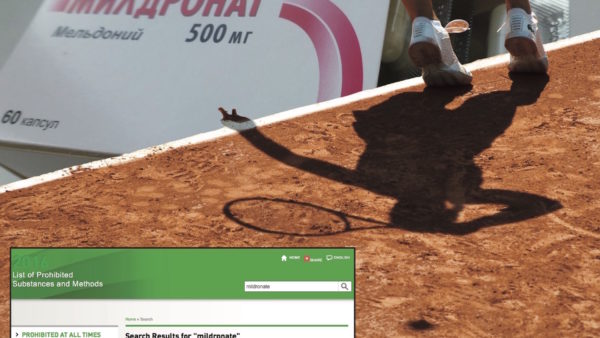
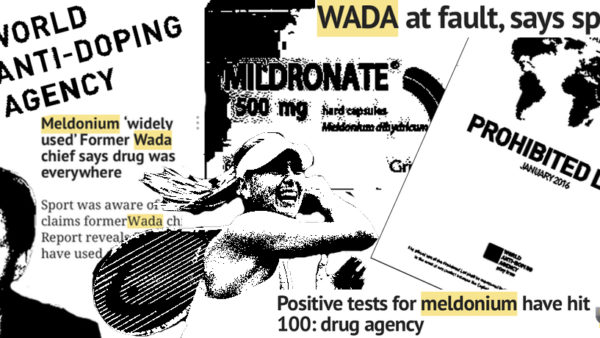
WADA has already confirmed that its laboratories are conducting studies on the excretion times for meldonium. The first  of these was published on 4 May and was performed on ‘two healthy male volunteers’ (not elite athletes) and found that meldonium exited the body in two phases – a rapid phase followed by a slower elimination phase. It could provide some support for athletes who have tested positive for meldonium, but claim to have stopped taking it before the 2016 Prohibited List came into effect on 1 January.

‘According to literature data, the estimated half-life (t1/2) of meldonium during the initial rapid elimination phase is 5–15 h’, it reads. ‘The results of this pilot study suggest the existence of a subsequent second and substantially slower elimination phase, attributed to a proposed incorporation of meldonium into erythrocytes. The administration of a single oral dose of meldonium was detected in human urine for up to 49 days using established doping control analytical approaches and in DBS for at least 16 days. In consideration of the multi-dose administration data and reported accumulation effects regarding meldonium and the aforementioned results that suggest the incorporation of the drug into erythrocytes allowing for sustained liberation WADAprofiles_VMutkoduring eryptosis, detection windows after long-term administration of high but yet therapeutic amounts of meldonium span over several weeks and might even extend to months.’
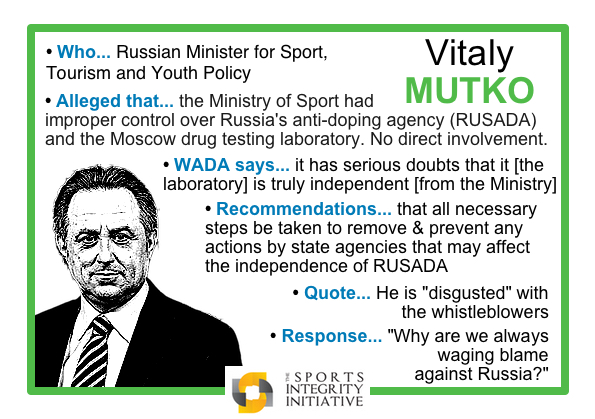
In April, WADA said that there have been 172 meldonium positives since the 2016 Prohibited List was introduced on 1 January. Russia’s Minister for Sport, Vitaly Mutko, expects WADA to complete its studies into the excretion times for meldonium in mid-June, he said on Match TV (Матч ТВ). “Up to now, no one can figure it out”, said Mutko, reports Interfax. “It may be concealing itself and hiding in the organism between six and seven months”. If Mutko is right and WADA’s research finds that meldonium can remain in the body for six or seven months, then all meldonium cases would have to be cancelled, as its ban only came into force six months ago.

Posted in UncategorisedTagged

Sports Integrity Briefs – 31 May 2016

• The Tennis Integrity Unit has issued a statement to The Wall Street Journal confirming that four mixed-double players, investigated over alleged match-fixing at this year’s Australian Open, have been cleared. During the tournament the four players featured in a doubles match in which bookmakers stopped taking money on due to high levels of irregular betting activity.

• The Union Cycliste Internationale (UCI) today said it will be taking no further action against Sergio Henao, after the Athlete Passport Management Unit (APMU) requested further information from the Team Sky rider about his Athlete Biological Passport (ABP) values on 20 April. As reported by The Sports Integrity Initiative, Team Sky withdrew the Colombian from racing after the Cycling Anti-Doping Foundation (CADF) contacted him about his ABP readings between August 2011 and June 2015. It is understood that the APMU were satisfied with Henao’s contention that the readings were a normal response to his returning to Colombia in winter, where he lives and trains at altitude.

• The international basketball federation (FIBA) and Euroleague Commercial Assets (ECA) have been “cooperating with the European Union” regarding the ongoing argument over European club competitions, said FIBA Europe President Turgay Demirel in a statement. In an earlier statement, FIBA said that national federations had ‘reacted positively’ to its 20 March decision to sanction any national federation that allows its clubs to participate in the ECA-run Euroleague with a ban from international competition.

Genius Sports has signed a deal with the Belarusian basketball federation (BBF) that will allow it to distribute all its data to the global betting market. In return, Genius Sports will provide its Sports Integrity Monitor services to the BBF.

• The World Boxing Council (WBC) announced that Lucian Bute has tested positive for ostarine, an anabolic agent prohibited by section S.1 of the World Anti-Doping Agency’s (WADA) Prohibited List. The super middleweight boxer, who tested positive at his championship fight with Badou Jack on 30 April, told the Canadian Press that he did not intend to take a prohibited substance, but admitted taking supplements and switching his training team a year ago.

• New South Wales police expect to issue further warnings to National Rugby League (NRL) players this week, as concerns grow over possible links to organised crime, reports the Daily Telegraph. Last week, Parramatta Eels player Corey Norman was charged with drugs offences after capsules of MDMA (ecstasy) were seized from him. The charges came after police warned Norman, team-mate Junior Paulo and James Segeyaro of Penrith Panthers for consorting with criminals. The Eels have since released Paulo, and Segeyaro has reportedly been dropped from the Panthers’ first team.

• The satirical current affairs magazine The Private Eye has revealed that a World Anti-Doping Agency (WADA) report into the International Boxing Association (AIBA) found that it ‘fell considerably short’ in meeting the requirements of the World Anti-Doping Code and ‘in protecting the sport and its clean athletes from the risk of doping’. AIBA is the world governing body for amateur boxing, which competes at the Olympics. According to the report, AIBA had ‘conducted virtually no out-of-competition tests in the past three years and none at all last year’. According to Boxing News, it is unlikely that boxing will be barred from the Olympics as WADA has said that it ‘does not have the jurisdiction or the power to take such decisions’.

• German newspaper the Frankfurter Allgemeine Zeitung has published a series of leaked recordings in which newly-elected FIFA President Gianni Infantino appears to encourage a plot to remove Audit and Compliance Committee Chairman Domenico Scala. According to the recordings, Infantino proposed to a meeting of FIFA’s Congress earlier this month that the FIFA Council be given the power to remove heads of its Independent Committees without putting it to a vote of the 211 Member Associations. FIFA has reportedly labeled the allegations as ‘ludicrous’ and ‘unfounded’.

• The Australian Sports Anti-Doping Agency (ASADA) told ABC that budget cuts of 20% would lead to a drop in staff levels from 78 in 2014, to 50 in 2017.

• UEFA have decided not to extend Liverpool defender Mamadoi Sakho’s 30-day suspension. In April, Sakho returned an adverse analytical finding (AAF) and was provisionally suspended by both UEFA and FIFA for 30 days. However the BBC reports that UEFA’s Disciplinary Committee will be making a decision on his case in the next few days and in the meantime will not extend his ban, which ended on Sunday.

• Dulwich Hamlet FC, a semi-professional club who play in the regional Isthmian League, have reportedly signed Ibrahim Kargbo, a footballer banned from playing football in The Netherlands over match-fixing allegations. Kargbo, a former Sierra Leone captain, was given a life ban earlier this year after an investigation by the Integrity Unit of the Royal Dutch Football Association (KNVB) found that he had colluded in fixing both domestic and charity matches involving Sierra Leone’s national team.

• Brentford football player Alan Judge has been issued with a reprimand by the Football Association (FA) after he was found to have breached The FA’s Anti-Doping Regulations. Judge was charged after the presence of Salbutamol (which can enter the body through the use of asthma inhalers), was found in his is body above the WADA permitted threshold.

Analysis: 8 of 23 London 2012 positive retests are Russian

The Russian Olympic Committee (ROC) has issued a statement confirming that eight Russian athletes have returned positive tests for banned substances following the re-testing of samples from the London 2012 Olympics.

Last week the International Olympic Committee (IOC) announced that 23 of the 265 London 2012 samples re-tested returned an Adverse Analytical Finding (AAF), as reported by The Sports Integrity Initiative. The ROC said that, following an official notification from the IOC, eight of the 23 positive A samples belonged to Russian athletes.

Olympic Retesting Russia

Interestingly, while the IOC announced that these 23 positive tests had resulted in full AAFs, meaning that both an athlete’s A sample and B sample had tested positive, the ROC announcement said that only the A samples had shown positive results.

If analysis of an athlete’s B sample matches the A sample analysis, then AAFs will be issued to those athletes concerned. The athletes will then be given the chance to explain how a prohibited substance ended up in their system. If they cannot, then an anti-doping rule violation (ADRV) will be issued.

The ROC said that it will now cooperate in the IOC’s analysis of the B samples. According to the ROC, in accordance with the IOC’s Anti-Doping Rules and those of the World Anti-Doping Code, it will not disclose the names of the athletes until analysis of those B samples and the start of the subsequent disciplinary procedures.

The news comes just days after it was revealed that fourteen Russians are amongst the 31 retrospective positives announced from the IOC retests of 454 ‘selected’ doping samples taken at the Beijing 2008 Olympics. In this instance the IOC is yet to issue an AAF to any of the 31 athletes as it confirmed that analysis of the athletes’ B samples will only take place at the start of June.

IOCretestsVwada

The Beijing 2008 retests show that 7% resulted in positive tests, and 8.7% of those from the London 2012 Olympics. Both sets of retests are higher than the 1% of AAFs typically reported, according to the World Anti-Doping Agency’s (WADA) 2014 testing figures.

The ROCs respective statements reveal that 35% of the London 2012 retest positives belonged to Russian athletes, compared with 45% of those from the Beijing 2008 Olympics. Russian athletics is currently excluded from taking part in the Rio 2016 Olympics, as its membership of the IAAF has been suspended. The IAAF’s Council meets in Monaco on 17 June where it will be deciding if Russian athletics has done enough to be readmitted.

After the initial announcement of the fourteen Russian positives from the 2008 Beijing Olympics, Russia’s Minister for Sport Vitaly Mutko told journalists, “I don’t think the IAAF has any grounds not to restore our team to competition for the Rio Olympics.”

However following the London 2012 Olympics doping revelations, Mutko has said that he would be taking ‘full responsibility’. According to Russian news agency TASS, Mutko said ‘I have never avoided taking the blame since I am fully responsible for the development and implementation of the sports policies.

‘In case something goes wrong I bear the full responsibility and do not intend to go into hiding.’

Meanwhile, Russian pole vaulter and two-time Olympic gold medalist Yelena Isinbayeva has said that she is getting “increasingly angry” at being “punished because of other people’s mistakes”. Speaking in an interview with Russia Today, Isinbayeva said that it was unfair that Russia was currently suspended from competing at the Olympics, claiming instead that doping is a “global issue” and that if the IAAF failed to “open their eyes and look in other directions”, it would amount to a “a deliberate campaign against Russia”.

According to insidethegames.biz, Isinbayeva said that there was ‘systematic doping’ occurring in other countries, implicating in particular the USA, UK, Germany and Kenya. Last week Isinbayeva told the Press Association that she planned to file a complaint with the European Court of Human Rights (ECHR) if she is prevented from competing at the Rio 2016 Olympics.

UKAD Welcomes London 2012 Sample Reanalysis

UK Anti-Doping (UKAD) today welcomed the news from the International Olympic Committee (IOC) that reanalysis of the “A” samples from 23 athletes in five sports and from six National Olympic Committees (NOCs) who competed at the Olympic Games London 2012 has returned Adverse Analytical Findings (AAFs).

In total, 265 selected doping samples from the London 2012 Olympic Games were reanalysed, all based on intelligence-gathering that began in August 2015. The reanalysis programme is ongoing, with the possibility of more results in the coming weeks.

UKAD’s Director of Operations, Pat Myhill said: “UKAD welcomes the news that the IOC has reanalysed samples from both the Beijing and London Olympic Games. The ability to retest samples, as a result of new intelligence or the development of new testing techniques, is a vital tool in the fight against doping in sport.

“Retrospective analysis allows us to pursue those who cheat clean athletes, long after the competition has ended. It sends a clear message to those who dope – if you chose to make that choice, and think that you’ve got away with it, think again. We can, and will, catch you.

“Doping has a huge impact on the clean athletes – it takes away once in a lifetime opportunities. We can never replace those memories, but we can do our best to ensure that individuals who choose to steal those moments are caught and punished accordingly, and that clean athletes are rightly awarded the titles they train so hard to achieve.”

• This media release was originally sent by email by UK Anti-Doping (UKAD) on 27 May 2016. 

Analysis: 23 London 2012 sample retests return an AAF

The International Olympic Committee (IOC) today announced that 23 of the 265 London 2012 samples re-tested returned an adverse analytical finding (AAF). The 23 AAFs involved six National Olympic Committees (NOCs) and five sports, in comparison to 12 NOCs and six sports identified by the Beijing 2008 retests.

Interestingly, 8.7% of the London 2012 samples returned an AAF, higher than the 7% of the 454 Beijing 2008 retests (the IOC also announced today that one more Beijing 2008 sample had returned an AAF, brining the total to 32 of 454 retests). Both sets of retests are higher than the 1% of AAFs typically reported, as illustrated by the World Anti-Doping Agency’s (WADA) 2014 testing figures (see table).

However, to complicate the statistics, some of the AAFs from the London 2012 retests could involve the same athletes identified in the retests of the Beijing 2008 samples. “Some of them are the same”, IOC President Thomas Bach revealed in a teleconference call last week. “Athletes who participated in Beijing and London, and may qualify for Rio”.

Interestingly, the IOC felt confident in announcing that the London 2012 retests had resulted in 23 AAFs, stating: ‘The athletes, NOCs and IFs concerned are already being informed, after which the proceedings against the athletes can begin’. With the Beijing 2008 retests, it was only able to announce that ‘up to 31’ athletes had tested positive. The IOC’s Medical and Scientific Director, Dr. Richard Budgett, later revealed that the B samples of the Beijing retests had yet to be analysed and therefore, full AAFs could only be announced “in early June”.

The IOC has already confirmed that if any of the retest AAFs involve a medallist, further retests would be required before any medals are reallocated. “A positive case involving a medalist may then lead to another retest of another athlete who would theoretically feature in the medal ranking”, said Bach. “Only then, when we have the result of this other retest, then we would decide about the reallocation of medals.”

In individual sports this is fairly straightforward, however in team sports this may require reanalysis of samples taken from an entire team. If a gold medallist is identified in a team sport, this could result in a potentially huge reanalysis programme, especially if that reanalysis uncovers further positives.

Posted in UncategorisedTagged

Reanalysis reveals banned substances in 23 ‘A’ samples from London 2012

The International Olympic Committee (IOC) announced today that reanalysis of the ‘A’ samples from 23 athletes in five sports and from six National Olympic Committees (NOCs) who competed at the Olympic Games London 2012 has returned Adverse Analytical Findings (AAFs). In total, 265 selected doping samples from the Olympic Games London 2012 were reanalysed, all based on intelligence-gathering that began in August 2015. The reanalysis programme is ongoing, with the possibility of more results in the coming weeks.

Last week, the IOC announced that up to 31 athletes could be banned from competing at the Olympic Games Rio 2016 after the reanalysis of 454 samples from the Olympic Games Beijing 2008. In the meantime, one more sample from Beijing 2008 has shown abnormal parameters, which the IOC, with the respective International Federation (IF), will also follow up.

“These reanalyses show, once again, our determination in the fight against doping”, said IOC President Thomas Bach. “We want to keep the dopers away from the Olympic Games in Rio de Janeiro. This is why we are acting swiftly now. I have already appointed a disciplinary commission, which has the full power to take all the decisions on behalf of the IOC.”

The reanalysis of samples from Beijing 2008 and London 2012 was performed using the very latest scientific analysis methods. They are part of the IOC’s efforts to protect the clean athletes by keeping dopers away from the Olympic Games Rio 2016 and protecting the integrity of the competition. The reanalysis follows work with the World Anti-Doping Agency (WADA) and the IFs, which started already in August 2015. It was mainly focused on athletes who could potentially participate in the Olympic Games Rio 2016.

The athletes, NOCs and IFs concerned are already being informed, after which the proceedings against the athletes can begin. All athletes found to have infringed the anti-doping rules will be banned from competing at the Olympic Games Rio 2016.

• This media release was originally published by the International Olympic Committee (IOC) on 27 May 2016. You can access the original by clicking here.

IOC ‘discussing’ how athletes from ‘contaminated’ federations could compete

The International Olympic Committee (IOC) is discussing how athletes from ‘contaminated’ federations could be allowed to compete at the Rio 2016 Olympics, after IOC President Thomas Bach suggested the possibility last week. The IOC said that it was unable to give details about how such a system might operate in practice, “as the process is currently under discussion”.

The topic has become a tricky point for both the IOC and the International Association of Athletics Federations (IAAF), after Yuliya Stepanova asked the IAAF Council to consider if she could be ruled eligible to compete in Rio. Stepanova and her husband famously blew the whistle on the systemic doping that was occurring in Russian athletics back in December 2014. It would be embarrassing for both bodies if the very athlete that blew the whistle on systemic Russian doping is banned from the Olympics.

Last week the IOC also asked the World Anti-Doping Agency (WADA) to investigate allegations that the laboratory used for the Sochi 2014 Winter Olympics may have been corrupted. As Thomas Bach pointed out, this raised the possibility that other sports may have been contaminated. This has not gone unnoticed by national anti-doping agencies in Canada, the US and Switzerland, who have called for all Russian athletes to be banned from Rio – not just track and field athletes.

WADA today clarified that Richard McLaren would present his report to WADA ‘by 15 July 2016 at the latest’, after which it will be published in full by WADA within five days. This is likely to make it even more difficult for a ‘clean’ Russian athlete to be able to present a strong case that they have been adequately tested and can therefore compete in Rio.

The IAAF has yet to announce whether Stepanova will be allowed to compete in Rio, as its Taskforce was to ‘report back with a recommendation, hopefully in early May’. It is expected that the IAAF Council will make a decision on her case at its 17 June meeting, which will also consider whether Russia can be readmitted to the IAAF and, hence, the Rio Olympics.

This puts the IAAF in a difficult position, as it must make a decision on both Stepanova and Russia before WADA presents its report into the allegations that the Sochi 2014 laboratory was subverted. If the IAAF readmits Russia or – alternatively – retains Russia’s ban but allows Stepanova to compete, it may have to revisit both decisions after 15 July.

Posted in UncategorisedTagged

Sports Integrity Briefs – 27 May 2016

• The Ethics and Disciplinary Committee of the Romanian Football Federation (FRF) has suspended three coaches and 14 footballers at second division side Gloria Buzau over match-fixing allegations. The bans vary from two months to two years and included fines of 200,000 lei (€44,360) for the coaches involved and between 10,000 (€2,218) and 50,000 lei (€11,090) for the players.

Maria Sharapova has been named in Russia’s tennis team for the 2016 Rio Olympics despite being provisionally suspended from the sport after testing positive for meldonium earlier this year. Earlier this week the All-Russian Athletics Federation (ARAF) ‘amended the criteria for selection for the Olympic Games’ so that any athlete convicted of doping ‘in recent years’ can not be a member of the Russian national Olympic team to compete at the Rio Olympics.

• The Union Cycliste Internationale (UCI) has announced that its Anti-Doping Tribunal has banned Italian cyclist Fabio Taborre for four years following his conviction for an anti-doping rule violation. Taborre failed a drugs test in July last year for the presence of FG-4592, a compound designed to increase an individual’s red blood cell count in order to combat anaemia. In November last year, Taborre’s former team Androni-Sidermec filed a lawsuit against him and another rider for what the Team Manager described as ‘criminal behaviour’.

• An expert panel has been appointed to review the culture within British Cycling, after allegations of sexist and discriminatory comments were made against its former Technical Director, Shane Sutton. British Cycling has also been forced to apologise after an April email emerged, which appeared to warn riders that their chances of being selected for the Rio 2016 Olympics would be jeopardised if they gave unfavourable comments to the media.

• The International Olympic Committee (IOC) has expressed ‘concerns’ over corruption allegations surrounding Tokyo’s successful bid for the 2020 Olympic Games, The Guardian reports. The IOC’s Vice-President John Coates also said during a visit to Tokyo that the IOC had a ‘zero-tolerance’ approach to corruption. Earlier this month French prosecutors confirmed that they are investigating a payment titled ‘Tokyo 2020 Olympic Games Bid’ made company owned by Papa Massata Diack, son of former IAAF President Lamine Diack.

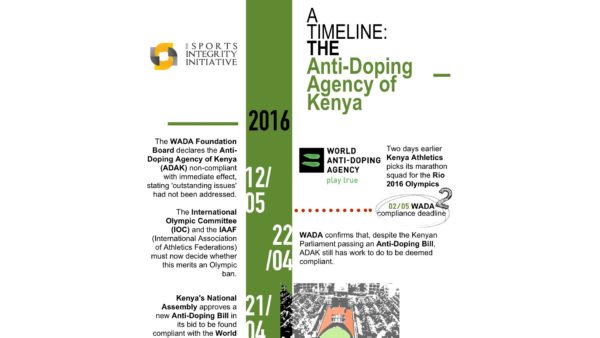
• The BBC has reported that Kenya’s parliament has once again approved changes to anti-doping legislation in a bid to have its athletes allowed to compete at this year’s Rio Olympics. Earlier this month the Foundation Board of the World Anti-Doping Agency (WADA) declared the Anti-Doping Agency of Kenya (ADAK) non-compliant, deeming a new Anti-Doping Bill passed by Kenya’s government to have not addressed the ‘outstanding issues’, namely the establishment of a new independent NADO in Kenya. There is no guarantee that the latest legislation will meet WADA’s requirements.

• The World Boxing Council has released a statement confirming that it has been ‘notified by the D.C. Boxing and Wrestling Commission’ that Romanian-Canadian boxer Lucian Bute had tested positive for the banned substance Ostarine. Ostarine is a selective androgen receptor modulator used to treat muscle wasting and osteoporosis. Bute is a former IBF super-middleweight champion; the D.C. Commission, based in Washington, USA, found the banned substance following a test on Bute after a super middleweight title bout in the city.

Sports Integrity Briefs – 26 May 2016

• Brazilian authorities have expanded a probe into possible corruption at the 2016 Rio Olympics to cover ‘venues and services financed with federal funds’, Reuters reports. According to the news agency, federal prosecutor Leandro Mitidieri has said that investigations previously focused around legacy projects will now include ‘contracts for services, security, everything that used federal funds’. Federal authorities are reportedly already investigating the expansion of Rio de Janeiro’s metro line for the Olympics, the restoration of the Porto Maravilha area and whether the Rio de Janeiro state water utility company Cedae ‘committed environmental crimes’.


• Police in New South Wales, Australia, have reportedly issuedconsorting warnings’ to three National Rugby League (NRL) players after they were pictured dining with a former crime gang boss and an accused fraudster and money launderer. Under section 93x of the Crimes Act 1900 a person can be charged with consorting if they ‘habitually consort’ with convicted offenders. The CEO of Australia’s National Rugby League (NRL) has issued a statement in response warning the NRL players Corey Norman, Junior Paulo and James Segeyaro, to take the police warnings ‘very seriously’. In a separate incident, Norman, who plays for Parramatta Eels, has been ordered to attend court after allegedly being caught with MDMA capsules and muscle relaxants at a casino on Friday night, the Sydney Morning Herald reports.


Travis Tygart, the CEO of United States Anti-Doping Agency (USADA), has said that ‘the entire Russian delegation should be barred not only from the 2016 Olympic Games but from international competition indefinitely’ if the World Anti-Doping Agency (WADA) is prevented by Russian authorities from investigating systemic doping allegations at the 2014 Winter Olympics in Sochi. In an op-ed piece for The New York Times, Tygart reiterated his opposition to the Russian track and field federation participating at this year’s Rio Olympics.


Klubi Futbollistik Skënderbeu Korçë, a professional football club from Albania, have issued a statement saying that UEFA, the Union of European Football Associations, is investigating match-fixing allegations at the club. According to the club, UEFA is investigating three matches in the Albanian Superliga, as well as those in European cups. KF Skënderbeu, who won their sixth national title in succession earlier this year, said that the investigation had been launched after information received from betting companies as well as allegations on social media and in the written press.


• An Italian match-fixing investigation into an alleged Serie B match-fixing ring has been expanded to the country’s top tier football league, Serie A, La Repubblica reports. Earlier this week the Associated Press reported that ‘ten members of the Camorra crime syndicate’ had been arrested and three soccer players placed under investigation following allegations of match-fixing at two matches played by Serie B football club Avellino. CasinoUSA.com Reports & According to the latest reports, a dossier prepared by bookmakers showing evidence of ‘abnormal movements’ in the betting market earlier this year is being sent to the ‘competent authorities’.


• The International Tennis Federation (ITF) is to publicly report positive tests by tennis players when the results arise, instead of wait for the outcome of a hearing before an independent tribunal, according to The Telegraph. In an interview with the newspaper, Dave Haggerty said that the ITF would make any ‘provisional suspensions known at the time’, and that the change in policy might be implemented as soon as ‘after Wimbledon’. The move follows many tennis players withdrawing from tournaments, allegedly for injuries but in reality because they had been banned for positive tests.

Sports Integrity Briefs – 25 May 2016

• Two weightlifters have been provisionally suspended after returning an adverse analytical finding for stanozolol. The International Weightlifting Federation (IWF) reported that Sergei Dolgalev of Kyrgyzstan and Rustam Khil Esmatullah of Afghanistan had tested positive for the anabolic steroid.

• The Football Association of Malaysia (FAM) has told The Star Online that FIFA, the international football confederation, has agreed to provide its Early Warning System (EWS) for free, so that the body can monitor betting markets in order to identify matches which may be fixed.

• South Korean prosecutors have indicted two former referees over allegations that they received money in return for favourable decisions in five games, reports the Associated Press. Jeonbuk Hyundai suspended a scout over the allegations that he paid the referees in connection to five games between March and October 2013.

Japanese appoint panel to investigate ‘Black Tidings’ consultancy cash

The Japanese Olympic Committee (JOC) has set up an investigation panel to consider the scandal over the sceret ‘consultancy’ payment made in the run-up to the award of 2020 Games host rights to Tokyo. The panel includes independent lawyers and an accountant which will investigate the consultancy agreement between the Tokyo 2020 bid committee and a Singapore-based company Black Tidings, linked to disgraced ex-IAAF marketing specialist Papa Massata Diack.

Initially, Tokyo officials denied any knowledge of a US$2 million payment into the account and then changed tack and insisted it was for promotional support. Yoshihisa Hayakawa, Professor of Law at Rikkyo University and practicing lawyer admitted in Japan, has been appointed to head to the investigation panel. Hayakawa is chair of the Japan Anti-Doping Disciplinary Panel and a member of the World Rugby Judicial Panel.

The other two members are lawyer Kabuki Shishido, who is vice-Chair of the Japan Anti-Doping Disciplinary Panel, while Keiichi Kubo is a certified public accountant in Japan and Canada. Observer roles will be held by Kiichiro Matsumaru, senior Executive Board member of the JOC; and Kotaro Wakui, Senior Director for trials, Bureau of General Affairs of the Tokyo Metropolitan Government.

• This article was originally published on Keir Radnedge’s internet site on 25 May 2016. You can access the original by clicking here.

Dirk Lange denies helping Chinese swimmers to dope

Swimming coach Dirk Lange is considering legal action after a Daily Telegraph article alleged that his company was involved with attempts to conceal doping by Chinese swimmers preparing for the Rio 2016 Olympics. The article alleged that China’s swimming team turned to Lange to run a training programme in Belek, Turkey in order to avoid being tested for prohibited substances. It also alleged that Zhou Ming, who was banned for life in 1998, was in Belek coaching Chinese swimmers.

In a letter to the Australian newspaper, Lange argues that the ‘discrete’ Turkish location mentioned in the article is the Gloria Sports Arena (pictured) in Antalya. He also argues that ‘on May 19 2016, WADA [World Anti-Doping Agency] representatives were here to take samples from the Chinese swim team’. He also points out that the Chinese swimming federation have said that Ming has never been in Belek; that swimmers coached by Ming have never been in Belek; and the reason for relocating the camp from Austria to Turkey was due to visa restrictions.

Interestingly, the Chinese swimming federation statement mentioned by Lange did not deny that Ming was coaching athletes. It is understood that he has recently returned to training athletes, after his lifetime ban was reduced to eight years. It has recently been reported that two swimmers coached by Ming have tested positive for doping.

Posted in UncategorisedTagged

Analysis: 14 Russians amongst 31 Beijing 2008 retrospective positives

Fourteen Russians are amongst the 31 retrospective positives announced from the International Olympic Committee’s (IOC) retests of 454 ‘selected’ doping samples taken at the Beijing 2008 Olympics. In a statement, the Russian Olympic Committee (ROC) said that it had received notification from the IOC in relation to ‘14 athletes in three sports’.

Russian state news agency Tass, stating ‘Match TV’ (Матч ТВ) as its source, named the 14 athletes including ten medal winners (see table below). The list includes two members of the women’s 4 x 400m team, which took silver in Beijing and tallies with the ‘three sports’ identified by the ROC.

Three of the athletes identified have served doping bans in the past. Anastasiya Kapachinskaya was a member of the women’s 4 x 400 team that took silver in Beijing. She won the 200m at the 2004 International Association of Athletics Federations (IAAF) World Indoor Championships, but was stripped of the title and banned for two years after testing positive for stanozolol. Denis Alekseyev was part of the 4 x 400m team that took bronze in Beijing, and has just returned from a two-year ban after testing positive for Dehydrochloromethyltestosterone in June 2013. Inga Abitova, who placed 6th in the 10,000m at Beijing, was given a two-year ban in 2012 for an abnormal haemoglobin profile in her athlete biological passport (ABP).

IOC response

The IOC could not confirm if Tass’ reports are correct, as it has yet to issue an adverse analytical finding (AAF) to any of the 31 athletes. The IOC’s Medical and Scientific Director, Dr. Richard Budgett, said that analysis of the athletes’ B samples will take place at start of June.

If this analysis matches the A sample analysis, then adverse analytical findings (AAFs) will be issued to those athletes concerned. The athletes will then be given the chance to explain how a prohibited substance ended up in their system. If they cannot, then an anti-doping rule violation (ADRV) will be issued.

If an ADRV is determined, medal reallocation could prove tricky, as it would require the reanalysis of more samples. “A positive case involving a medalist may then lead to another retest of another athlete who would theoretically feature in the medal ranking”, said IOC President Thomas Bach in a recent teleconference call. “Only then, when we have the result of this other retest, then we would decide about the reallocation of medals”.

This could prove especially difficult if ADRVs are determined for the Russian relay team members. For example, in the case of Yulia Chermoshanskaya, this will involve retesting at least 12 more athletes before the final medal table for the 4 x 100m can be determined. As a single positive test results in team disqualification, if more positives are identified in those retests, then medal reallocation could become even more complex and take even longer.

Pressure on Russia

Currently, only Russian athletics is excluded from taking part in the Rio 2016 Olympics, as its membership of the IAAF has been suspended. That Russians make up almost half of the 31 retrospective positives announced by the IOC puts further pressure on the IAAF, whose Council will be deciding if Russian athletics has done enough to be readmitted at its meeting in Monaco on 17 June.

“’I don’t think the IAAF has any grounds not to restore our team to competition for the Rio Olympics”, Russia’s Minister for Sport Vitaly Mutko told journalists. “Personally, I am in favour of individual punishments for athletes who violate anti-doping rules”. Anti-Doping Organisations (ADOs) such as Anti-Doping Switzerland and the Canadian Centre for Ethics in Sport (CCES) have called for a total ban on Russia taking part.

The IOC has appointed the World Anti-Doping Agency (WADA) to investigate allegations that the former Director of the Moscow anti-doping laboratory, Dr. Grigory Rodchenkov, subverted the doping control process at the Sochi 2014 Winter Olympics anti-doping laboratory. Despite this, WADA has recently allowed the Moscow laboratory to perform blood analyses for the ABP.

“WADA has granted approval to the Anti-Doping Centre Moscow to exclusively conduct blood analyses in support of the Athlete Biological Passport (ABP)”, a WADA spokesperson told The Sports Integrity Initiative. “However, this does not mean that the lab has been reaccredited”.

Sports Integrity Briefs – 24 May 2016

• A Belgian water-polo player has been issued with a six-month ban by the National Anti-Doping Agency of Flanders after he tested positive for cannabis. ‘On January 23, 2016, the water polo player Louis Brodeur (BEL) was tested positive to the prohibited substance Carboxy-THC (Class S.8 Cannabinoids) following a doping control test conducted on the occasion of the water polo competitions in Mechelen (BEL)’, confirmed a statement from the Fédération Internationale de Natation (FINA).

• Russian pole vaulter Yelena Isinbayeva has told the Press Association that she plans to file a complaint with the European Court of Human Rights (ECHR) if she is prevented from competing at the Rio 2016 Olympics. The International Association of Athletics Associations (IAAF) Council will decide whether Russia’s ban can be lifted on 17 June.

• The British Horseracing Authority’s (BHA) hearing into Jim Best’s appeal against a four-year ban issued for ‘corrupt[ing] a young man to ensure horses were not run on their merits’ begins today. As previously reported by The Sports Integrity Initiative, the hearing could result in the BHA having to annul a number of disciplinary sanctions, as Best’s appeal contends that the Chairman of the Disciplinary Panel in his case, Solicitor Matthew Lohn, has acted professionally for the BHA in the past, presenting a conflict of interests. A date of 1 June has been held in reserve for a second day in Best’s hearing, in case it is needed.

• A rugby league player is facing a charge of perverting the course of justice and false imprisonment after locking a UK Anti-Doping (UKAD) official in his garage, reports the BBC. Sam Barlow, who plays for Leigh Centurions, was visited at his home in Halifax, West Yorkshire in July 2015. He will be sentenced at Bradford Crown Court on 27 June after a drugs panel hearing on 6 June.

• A former football player involved in match-fixing in Malaysia during the 1990s has spoken about the threats used by bookmakers in order to get players to comply with their wishes. “It was the 1992 season”, P. Ravindran told The Star Online. “We had not followed the bookies’ instructions for two games. The moment they lost, they warned us with guns.” Ravindran was one of 84 footballers charged with match-fixing in 1994.

FIFA sack Kattner over financial misconduct allegations

Yet another head has fallen from the derided old FIFA ‘inner circle’ with the sacking of Markus Kattner, the Finance Director who has been interim Secretary General since last summer. Kattner, a 45-year-old German, joined the world football federation in 2003 from business consultancy corporation McKinsey in the restructing which followed the near-financial catastrophe of the collapse of commercial agent ISL and broadcast partner Kirch.

He remained largely out of the headlines and in the public shadow of long-serving President Joseph S. Blatter and high-profile Jérôme Valcke, the Frenchman who took over as Secretary General in the autumn of 2007. However, Kattner’s credibility came under increasing pressure as details surfaced about questionable payments ‘on his watch’.

Notable disbursements included the US$10 million (€9 million) handed to CONCACAF boss Jack Warner on behalf of the South African 2010 World Cup bid committee and then the risible CHF2m (€1.8 million) paid to UEFA President Michel Platini – another FIFA vice-President – on Blatter’s orders in 2011. Since then it has emerged that Kattner enjoyed not only a significant contract, but a little-known highly-lucrative bonus arrangement between 2008 and 2014.

Confidence chasm

This is understood also to have come into question during the recent financial turmoil when FIFA’s financial projections were jeopardised by a lack of sponsor and broadcaster confidence after the scandal-scarred past 12 months. A FIFA statement said only: ‘Markus Kattner has been dismissed from his position effective immediately. FIFA’s internal investigation uncovered breaches of his fiduciary responsibilities in connection with his employment contract.’

FIFA observers have considered that Kattner lasted as long as he did only through force of necessity and while he remained useful to the US and Swiss lawyers overseeing FIFA affairs in keeping the body’s administration ‘ticking over’. His last major assignment was conducting the FIFA Congress in Mexico City two weeks ago for new President Gianni Infantino and presenting FIFA’s financial report. Notably, Kattner hurried through a vote on a controversial regulatory change removing the independence of the judicial committees, which provoked the resignation of Domenico Scala as Audit/Compliance Committee chairman.

New appointment

With Fatma Soumara arriving as Secretary General next month, Kattner was always expected to follow his other former colleagues and directors who have fallen foul of the law and/or the management:

Jérôme Valcke was suspended by FIFA last autumn over allegations concerning misuse of expenses and World Cup tickets sales; he was sacked in January and then banned from all football for 12 years by the FIFA Ethics Committee in February; Valcke has denied all wrongdoing.
Jack Warner quit all football in 2011 ahead of an Ethics Committee investigation and has since been banned for life; the Trinidadian, who has also protests his innocence, is currently contesting an extradition application from the US Department of Justice (DoJ) on corruption charges arising from its FIFAGate investigation;
Joseph S. Blatter was suspended provisionally last October by the FIFA Ethics Committee after becoming the subject of a Swiss criminal investigation over the Platini payment; he was subsquently banned from football for six years and is awaiting an appeal hearing at the Court of Arbitration for Sport (CAS);
Michel Platini has submitted his resignation as President of UEFA after failing to persuade the CAS to quash a ban imposed by a FIFA Ethics Committee over the CHF2m payment; he secured ‘only’ a trimming of the ban to four years.

Kattner, like the above, is also likely to find himself in another firing line, that of the FIFA Ethics Committee.

• This article was originally published on Keir Radnedge’s internet site on 23 May 2016. To access the original, please click here.