






The trouble with Ostarine: Jimmy Wallhead’s
16th March 2018
Features



Seventeen athletes from six countries, competing in nine sports, were involved in anti-doping proceedings that came to light this week. Five of the proceedings involved historic adverse analytical findings (AAFs – or ‘positive tests’) covered up by the Russian State, subsequently discovered after the Moscow Laboratory Information Management System (LIMS) was retrieved and analysed.
‘Whereabouts’ requirements continue to cause a problem. This week, two Kenyans were charged with ‘whereabouts’ failures, and a third was sanctioned with a two year ban. One of the two provisionally suspended is Matthew Kisorio, who was sanctioned with a two year ban in 2012 for an ADRV involving steroids. He later alleged that his AAF was due to systemic doping in Kenya, after which an investigation was promised.
In April last year, Kenyan authorities attempted to charge an athlete with fabricating doping stories for money. However questions remain about whether Kenyan authorities are keen to tackle allegations of doping in high altitude training camps within the country, which are often used by high profile European and US athletes.
So what are ‘whereabouts’ requirements? Under the World Anti-Doping Code, sporting organisations must select elite athletes to become part of a registered testing pool (RTP) for regular testing. In order for this to happen, they must file information including their home address; overnight location; competition and training schedules; as well as a location where they will be available for testing for one hour in every 24, three months in advance (although this can later be amended) through the World Anti-Doping Agency’s (WADA’s) Anti-Doping Administration and Management System (ADAMS).
If the athlete is not where they say they will be, that constitutes a ‘Missed Test’. If the filed information is judged to be inaccurate or incomplete, that constitutes a ‘Filing Failure’. Any combination of three Missed Tests and/or Filing Failures is equivalent to an anti-doping rule violation (ADRV) subject to a two year ban.
Most athletes already use tracking applications such as Strava, and many have said that they would support the use of GPS tracking technology to locate them for testing. WADA had the opportunity to use such technology, but used misplaced privacy concerns following media hysteria as an excuse to reject it. Perhaps it is time to revisit that decision.
The ‘whereabouts’ system is centrally held and can be accessed by a number of testing authorities seeking to deploy testing missions. The privacy risk that this presents was recognised by the Article 29 Working Party, which was made up by European data protection Commissioners, back in 2013.

The privacy threat is real. At its Foundation Board meeting in November 2016, WADA admitted that it had spent US$200,000 on updating the ADAMS system following continued hacks by Russian State agents operating under the ‘Fancy Bears’ monicker.
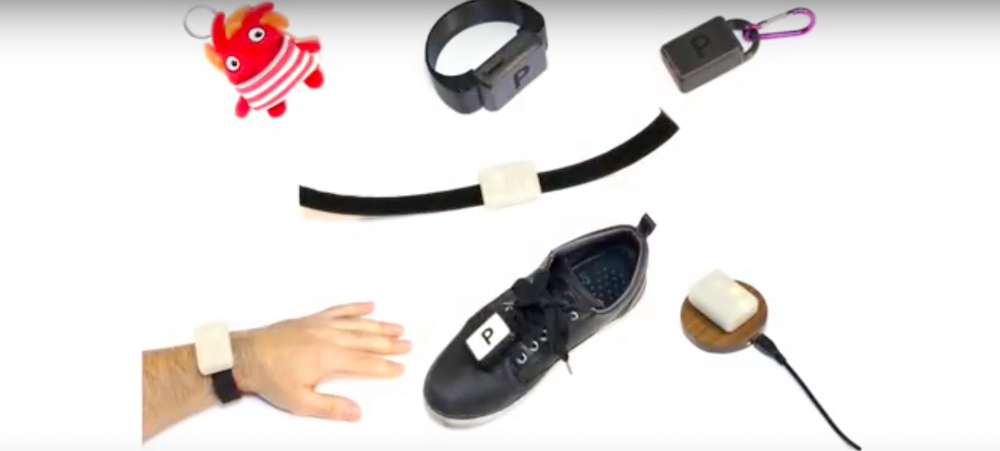
Use of GPS Technology can reduce the amount of sensitive athlete data that needs to be centrally held, reducing risks that data breaches could compromise the personal data of athletes. Former athlete Jonas Plass developed a wearable GPS positioning device to initially give an athlete’s rough location to a DCO, who receives the exact location only once they are within four kilometres of the athlete.
One system need not replace the other – both could exist in tandem. The use of GPS could help locate athletes at training camps for surprise testing, ending the suspicion of foul play that surrounds such camps.
Use of GPS would also remove the need for detailed, centrally held, whereabouts filings. As only rough location data would be stored on the system, this could represent enhanced privacy compared to the current system, which stores an athlete’s exact location multiple times a day, three months in advance.
Using GPS might reduce the minute scrutiny of who is telling the truth and who isn’t, which seems to characterise ‘whereabouts’ cases. Its use might also catch more actual doping cheats, rather than athletes who are responsible for filing forms incorrectly.
Under the ‘whereabouts’ system, an athlete who is doping knows when the testers are likely to turn up. Using GPS, DCOs could surprise them at any time.
Under Article 12.2.1 of WADA’s International Standard for Testing and Investigations (ISTI), anti-doping organisations are required to ‘ensure that they are able to investigate confidentially and effectively any analytical or non-analytical information or intelligence that indicates there is reasonable cause to suspect that an anti-doping rule violation may have been committed’. By not utilising GPS, is WADA in compliance with this Article?
Ekaterina Glazyrina (Statement and Provisional Suspension);
Alexandra Sokolova (Statement and Decision);
Artem Podyakov (Statement and Decision);
Artem Lobuzov (Statement and Decision);
Donovan Burgmaier (Statement and Decision);
Justus Kimutai and Mathew Kipkoech Kisorio;
• Eleven athletes (and a horse trainer) from eleven countries, competing in nine sports, were...
• 20 athletes from nine countries, competing in ten sports, were involved in anti-doping proceedings...
• Twenty four athletes from 13 countries, competing in eight sports, were involved in anti-doping...