



The trouble with Ostarine: Jimmy Wallhead’s
16th March 2018
Features

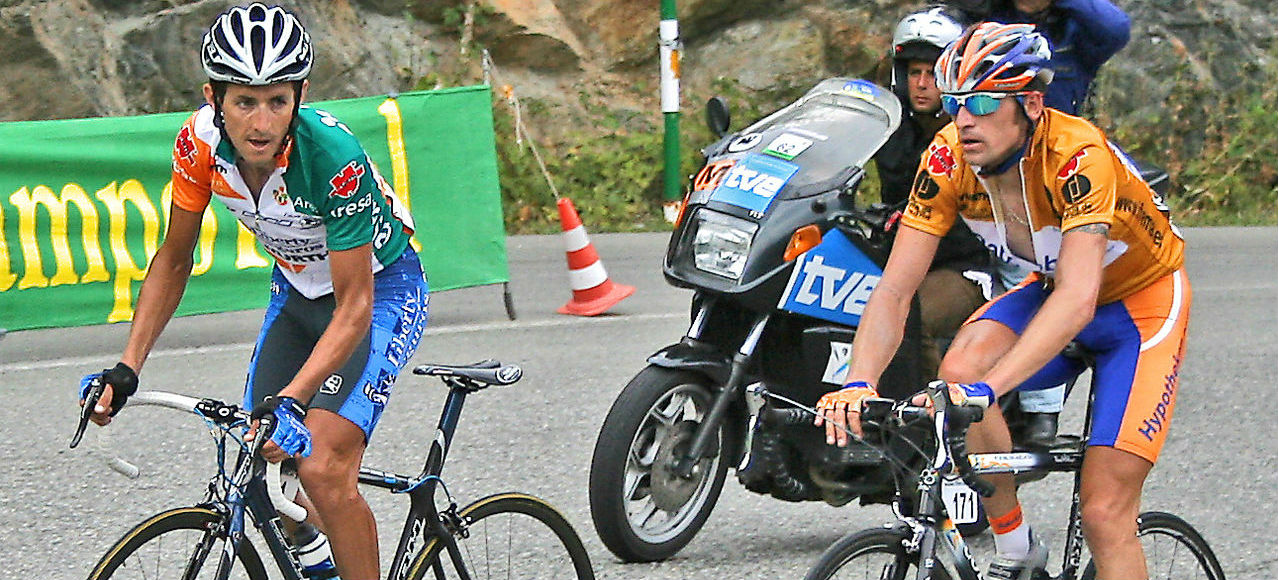
Vuelta a España winner, Roberto Heras Hernández, is set to receive €724,904.86 in compensation following a successful appeal against a 2006 doping ban in the Spanish courts, reports AFP. According to the court documents obtained by AFP, Judge Berta Santillan Pedrosa ruled that the Spanish state was responsible for the error, and was therefore liable to pay compensation to the athlete, who lost his team contract as a result of the ban.
Heras won the monumental Grand Tour race in 2000, 2003 and 2004 and was also the podium winner in 2005, however two months after the race he was found to have tested positive for erythropoietin (EPO) during stage 20, a time trial stage. The Spanish cycling federation (REFC) initially stripped Heras of his title, and in November 2005 the Union Cycliste Internationale (UCI) issued a statement confirming the presence of EPO in the sample. The RFEC later sanctioned Heras with a two-year ban in 2006.
‘The UCI would like to express its full satisfaction as to the progress of the procedures related to this case, and reaffirms its unconditional confidence in the method used for the search of EPO’, read the 2005 UCI statement, reported verbatim at the time on cycling websites. Interestingly, the statement no longer appears on the UCI internet site. Other news items from 2005 relating to Heras remain on the UCI’s site, as this search demonstrates.
Heras’ 2005 Vuelta podium win was automatically awarded to runner up, Denis Menchov, a rider five minutes behind in the general classification. Menchov was later given a two-year sanction by the Union Cycliste Internationale (UCI) under the Athlete Biological Passport (ABP) programme. Manolo Saiz, Director of Heras’ Liberty Saguaros team, initially said that Heras was “destroyed” and insisted that the cyclist was innocent. “This is the first time in 18 years that I am confronted with a situation like this”, he told EFE Radio. “More than anything, I am very sad for the rider”.
Despite this, Heras had his contract with Liberty Seguros terminated. The team’s management company, Active Bay, released a November 2005 statement that reportedly read, ‘after receiving confirmation from the rider of his positive testing in the counter-analysis – regrets to inform that as a result of the commitment pledged through the ethical code endorsed by all UCI-ProTour Teams, it will proceed to terminate the contract of Roberto Heras as soon as it receives an official confirmation from the (UCI), following which the rider will step down from the team.’
Heras immediately initiated a legal battle to restore his title and to overturn his two-year ban, including remuneration for his loss of earnings. In 2012, the Spanish Supreme Court confirmed a June 2011 judgment of the Superior Court of Castilla y Leon annulling his sanction. There were a number of irregularities with the testing procedure, reported Cycling Weekly, notably that the urine was stored at an incorrect temperature, the same laboratory technician controlled both the A and B samples and the laboratory knew Heras’ identity. It was therefore decided that the case would not be taken to the Court of Arbitration for Sport (CAS), and rather the ruling was fought through the Spanish civil courts. The amount of compensation relates to the loss of potential earnings during his two year suspension, reports AFP.
The decision remains subject to appeal. A definitive conclusion to this case could take up to another two years, reports Spanish daily Marca. Following the restoration of his 2005 title, Heras currently holds the record for the most overall wins in the Vuelta’s 80 year history.
• Eleven athletes (and a horse trainer) from eleven countries, competing in nine sports, were...
• 20 athletes from nine countries, competing in ten sports, were involved in anti-doping proceedings...
• Twenty four athletes from 13 countries, competing in eight sports, were involved in anti-doping...