

The trouble with Ostarine: Jimmy Wallhead’s
16th March 2018
Features

Twenty athletes from eight countries, competing in eight sports, were involved in anti-doping proceedings that came to light during the past week. One case involved an Indian athlete dropping her defence that a supplement was to blame for her adverse analytical finding (AAF – or ‘positive test’. The reason? She was offered a one year reduction in her ban if she accepted her anti-doping rule violation (ADRV) within 20 days. There is no indication that she changed her mind about the source of the AAF.

Article 10.8.1 of the World Anti-Doping Code allows sport to offer athletes a one year reduction to a four year ban if they accept an ADRV within 20 days. The new rule was introduced into the 2021 World Anti-Doping Code in an attempt to save money by allowing anti-doping organisations (ADOs) to conclude cases without holding a hearing.
However, it often has the unintended consequence of pushing athletes towards admitting to an ADRV they consider to be unintentional. Due to the lack of need for a hearing, it also results in no exploration into how an athlete may have tested positive.
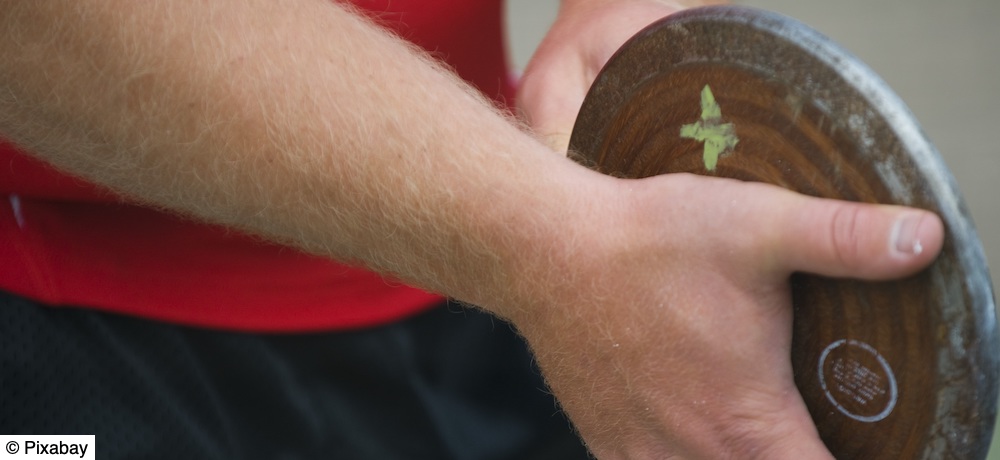
Discus thrower Navjeet Kaur Dhillon returned an AAF for Dehydrochloromethyltestosterone (DHCMT) from a 24 June 2022 out of competition sample. On 23 August, Dhillon wrote to the Athletics Integrity Unit (AIU) of World Athletics stating that she’d used a supplement that, unknown to her, had contained DHCMT. She also returned forms admitting the ADRV and accepting its consequences within 20 days. As such, her four year ban was reduced to three years and her explanation wasn’t investigated.
The issue with this approach is that it assumes that athletes act alone in committing an ADRV. As investigations into systemic doping have consistently revealed, this is often not the case.
The possibility that Dhillon was given the supplements by her support team is automatically discounted, and Dhillon assumes the blame. This plays into the hands of Coaches or sporting organisations who facilitate doping, and allows them to put pressure on vulnerable athletes to admit an ADRV within 20 days, exonerating the support team from blame.
There is no suggestion that Dhillon’s case involved any of the above scenarios. However there are questions as to why sport allowed such a hole to be introduced into anti-doping jurisprudence. Especially after relatively recent systemic doping issues in Russia and within the International Weightlifting Federation (IWF).
Please continue to send any cases we may have missed or suggestions through to our editor by clicking here. Also, if you’re an athlete, national anti-doping organisation (NADO) or other Results Management Authority and you’d like us to cover a case that you’re involved with, please get in touch! Also – a reminder. The SII Anti-Doping Monitor only features confirmed AAFs (‘positive tests’) or confirmed anti-doping rule violations (ADRVs).
Maiyo Johnstone Kibet & Michael Kunyuga Njenga (AIU Provisional Suspensions List);
* Mark Otieno Odhiambo (AIU First Instance Cases List);
John Campbell (West Indies Players Association Statement);
Shahin Mehrdalan & Ebrahim Qajar (Iran NADO Statement);
Simone Mastropaolo (NADO Italia Statement);
Ben Solder (UKAD Statement & Decision);
Richard Cardoza, Jeremy Castro, Ricardo Estrada, Miguel Gonzalez, Jose Serrano, & Christian Suarez (MLB Statement);
Navjeet Kaur Dhillon (AIU First Instance Decisions List & Decision);
Aleksandr Ivanov (AIU First Instance Decisions List & Decision);
Igor Yerokhin (AIU First Instance Decisions List & Decision);
Fedor Mukhin (RUSADA Statement);
Olga Pavlova (RUSADA Statement);
Aleksey Dorofeev (RUSADA Statement & Statement on original sanction)
* On 1 September 2022, the AIU announced that it had erroneously stated that Mark Otieno Odhiambo had been charged with Tampering.
• Eleven athletes (and a horse trainer) from eleven countries, competing in nine sports, were...
• 20 athletes from nine countries, competing in ten sports, were involved in anti-doping proceedings...
• Twenty four athletes from 13 countries, competing in eight sports, were involved in anti-doping...