

The trouble with Ostarine: Jimmy Wallhead’s
16th March 2018
Features


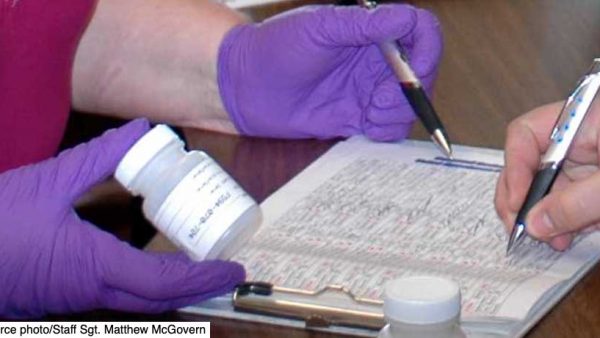
Australia’s National Rugby League (NRL) has changed its illicit drug testing regime to require players to show identification or to be identified by a club anti-doping officer, after a player took a urine test for another player in February. The test was part of the NRL’s Illicit and Hazardous Drug Testing Policy, which is a player welfare policy conducted in-house. This is separate from testing for performance-enhancing drugs, which is conducted in association with the Australian Sports Anti-Doping Authority (ASADA).
The 24 February incident was discovered by chance, when a drug-testing official referred to Parramatta Eels player Kaysa Pritchard (pictured), but pointed at teammate Kenny Edwards. It was discovered that Edwards had attempted to provide a urine sample for Pritchard. Edwards has been issued with a nine-month suspension from 24 February, but Pritchard has yet to be sanctioned.
“Since that case in February at Parramatta we have changed the testing regime”, a NRL spokesperson told the Sports Integrity Initiative. “Players are now required to show their driver’s licence as a form of identification when they’re taking the test. If that identification is not available, then the club’s anti-doping officer has to take the player to the testing area and confirm it is the right and proper person.”
“This was an in-house club test as part of the NRL guidelines”, Eels’ Chief Executive Scott Seward told ABC News. “Hence when we found out about it, we informed the NRL Integrity Unit straight away that we had a potential issue, and hence the investigations. What this shows is that some of the governance structures that we’re putting in place mean that things such as this don’t slip through the net. Once the NRL have finalised their process, the club will then undertake their own disciplinary process. We made a clear decision that we weren’t going to prejudice the NRL decision under their code of conduct.”
Laverty Pathology was appointed as part of the NRL’s Illicit and Hazardous Drug Testing Policy, which was implemented in July 2014. It is understood that the NRL Integrity Unit supplies Laverty Pathology with a list of names to be tested at each club. Each club’s anti-doping officer is responsible for ensuring that the selected players report for testing. Players then have to sign a form with their date of birth to prove their identification. After the incident, this process will now require each player to produce identification, or to be confirmed as the correct player by the club’s anti-doping officer.
‘This policy operates independently from clubs and is conducted by an independent and fully certified third party provider’, read an NRL statement issued earlier this year. ‘The policy ensures code-wide consistency, as opposed to previous testing programs that were undertaken by each individual club. Under the new policy clubs are not aware of the timing or number of drug tests, as random testing ensures the program’s integrity and effectiveness.’
• Eleven athletes (and a horse trainer) from eleven countries, competing in nine sports, were...
• 20 athletes from nine countries, competing in ten sports, were involved in anti-doping proceedings...
• Twenty four athletes from 13 countries, competing in eight sports, were involved in anti-doping...