
The trouble with Ostarine: Jimmy Wallhead’s
16th March 2018
Features


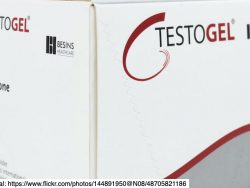
South Korean striker Kang Soo-il has decided not to contest a 15-match suspension issued by South Korea’s K-League for failing a doping test, reports the Associated Press. An 11 June statement from the K-League revealed that Kang, who plays for Jeju United, had tested positive for ‘methyltestosterone, a type of steroid medication’, after a random sample had been collected by the Korean Institute of Science & Technology (KIST). ‘The player Kang Soo-il declared he had used facial hair restorer for a period of time before the sample’, read the K-League statement. ‘Under the Korean Professional Football Disciplinary Regulations, a 15-game suspension is mandated for a First Offence; a one-year suspension for a second violation and permanent exclusion for a third violation’.
It is understood to be Kang’s first offence, however the K-League statement did say that he had the option of requesting analysis of his B sample, an option which Kang has understood to have declined. Kang was in Kuala Lumpur with the South Korean national team preparing for his international debut, when news of the positive test broke. He was withdrawn from the squad and returned to Seoul while the South Korean team went on to beat the UAE 3-0.
The K-League’s relationship with the World Anti-Doping Code is currently unclear. The 2015 World Anti-Doping Code, which came into force on 1 January this year, raises the standard ban for a doping offence to four years, unless an athlete can prove that the violation was not intentional, or if the anti-doping organisation can prove that the violation was intentional. FIFA has implemented the 2015 Code, which means that the Korea Football Association (KFA) should follow suit. Yet the K-League appears to be able to implement a 15-game ban, which widely differs from the guidelines mandated by the 2015 Code.
Upon his return to Seoul, Kang told reporters that he was “sorry for the fans who had high expectations of me”, reported The Guardian. “I feel sad […] and disappointed with myself because I had no knowledge about what a professional player should know naturally.”
• Eleven athletes (and a horse trainer) from eleven countries, competing in nine sports, were...
• 20 athletes from nine countries, competing in ten sports, were involved in anti-doping proceedings...
• Twenty four athletes from 13 countries, competing in eight sports, were involved in anti-doping...