
The trouble with Ostarine: Jimmy Wallhead’s
16th March 2018
Features

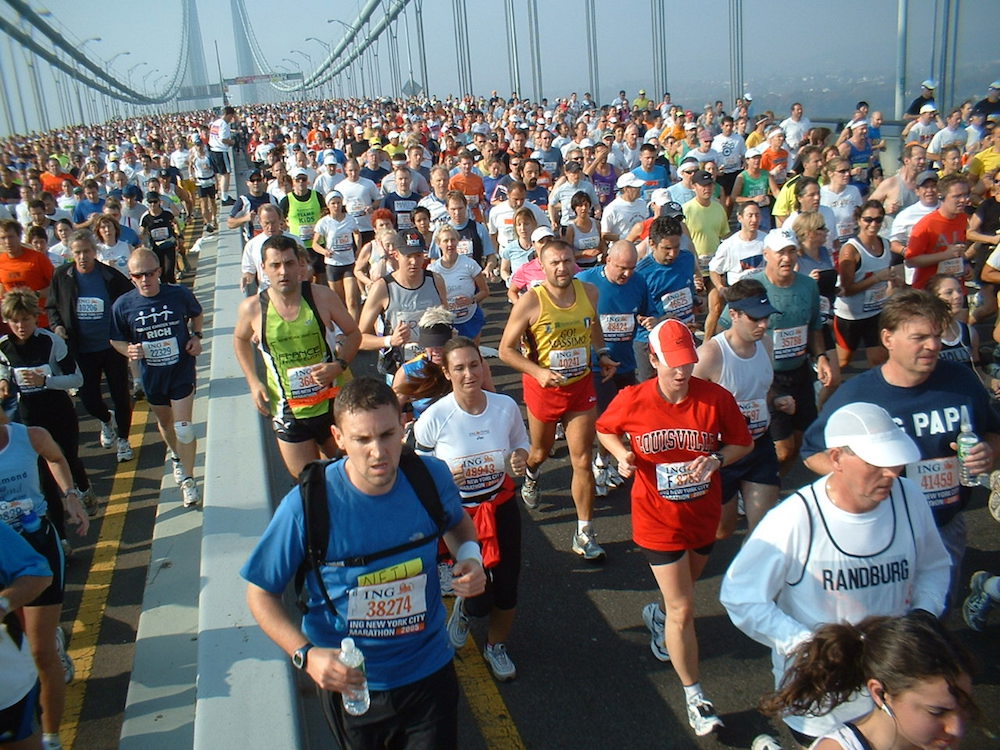
The New York Marathon and Russian sports agent Andrey Baranov have denied any knowledge of an alleged US Federal investigation into whether the Russian sports agent conspired with marathon organisers to allow athletes using prohibited substances to compete in their events. On 3 November, the New York Times alleged that officials from the Department of Justice (DoJ), the Federal Bureau of Investigation (FBI) and the US Attorney’s Office for the Eastern District of New York were investigating Baranov on suspicion of bribery and corruption, quoting an anonymous source close to the investigation. “As a matter of policy, the Justice Department generally neither confirms nor denies whether a matter is under investigation”, said a DoJ spokesperson.
‘We have no knowledge of an investigation by U.S. law enforcement officials as referenced in The New York Times’, read a statement from New York Road Runners, which runs the New York Marathon, which will take place this Sunday (6 November). ‘If contacted, we will cooperate fully with the authorities’.
Baranov, who was questioned by the New York Times on Thursday, said that he had no knowledge of the investigation and denied entering doped athletes into competitions or making inappropriate payments to race organisers. The Sports Integrity Initiative has asked the DoJ to confirm whether an investigation – understood to be along the same lines as the one which led to an indictment against FIFA officials – is taking place.
Baranov is agent to a number of distance runners and was instrumental in exposing systemic Russian doping. In April 2014, he wrote a signed affidavit to the International Association of Athletics Federations (IAAF) detailing how Russian sport officials had colluded with IAAF officials to allow Liliya Shobukhova – whom he represents – to compete at the London 2012 Olympics. Based on this key evidence, the IAAF Ethics Commission issued life bans to three officials for extorting money from Shobukhova to cover up anti-doping rule violations (ADRVs) for three years.
One of these was Alexei Melnikov, All Russian Athletics Federation (ARAF) distance running and walking coach, who was named in his affidavit along with Valentin Balakhnichev, who resigned as ARAF President in February 2015 and voluntarily stepped down as IAAF Treasurer while the IAAF Ethics Commission conducted its investigation. It found that Balakhnichev, Melnikov and Papa Massata Diack – son of then IAAF President Lamine Diack – had engineered an agreement whereby no IAAF action would be taken against Shobukhova, if she paid €450,000 to them. It also found that they had attempted to silence Shobukhova and her husband from reporting what had happened by arranging the repayment of €300,000 to her and her husband.
In the World Anti-Doping Agency’s (WADA) Independent Commission (IC) Report, published in November 2015, Melkinov alleged that Baranov had purchased banned substances in the US. However the IC appeared to question his evidence.
‘Even if the above allegation is true, through Melnikov’s own admission, the IC discovered that he continued to allow Shobukhova to compete, in violation of the Code, and in spite of his declared knowledge that Shobhukova was buying and presumably using banned substances’, reads the Report. ‘Only when directly confronted with accusations did Melnikov, in his position as a senior National Team Coach, come forward with his own professed knowledge of Shobukhova’s doping violations over the six-year period from 2009 to 2015. The IC concludes that over the course of many years Melnikov actively colluded with athletes under his control to dope, in direct violation of the Code.’
Despite the scepticism of WADA, it appears to be Melnikov’s questionable evidence that US investigators are following up. In a potentially libellous statement, Melnikov told the New York Times that Baranov’s “disgusting reputation in the world of athletics is well known”. Yesterday, Russia’s State Duma passed legislation that would allow it to impose criminal penalties on those who induce athletes to dope.
• Eleven athletes (and a horse trainer) from eleven countries, competing in nine sports, were...
• 20 athletes from nine countries, competing in ten sports, were involved in anti-doping proceedings...
• Twenty four athletes from 13 countries, competing in eight sports, were involved in anti-doping...