





The trouble with Ostarine: Jimmy Wallhead’s
16th March 2018
Features




The Mouvement Pour un Cyclisme Crédible (MPCC) has excluded the Astana team for allowing Lars Boom to start the 2015 Tour de France with low cortisol levels, against its rules. However, it found that Androni-Sidermec had complied with its rules, despite the team being suspended by the Union Cycliste Internationale (UCI) in August for reporting two anti-doping rule violations in 12 months.
‘Although cortisol hormones are an allowed medicine when prescribed by a physician, the use of that medicine has frequently been abused in the history of sports (including in cycling) for the purpose of increasing performance’, read an MPCC statement. ‘Besides, a low level of cortisol can potentially endanger the health of athletes in certain circumstances when he/she is in competition while the athletes perform under high intensity or under stress’. The MPCC temporarily suspended Astana in July, as reported by the Sports Integrity Initiative.
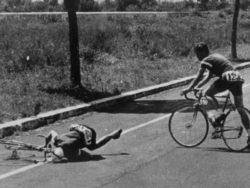
Article 9 of the MPCC’s regulations mandate that in cases where riders report abnormally low cortisol levels, competition will resume after an eight-day rest period, after cortisol levels have returned to normal. Astana had asked the UCI if it could replace Boom (pictured), however the UCI refused, arguing that low cortisol levels are not a risk to the health of the rider, and are therefore not a valid reason for a substitution.
‘After the 3 July receipt of blood tests administered by the UCI on 2 July that showed a low level of cortisol, Astana Pro Team medical staff examined Boom in order to assess the athlete’s health and viability for the 2015 Tour de France start in Utrecht’, read a 4 July Astana team statement. Astana said that its medical staff had advised that Bloom’s low cortisol level is a consequence of ‘a long-standing and well-known application of anti-asthma therapy’ and is not a health risk or a violation of the UCI’s rules. ‘Astana Pro Team asked the UCI to allow a replacement rider in place of Boom, and received confirmation from the UCI that as a low cortisol result is no risk to the health of the rider, therefore there are no valid grounds for a late substitution’, continued the statement.
Low cortisol levels can also indicate the use of corticosteroids, which are banned under the World Anti-Doping Agency’s (WADA) Prohibited List, unless a therapeutic use exemption (TUE) is held for them. The Cycling Independent Reform Commission (CIRC) report (p59) said that corticoids were ‘widely used today’ as a form of pain relief which therefore improves endurance, but are also used for weight loss purposes. It alleged that riders may be abusing the TUE process in order to use corticoids, citing evidence from unnamed doctors.
In the case of Androni-Sidermec, the MPCC found that the team had ‘abided to the 10th article of the internal regulations and self-suspended for a month’. The MPCC said that it noted the team’s decision to sue three riders who have reported doping positives in the past 24 months. In July, Fabio Taborre reported an adverse analytical finding for FG-4592, a compound designed to increase an individuals red blood cell count in order to combat anaemia. This followed Davide Appollonio’s positive test for erythropoietin (EPO) earlier that month. On 30 May 2014, Patrick Facchini gave an adverse analytical finding for tuaminoheptane and was banned for 10 months.
• Eleven athletes (and a horse trainer) from eleven countries, competing in nine sports, were...
• 20 athletes from nine countries, competing in ten sports, were involved in anti-doping proceedings...
• Twenty four athletes from 13 countries, competing in eight sports, were involved in anti-doping...