

The trouble with Ostarine: Jimmy Wallhead’s
16th March 2018
Features

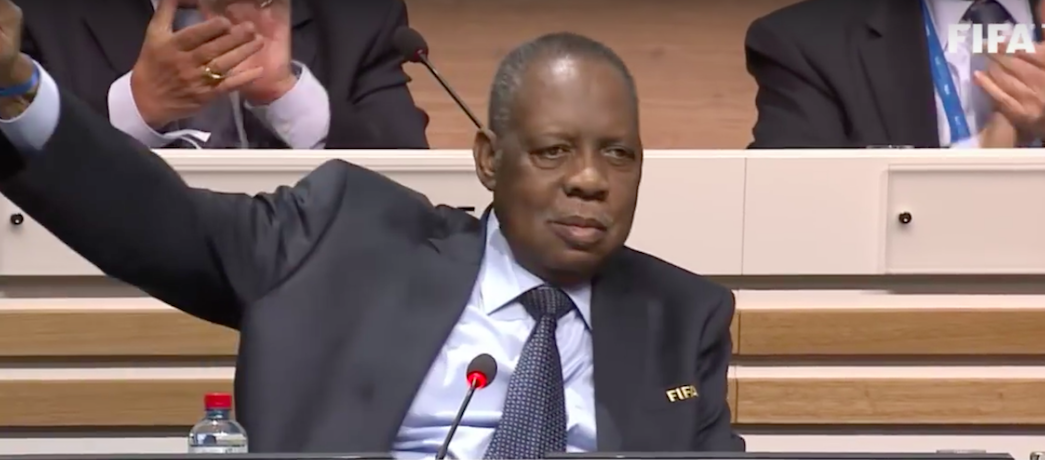
Issa Hayatou, veteran President of the African Football Confederation (CAF), faces possible corruption charges in Egypt over the awarding of television rights to the imminent Nations Cup (ACN). Cameroonian Hayatou is the Senior Vice-President of world federation FIFA and its finance committee Chairman. However he survived the ethics culls prompted by Russia and Qatar World Cup votes and the United States’ Justice Department’s (DoJ) corruption investigation.
The Egyptian Competitions Authorities claim that he violated five sections of the Protection of Competition Act and abused his position by giving broadcasting rights to Lagardere Sports alone bidding to tender. A report says that, back in June, Hayatou granted Lagardere the rights for 12 years starting from 2017 until 2028. CAF signed this agreement with Lagardere in June 2015, almost a year and half before the current rights agreement ended.
Lagardere had also ‘owned’ the rights in 2008 and until 2016, which means that the company acquired broadcasting rights for 20 years. These worldwide broadcasting rights limited were not to satellite broadcasting but the internet.
Competitions Authorities have asked CAF to cancel the contract because of of its relevance to Egypt. The authority also granted an exceptional right for BeIn, the other company that sought broadcasting grants to continue its live broadcasting for the 2017 finals which start in Gabon on January 14.
CAF would also have to change the way broadcasting rights for its championships are sold in Egypt, “in a manner that divides it into bundles that ensures the creation of conditions that encourages competition in broadcasting championships.” The action will increase speculation about CAF shifting its headquarters out of Cairo – an issue which may come up at the forthcoming congress in Addis Ababa on March 17.
• This article originally appeared on Keir Radnedge’s internet site on 4 January 2017. You can access the original by clicking here.
• Eleven athletes (and a horse trainer) from eleven countries, competing in nine sports, were...
• 20 athletes from nine countries, competing in ten sports, were involved in anti-doping proceedings...
• Twenty four athletes from 13 countries, competing in eight sports, were involved in anti-doping...