


The trouble with Ostarine: Jimmy Wallhead’s
16th March 2018
Features
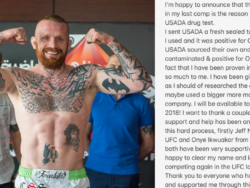


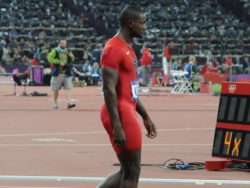
The International Testing Agency (ITA) has announced that Chijindu (CJ) Ujah’s B sample has confirmed the A sample result – an adverse analytical finding (AAF – or ‘positive test’) for Enobosarm (ostarine) and S-23. The ITA said (see below) that it has referred the case to the Court of Arbitration for Sport’s (CAS) Anti-Doping Division (ADD), which will determine if Ujah has committed an anti-doping rule violation (ADRV).
UPDATE: the ITA reports that the B-sample analysis of GB athlete CJ Ujah confirms the initial A-sample result and that it has referred the case to the Court of Arbitration for Sport Anti-Doping Division (CAS ADD).
➡️ https://t.co/AonXzU5qMn#KeepingSportReal pic.twitter.com/kxE2Mn9TZb
— International Testing Agency (@IntTestAgency) September 14, 2021
As previously reported, the standard sanction will be a four year ban, which Ujah may be able to reduce if he is able to prove that he is not at fault or not at significant fault for his ADRV. It appears likely that alongside Ujah, his 4x100m teammates Zharnel Hughes, Richard Kilty and Nethaneel Mitchell-Blake will lose their Tokyo 2020 Silver Medals.

Even if Ujah is found not to be at fault for his ADRV, World Athletics’ rules state that they will lose their medals if it is confirmed (see right). The logic behind this is that even if Ujah wasn’t at fault for his ADRV, he will have gained an unfair advantage over his competitors from the two Selective Androgen Receptor Modulators (SARMs) in his system.
• Eleven athletes (and a horse trainer) from eleven countries, competing in nine sports, were...
• 20 athletes from nine countries, competing in ten sports, were involved in anti-doping proceedings...
• Twenty four athletes from 13 countries, competing in eight sports, were involved in anti-doping...