









The trouble with Ostarine: Jimmy Wallhead’s
16th March 2018
Features



Researchers at the University of Oslo have found that brief use of steroids may have permanent performance-enhancing effects, if the biological mechanisms in humans are similar to those in mice. “Our data may lead to changes in the exclusion rules for athletes testing positive”, said Professor Kristian Gundersen, leader of the Department of Biosciences group that conducted the study, which was published int he Journal of Physiology.
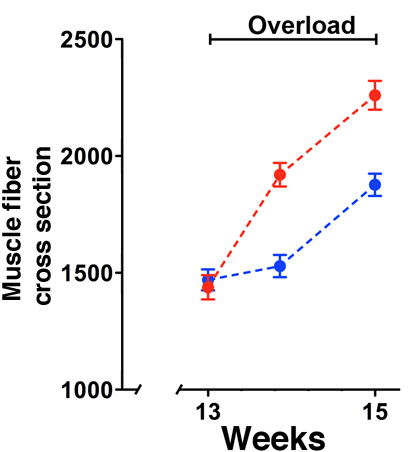
In the study, mice were exposed to anabolic steroids for two weeks, which resulted in increased muscle mass and number of nuclei in the muscle fibres. The drug was then withdrawn for three months, which corresponds to 15% of a mouse’s lifespan.
After this withdrawal, it was found that the treated mice were able to increase muscle mass by 30% in six days following load exercise, while untreated mice showed insignificant growth over the same period. ‘Therefore, former steroid use had a clear effect even after a long period without steroid use’, read a media release from the University.
This is due to a mechanism termed ‘muscle memory’, where the increased number of muscle nuclei in muscle cells is maintained after temporary use of performance enhancing drugs. “There is an accumulation of nuclei when you build muscles, and these nuclei seem to promote the gain of muscle mass with future exercise”, said Gundersen. “Nuclei accumulation gets harder as you get older. Therefore, it may be advantageous to perform overload exercise at a young age in order to counteract frailty in the elderly…if the muscle memory mechanism in humans is sillier to what we observe in mice, we could be talking about several decades of advantageous effects.”
The World Anti-Doping Agency (WADA) is currently conducting research into the long-term effects of steroids on human muscle. “The [research] was well conducted, and supported by good science”, a WADA spokesperson told the Scottish Herald. “However, it is important not to extrapolate this one study to further increase sanctions when there are other factors to consider; from a scientific perspective, whilst the Oslo research presents its own findings, some other research conducted in the past has shown that some muscle modifications in mice or rodents cannot be directly translated to humans”.
The 2015 World Anti-Doping Code, which comes into force on 1 January, increases bans for ‘intentional’ doping from two years to four. The current 2009 Code, which remains in force until 31 December this year, mandates a two-year ban for ‘intentional’ doping, which Anti-Doping Organisations (ADOs) can increase to four years by proving that the doping was intentional (Article 10.2). Under the 2015 Code, the onus shifts to athletes, who must prove that their doping was not intentional in order to reduce the four-year ban.
“If the effect of steroids are permanent, shouldn’t the exclusion be permanent as well?” says Gundersen.
• Eleven athletes (and a horse trainer) from eleven countries, competing in nine sports, were...
• 20 athletes from nine countries, competing in ten sports, were involved in anti-doping proceedings...
• Twenty four athletes from 13 countries, competing in eight sports, were involved in anti-doping...