



The trouble with Ostarine: Jimmy Wallhead’s
16th March 2018
Features

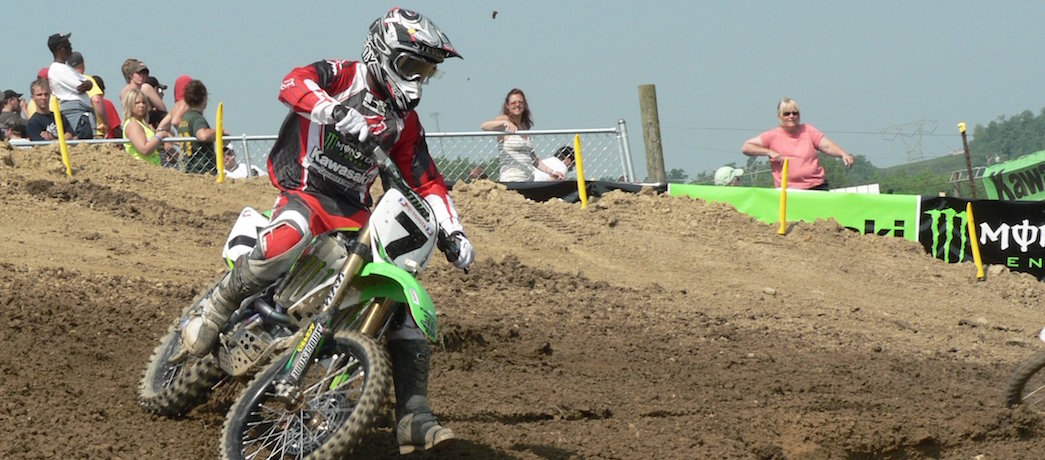
The Court of Arbitration for Sport (CAS) yesterday dismissed an appeal by US motocross and supercross rider James Stewart Jr. against a 16-month ban imposed by the Fédération Internationale de Motorcyclisme (FIM), after a positive test for amphetamine. According to his Wikipedia page, Stewart is prescribed Adderall, which is used in the US to treat sleep disorder narcolepsy and attention deficit hyperactivity disorder (ADHD). The substance contains a combination of amphetamine and dextroamphetamine. It is understood that Stewart failed to submit the proper paperwork to obtain a TUE for Adderall.
Stewart had ‘argued that his positive test was a “paperwork violation” only, as it stemmed from his failure to obtain a Therapeutic Use Exemption (TUE) certificate for medication he was taking and that he had not sought at any time to cheat or gain unfair advantage’, read a CAS statement. ‘Having reviewed the evidence, the CAS Panel agreed with the FIM IDC’s finding that the rider had committed an anti-doping rule infraction and confirmed its decision to impose a 16-month period of ineligibility on the rider. Accordingly, Mr James Stewart Jr. is ineligible for a period of 16 months beginning on 12 April 2014 and ending at midnight on 11 August 2015.’
On 12 April last year, Stewart underwent a doping test conducted by the FIM at a round of the Monster Energy AMA Supercross, an FIM World Championship event held in Seattle. ‘The urine sample obtained from Mr Stewart revealed the presence of a prohibited substance (amphetamine) listed in the category S6. Stimulant under a) Non-specified Stimulants and prohibited in competition under the FIM Anti-doping Code (CAD) in force’, read an FIM statement. ‘At the moment of the test, Mr Stewart was not in a possession of any Therapeutic Use Exemption (TUE) for that substance.’
On 17 June 2014, the FIM suspended Stewart from 20 June, pending the decision from the FIM’s Disciplinary Court (CDI). On 12 December 2014, the CDI banned Stewart from 12 April 2014, notifying the full decision to Stewart, who then appealed to the CAS. It chose a 16-month ban as appropriate because Stewart had ‘established how the prohibited substance had entered his body’, read a 17 December 2014 FIM statement. The CDI was therefore able to apply Article 10.5.2 of the FIM Anti-Doping Code (CAD), which allows sanctions to be reduced if a rider can prove ‘no significant fault or negligence’.
The CAS has yet to publish the full decision on its internet site. The FIM said that it would publish the full reasoned decision on its internet site as soon as it received it from the CAS. ‘First off I want to apologise to my family, team, sponsors and my fans for putting them through this crazy situation this last year’, read a statement posted by Stewart on Instagram. ‘I’ve woken up these last nine months not knowing whether I’ll be able to do the thing I love the most anytime soon. It’s been very disappointing how this whole thing has played out. Not necessarily about the outcome, “although I’m bummed about that also”, but rather the process. A process that I wouldn’t wish anyone to go through. But you know, Sometimes it’s better to walk barefoot then to run with wet shoes on. I could get into the whole story but honestly there’s only one thing you need to know… I WILL BE BACK! They might’ve stalled me, but they won’t stop me! I personally want to thank all my fans for the love and support you have showed me. So next year it’ll be my opportunity for me to show the love back!’
• Eleven athletes (and a horse trainer) from eleven countries, competing in nine sports, were...
• 20 athletes from nine countries, competing in ten sports, were involved in anti-doping proceedings...
• Twenty four athletes from 13 countries, competing in eight sports, were involved in anti-doping...