



The trouble with Ostarine: Jimmy Wallhead’s
16th March 2018
Features

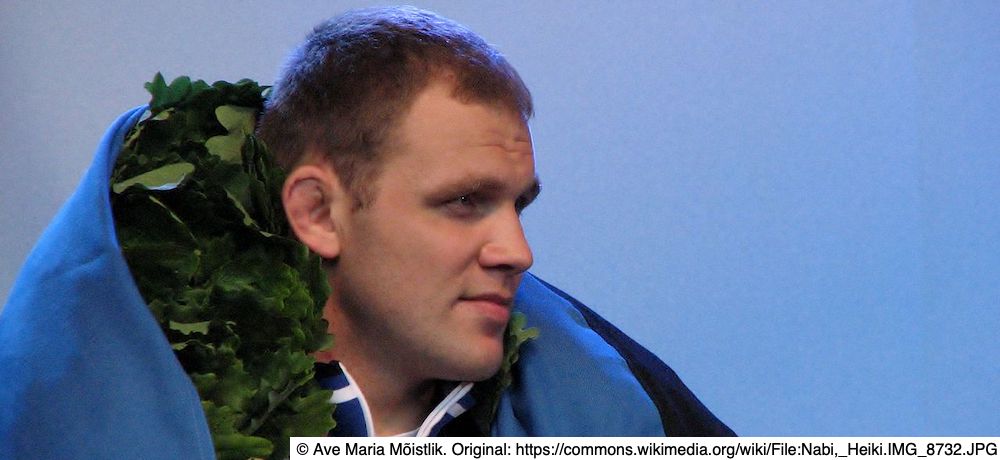
Estonian wrestler Heiki Nabi is to appeal a two year ban issued by the Estonian Centre for Integrity in Sports (ESTCIS) to the Court of Arbitration for Sport (CAS), reports Estonia’s public broadcaster ERR. Nabi, a 2016 World Champion and London 2012 Silver Medalist in Greco-Roman wrestling, was provisionally suspended in February and had hoped to compete at the postponed Tokyo 2020 Olympics.
Nabi’s adverse analytical finding (AAF) for letrozole occurred at the beginning of January. It is understood that his AAF involved a low level of the hormonal and metabolic modulator, which is normally prescribed to treat breast cancer. It is understood that Nabi’s argument that the AAF was due to accidental contamination was rejected by ESTCIS.
A year ago, the US Anti-Doping Agency (USADA) accepted that boxer Virginia Fuchs was not at fault for a letrozole AAF. It determined that the levels in her sample were consistent with exposure via sexual contact with her partner, who was taking medication containing the substance.
However, there is a danger that a CAS appeal could result in an increased sanction. In 2017, Sara Errani was sanctioned with a two month ban for an anti-doping rule violation (ADRV) involving letrozole, after the International Tennis Federation (ITF) accepted that her AAF was likely caused by food contaminated with her mother’s breast cancer medication. Her ban was increased to ten months following an appeal to CAS.
• Eleven athletes (and a horse trainer) from eleven countries, competing in nine sports, were...
• 20 athletes from nine countries, competing in ten sports, were involved in anti-doping proceedings...
• Twenty four athletes from 13 countries, competing in eight sports, were involved in anti-doping...