


The trouble with Ostarine: Jimmy Wallhead’s
16th March 2018
Features


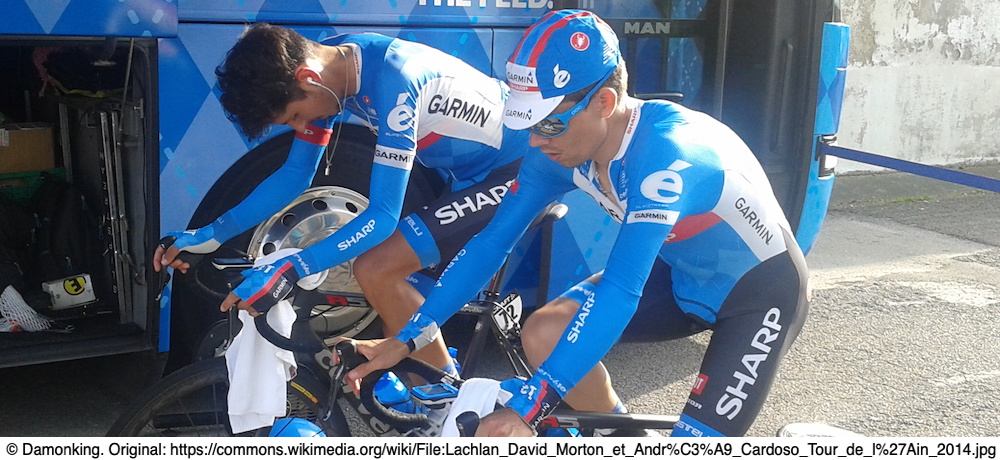
André Cardoso has vowed to clear his name, after the Union Cycliste Internationale (UCI) imposed a four year sanction on the Portuguese cyclist for an anti-doping rule violation (ADRV) involving erythropoietin (EPO). The ADRV resulted from an A sample collected on 18 June 2017, and Cardoso claims that when his B sample was tested at the Swiss Laboratory, an ‘inconclusive’ result was recorded. He claims that this ‘atypical’ result was ‘open to interpretation’ by the UCI.
“I’m doing my best to control my anger, but I’m totally disappointed with the confirmation”, said the 34 year old in a statement. “I’ve been fighting this for 16 months, but from the beginning it was clear that the UCI wanted to make an example of me in order to set a precedent to sanction athletes through the results of their A sample, ignoring due process. We realised this when they hired one of Switzerland’s main law offices and practically all the specialist doctors who could help us prove our case. Why did they do that in a case they claim is completely clear cut? If it were a simple case, it would have been closed quickly.”
Cardoso has enlisted the help of Douwe de Boer, a Dutch scientist and former head of the Dutch Doping Autoriteit, to investigate what caused his AAF for EPO. “In this particular case, there are solid reasons to investigate the cause of this apparent doping crime”, he said in Cardoso’s statement. “Such research requires time and effort from all parties involved, but I hope that André Cardoso will also have the opportunity to carry out this examination. I believe that innocent victims in the battle against doping should be avoided at all costs.”
• Eleven athletes (and a horse trainer) from eleven countries, competing in nine sports, were...
• 20 athletes from nine countries, competing in ten sports, were involved in anti-doping proceedings...
• Twenty four athletes from 13 countries, competing in eight sports, were involved in anti-doping...