




The trouble with Ostarine: Jimmy Wallhead’s
16th March 2018
Features


USADA announced today that Buster Brown, of Bixby, Okla., an athlete in the sport of cycling, has tested positive for a prohibited substance and accepted a two-year sanction for his violation. Brown, 53, tested positive for the presence of an anabolic agent and/or its metabolites as the result of an out-of-competition urine sample he provided on October 11, 2016.
Brown was target tested based on credible information USADA received through the PlayClean Tip Center. His urine sample was analyzed using a specialized test that differentiates between anabolic-androgenic steroids naturally produced by the body and prohibited anabolic agents of external origin. The use of anabolic agents is prohibited at all times under the USADA Protocol for Olympic and Paralympic Movement Testing, the United States Olympic Committee National Anti-Doping Policies, and the International Cycling Union Anti-Doping Rules, all of which have adopted the World Anti-Doping Code and the WADA Prohibited List.
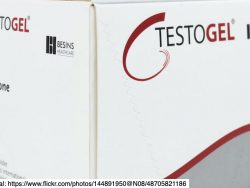
After a thorough review of the case, including the examination of medical records provided by the athlete, USADA determined that Brown’s positive test was caused by a prescribed medication containing testosterone, which he was using in a therapeutic dose under the care of a physician. Although the substance was taken at the direction of a physician, the USADA Therapeutic Use Exemption (TUE) Policy requires athletes to obtain a TUE before using a prohibited substance.
Under the USADA TUE Policy, an athlete has the responsibility to demonstrate in advance of using a prohibited substance that the medical need to treat an acute or chronic condition satisfies all four strict criteria within the WADA International Standard for TUEs (ISTUE). In this instance, Brown’s TUE application was insufficient because it neither met the ISTUE criteria nor the criteria for a TUE as a recreational competitor. Anabolic agents like testosterone have powerful performance-enhancing capabilities and can give an athlete an unfair advantage over fellow competitors, which is why criteria must be fulfilled beyond merely providing a prescription.
Brown’s two-year period of ineligibility began on November 29, 2016, the date his provisional suspension was imposed. In addition, Brown has been disqualified from all competitive results obtained on and subsequent to August 1, 2015, the approximate first date he began using testosterone, including forfeiture of any medals, points and prizes.
• This media release was published by the US Anti-Doping Agency (USADA) on 1 June 2018. Click here for the original.
• Eleven athletes (and a horse trainer) from eleven countries, competing in nine sports, were...
• 20 athletes from nine countries, competing in ten sports, were involved in anti-doping proceedings...
• Twenty four athletes from 13 countries, competing in eight sports, were involved in anti-doping...