
The trouble with Ostarine: Jimmy Wallhead’s
16th March 2018
Features


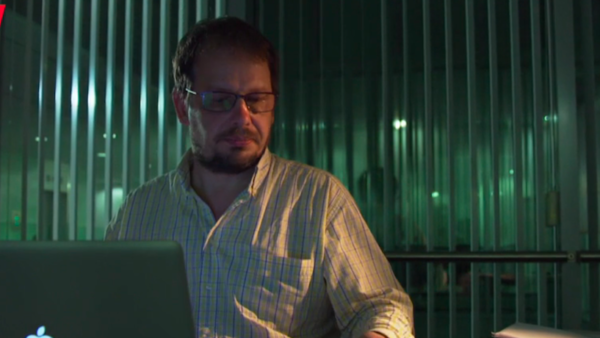
Samples from members of Russia’s provisional 2018 FIFA World Cup squad are amongst 155 being investigated by the International Federation of Football Associations (FIFA), reports ARD. In the video below, Journalists Hajo Seppelt and Florian Riesewieck said they had received a document with sample numbers and names corresponding to some of the members of the Russian team.
As investigations are ongoing, FIFA declined to confirm what stage they have reached. In February, FIFA confirmed that of ‘approximately 3,000’ samples seized from the Moscow Laboratory in December 2014, 154 were from football players. A whistleblower, who did not wish to be named, told Seppelt and Riesewieck that FIFA received a list of 155 footballers in the first half of 2017.
‘These samples, seized randomly, do not constitute, per se, evidence of anti-doping rule violations, but they were stored by WADA at the Lausanne Laboratory and were made available for re-testing, which FIFA has requested’, read a FIFA statement. In his second Independent Person (IP) Report for the World Anti-Doping Agency (WADA) in December 2016, Richard McLaren told FIFA that 34 football samples identified in the Report may have benefitted from manipulation.
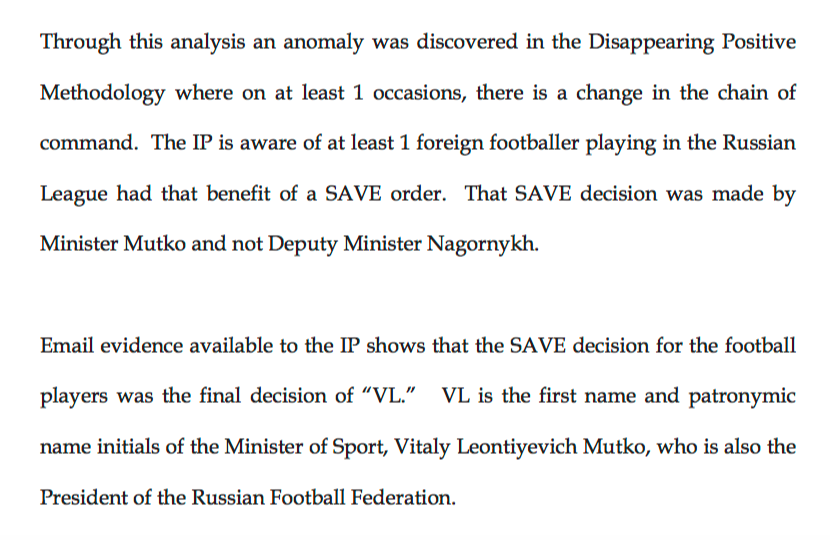
Seppelt and Riesewieck also allege that a number of emails instructed that positive samples should be ‘saved’, and were initialled ‘VL’. The first IP Report produced by McLaren found that the save decision for football players was the final decision of ‘VL’, which is the first name and patronymic initials of Russia’s Minister of Sport at the time, Vitaly Leontiyevich Mutko.
In December last year, Mutko stepped down as Chairman of the Russia 2018 Local Organising Committee, after stepping aside as President of the Football Union of Russia (FUR) for six months to concentrate on an appeal at the Court of Arbitration for Sport (CAS) against a life ban imposed by the International Olympic Committee (IOC). His decision to step down followed his appearance alongside FIFA President Gianni Infantino at the World Cup draw in December.
Dr. Grigory Rodchenkov, former Director of the Moscow Laboratory, said that Mutko had ordered him not to report positive tests in football. “I received order from Mutko that we don’t need positives in football”, he told Seppelt and Riesewieck. “Don’t touch football, OK? He was my boss and I followed his order.”
The ARD video points out that the Laboratory Information Management System (LIMS) from the Moscow Laboratory was handed over to WADA in October last year, and identifies a number of suspicious football samples from 2012-2015. FIFA claims it did not receive the copy of the LIMS database until December and in any case, the original version remains sealed off in the Moscow Laboratory as evidence in an ongoing investigation by the Investigative Commission of the Russian Federation (SKR or Sledcom).
FIFA denies that there has been any delay to its investigation. ‘A standard reanalysis of all suspicious football samples has already been conducted by the Lausanne laboratory, and all results were negative’, reads its February statement. ‘In addition, FIFA has requested a forensic analysis (to determine whether bottles bear marks indicating surreptitious opening) to be conducted on a specific number of samples (selected following the criteria set by WADA) and asked to be given priority. The process is ongoing and FIFA has been informed by WADA that this is a lengthy analysis which includes the delivery of a detailed report for each sample, taking a number of weeks.’
• UPDATE: Later on the 22 May 2018, FIFA clarified that all investigations into all members of the Russian provisional squad had been completed, with insufficient evidence to bring forward an anti-doping rule violation (ADRV) against any of them. FIFA also confirmed that samples taken from all players named as a result of the McLaren investigation had been reanalysed, and all results were negative. FIFA also said that samples seized from the Moscow Laboratory were forensically analysed, and none of them showed typical signs of tampering or unusual salt levels. Click here to read FIFA’s statement.
• Eleven athletes (and a horse trainer) from eleven countries, competing in nine sports, were...
• 20 athletes from nine countries, competing in ten sports, were involved in anti-doping proceedings...
• Twenty four athletes from 13 countries, competing in eight sports, were involved in anti-doping...